
That is the peach tree with the lettuce box in center of the photo. Our chimney swift colony lives in the chimney which is in the center, a good location for them!
Esperanza and gardening and Landscapes and Modern Photos gardening, vegetable gardening 10:31
That is the peach tree with the lettuce box in center of the photo. Our chimney swift colony lives in the chimney which is in the center, a good location for them!
gardening gardening, lobelia 10:26
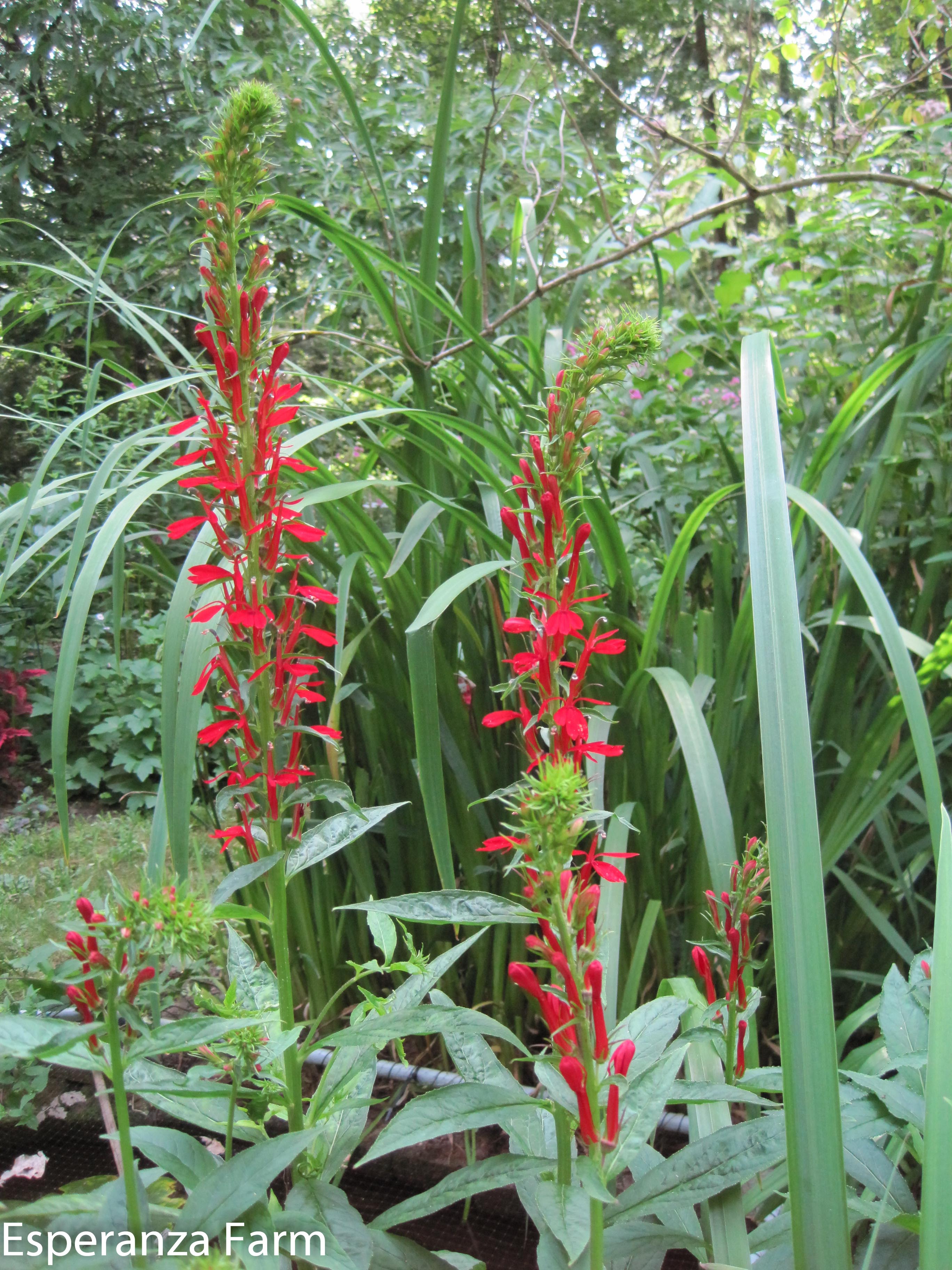
There are certain plants that are inexplicably under used. The red cardinal flower, lobelia, is one of them. This is a well behaved perennial (unlike the blue lobelia which seeds abundantly and is short lived). It prefers stream banks or pond locations, where its roots can get wet, but the basal crown of leaves is not drowned. Unlike the fiddled fancy pinks that have been bred, it is a very tough plant. During August, its scarlet red flower spikes give long lasting color and will do so even in fairly deep shade. Hummingbirds love it.
Comments Off on Cardinal Flower
It is always a little amazing how quickly the summer months change around here; I think it is because so much is trying to grow so fast. Still, this year has been flying past at a ridiculous rate.
The trees this year are all still a mid summer green, probably because despite the heat, we have had enough water. But there are the first shades of olive, and on over-stressed plants, yellow-red. The roadside, where it wasn’t mown, is in its full glory: dusk blue and pink chicory, ivory Queen Anne’s lace, the old gold of the black-eyed susans and goldenrod, the bright gold of the Jerusalem artichoke, the dusk purple Joe-Pye weed. The wood aster now has visible flower buds clustered and waiting. The old standard hydrangea has slowly, almost reluctantly, been unfolding its ivory blossoms. The hayfield is rapidly regrowing, they probably will get a second cut, for it has gone from a baked brown to a lush green.
Now if only my tomatoes would get their act together and actually do something….
Comments Off on Late summer
gardening and Historic Photos gardening, historic photographs, history, photographs 10:16

I haven’t happily identified the woman yet, someone connected with Bradford Ellsworth, possibly his first wife Juliet Inness?
Nice dress….
I do know the picture was taken in the big garden, and those are probably classic New England/New York asters. Clearly, the plant breeders have been had at work making them smaller.
The photo by the way is actually a scanned negative, aren’t computers wonderful?
Comments Off on Garden Flowers circa 1925
in lieu of content
Daylilies: the orange river is just about done, but some of the special creams/purples are still going in the shade, as are the orange ones in the shade.
Shasta Daisies: the flagpole garden is a nice white half-circle, the Russian Sage is just about to get going there as well, so it will start to shade to the pastel shades shortly, dusty blues, pinks, yellows. The Joe Pye weed and the goldenrod are about to start, then the asters.
Yarrow: the wild white throughout the unmowed sections, some elsewhere
Echinacea
Coreopsis
Wild Thyme
Hyssop
Agrimony
Soapwort
Black-eyed susans of all types. The west porch set has been blooming for a month solid
Monarda: red (Jacob Cline), Hot neon pink (short), tall raspberry pink
Phlox: here, there, and everywhere; mostly the reverted washed out pink, but some good salmons, whites, deep pinks.
Hostas: almost done
Oriental Lilies
Gooseneck
Astilbes: almost done, the last are the big pink ostrich types
Cinnamon Clethra: the insects go mad for this underused shrub, a nice vanilla scent, loaded with white flowers, gorgeous exfoliating bark, native.
Black Snakeroot
Blue/Red Lobelia: just starting up
Annuals: including morning glories, marigolds,
Hydrangeas
Duchess of Albany clematis: pink bells over the top of the pergola
other….
Comments Off on What’s Blooming
gardening and Modern Photos gardening, lilies, photography 10:44
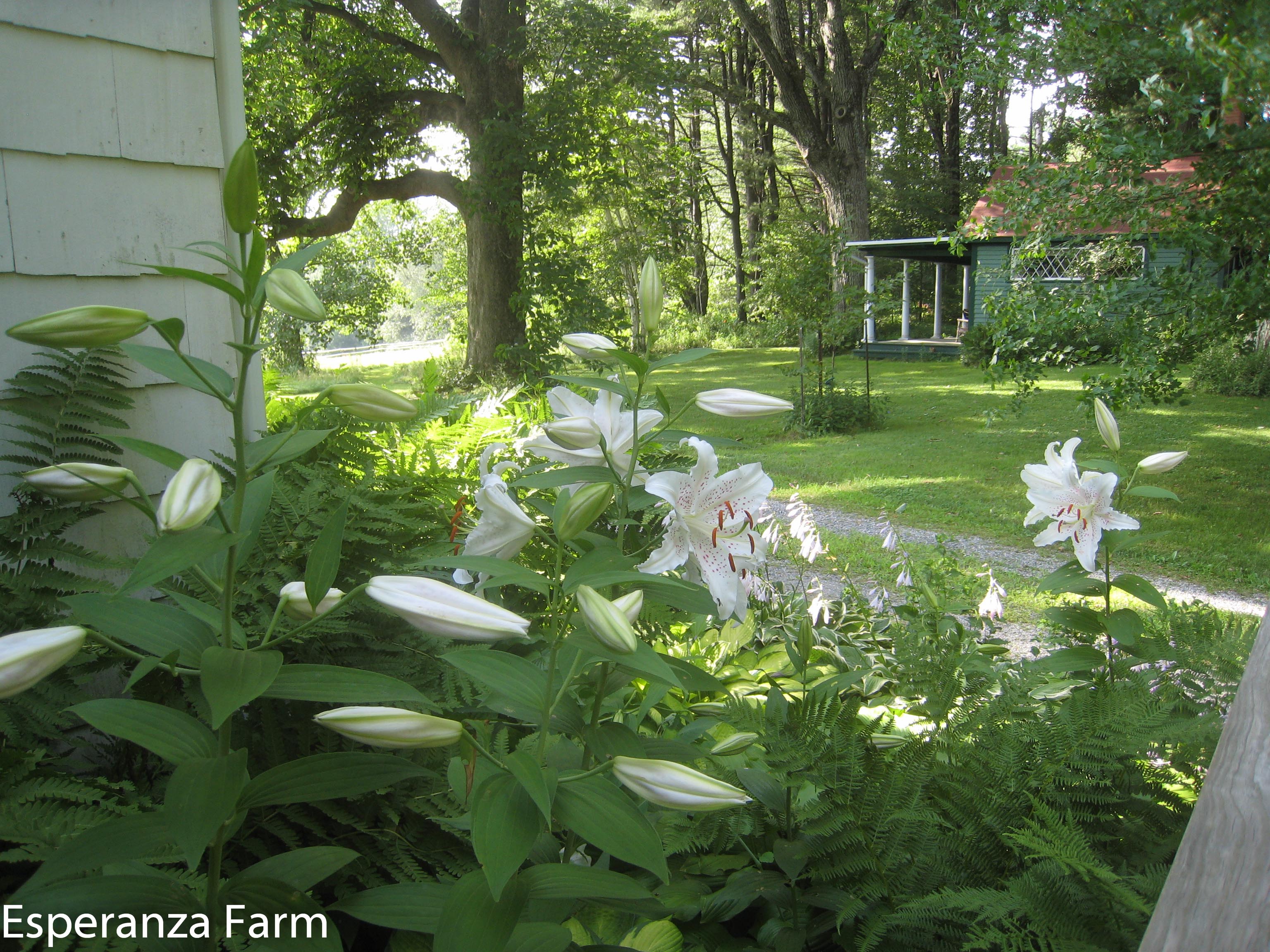
Some lilies, ‘Muscadet’ and ‘Casa Blanca’ by the east porch
Comments Off on Random Photo
gardening and Modern Photos actaea racemosa, gardening, photography 11:47

Also known as bugbane and black cohosh, with the latin name of actaea racemosa (formerly cimicifuga racemosa); snakeroot is a eastern N.A. native growing from Ontario to Georgia. It is increasingly rare in some areas, actually considered to be threatened if not locally endangered in Ct. This is probably because it is a slow growing plant, taking several years to flower, and prefering shaded, damp woods. The closely related a. simplex is the species from which the cultivated types have been bred, including the purple varieties.
Esperanza has a lot of snakeroot, to the point where it is almost a nuisance in some spots. A fully mature plant really should be considered as an herbaceous shrub. It is the backbane of the late July garden, the flower spikes (which can reach 8 feet) twist and turn in a wonderfully dynamic fashion. Despite the name bugbane, the pollinators love it. The one in the picture is growing up through the low branches of a Japanese maple.
Comments Off on Black Snakeroot
gardening and Modern Photos gardening, lilies, photography 15:07
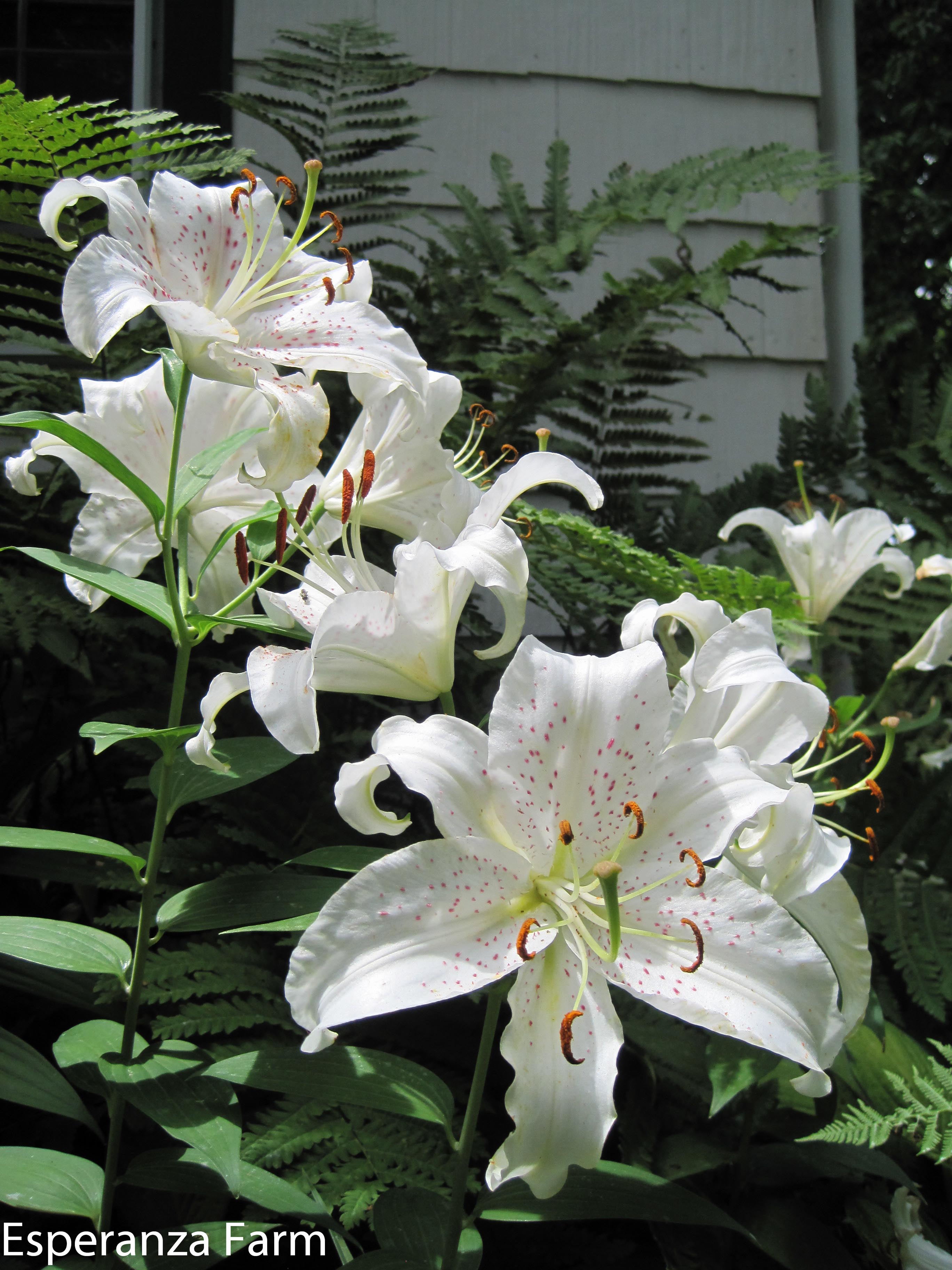
In my opinion, it would not be late July in New England without a big stand of Oriental Lilies by the main door. Preferably located where their fragrance, which is strongest at night, can drift inside. It is a spicy scent, not ‘floral’ really at all. They are a little early this year, they really ought to be in August; but I certainly enjoy them. It is also worthwhile to note that while the lily beetles will eat them, they prefer the Asiatic lilies; so the latter can function as a trap reducing the amount of effort needed to protect the Oriental lilies. Though one still needs to keep a very close eye on them. Support is also useful, in this spot some ferns help out, elsewhere, lanky rugosa roses give some support.
gardening gardening, squash bugs, vegetable gardening 09:59
Which I am barely staying ahead of… The winter squash patch, which is the patch that is being most heavily attacked, has a couple of hills with the vines sprawling in between and finally beginning to extend out of the borders. It isn’t large, perhaps 4’x5′ in size. All of the plants touch, and earlier in the season I was finding squash beetles evenly distributed on all of the plants. However, I took three extra tomatoes and planted them in the middle. Now, I don’t think those tomatoes are going to produce very much, though they seem to be quite healthy. However, on the squash vines that are in direct contact with the tomatoes…I am not finding squash bugs nor eggs. I find them on the other side of the plant, but not on sections intertwined with the tomatoes.
This, it seems to me, is potentially very interesting. Maybe it is a fluke, or maybe it is a partial solution?
gardening and Landscapes and Modern Photos daylilies, gardening 14:14
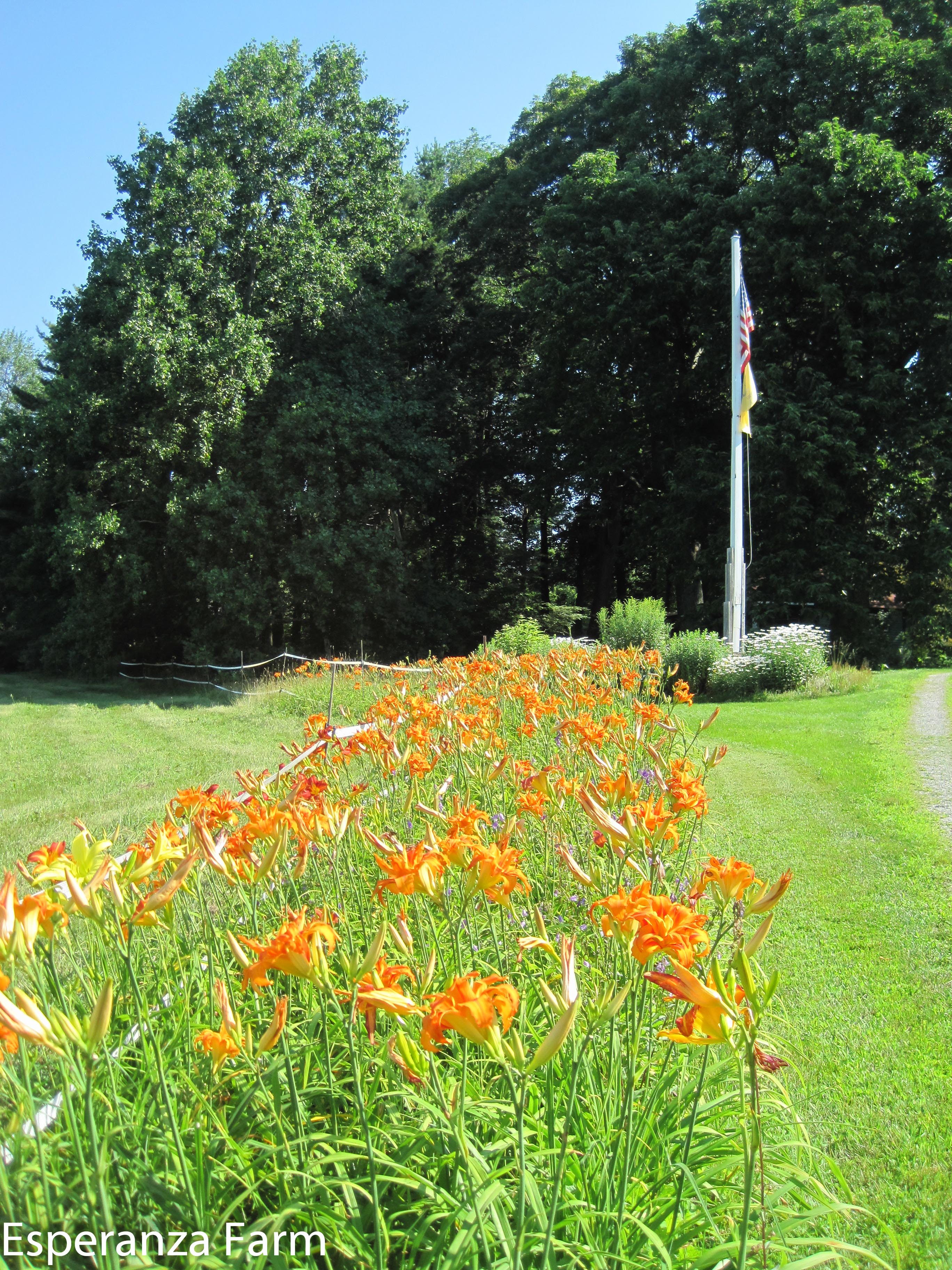
The daylilies along the fence, nearly all big orange doubles. It is a bit hard to believe that all of those came out of one very crowded 20′ by 5′ foot strip, now part of the vegetable garden, two years ago. The strip they are now is about 130 feet long and 4 feet wide.
(in other news, still too hot. But the guys got close to a 1000 bales of hay off the field, or over 100 bales on acre. which is rather impressive)
Comments Off on Orange Tide
 Acair Fearann