Or how to grow pole beans properly. A photograph taken of Esperanza’s then garden. Remember, it supplied the tenant farmer, his family, and Aunt Carlotta (pictured at the far end of the row) over the winter; it supplied all the guests at Esperanza, ranging from a constant 5-8 with spikes of close to 20 for weekends throughout the summer.
The garden shown is no longer part of the property, that section was sold off in the 1960’s and is now a winery.
My pole beans don’t look like that. Not only are poles not big enough, but this time around in addition to the turkeys, there was a nice young doe taking a nap….they are now netted.
Gardening circa 1909 Friday, Jun 21 2013
gardening and Historic Photos gardening, history, photography 14:23
Wordless Wednesday: Roses Wednesday, Jun 19 2013
gardening and Modern Photos gardening, photography, roses, wordless wednesdays 09:21
Not necessary Monday, Jun 17 2013
The turkeys that is. To be quite precise, the turkeys deciding that the bean patch on the slope was the ideal location for a dust bath. We shall see how elderly firewood works as mulch, I placed sections in between each row and around each squash plant. The theory being that they can’t push aside the chunks of wood. The uncertain factor is how, or if, the insect population which came with the wood will affect the plants. They didn’t, thankfully, get the pole beans; and I only had to replant some of the yellow wax beans. So, I suppose I can look at it as a way of ensuring a longer harvest.
It is very nice that they were able to raise a successful brood; but there are other places, plenty of them, where they can get a good dust bath. I wonder how young wild turkey tastes….
Comments Off on Not necessary
Peony: Festiva Maxima Saturday, Jun 15 2013
gardening and Modern Photos gardening, photography 14:02
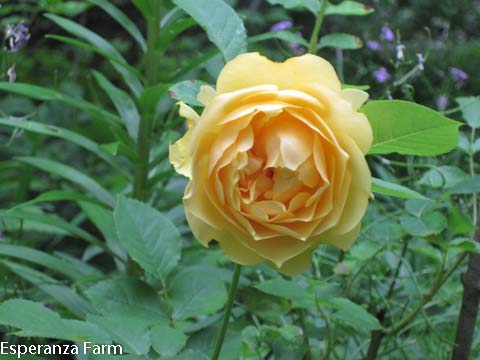
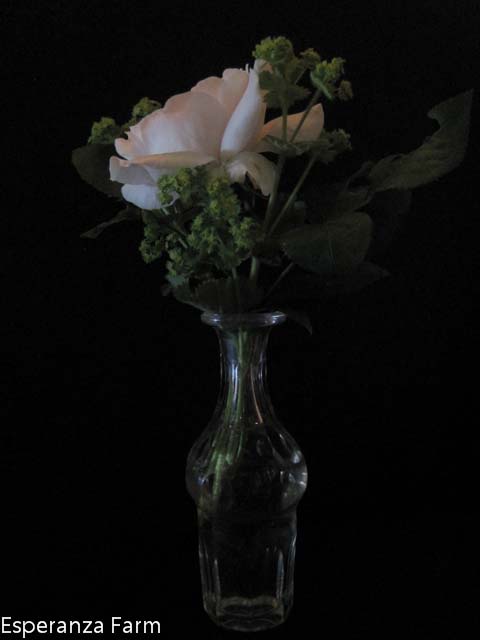
Floral Decorations Friday, Jun 7 2013
gardening and Modern Photos gardening, photography, roses 18:03
Chores Friday, Jun 7 2013
Esperanza and gardening gardening, history 10:07
Keeping up with a landscape of this nature requires a fair bit of work. This is made easier these days with an ever increasing armada of power equipment. And a modification to the types of gardening/landscaping. (I like shrubs for a reason)
In the 1870/1880’s it was a bit different. At that time there were a number of children around during the summer, usually six or seven.*
In addition to summer schooling and exploring all of the surrounding area, going as far as several towns away and hitching a ride back on a train, they were kept busy.
“There were chores which we were expected to do, and so we did them….On Saturday we were also required to rake the driveways and the many winding paths so as to have them look neatly cared for when Papa came up from New York on the evening train. We earned very good wages for that. Ten cents a week. And we had an extra privilege of earning more by digging dandelions from the lawn at ten cents a hundred, and nice long roots mind! Grandfather made us this offer and we were tremendously busy at it at every spare moment. But one day Wallace, who was the busiest digger of all of us, presented Grandfather with a heaping bushel basket full of thousands of dandelions. That was the end…as the suspicion that Wallace had gone far afield for those flourishing dandelions was strong…”
*The Ellsworth children: Helen Adelaide, Lucy, Bradford, Elizabeth; their cousin, Carl Davis; and the two Rood children, Wallace and Nan. The Roods were the family in charge of the farm.
Comments Off on Chores
What’s Blooming? Tuesday, Jun 4 2013
It would be easier to say what isn’t actually…
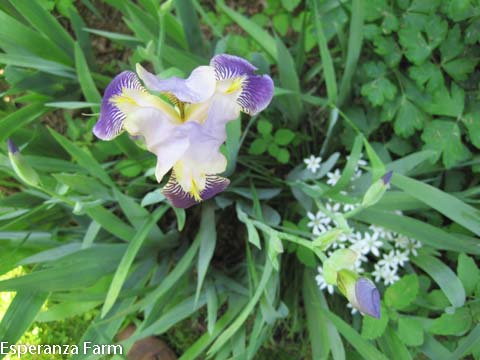
Iris, both Bearded and Siberian, at least 8 different varieties; primarily blues/golds/white, with a touch of bronze.
Oriental Poppies: RED
Clematis: pinks/purples
Dame’s Rocket: pinks/whites
Dianthus: white
June lilies: yellow
English Bluebells: Blue
Perennial Bachelor’s Buttons: bright blue
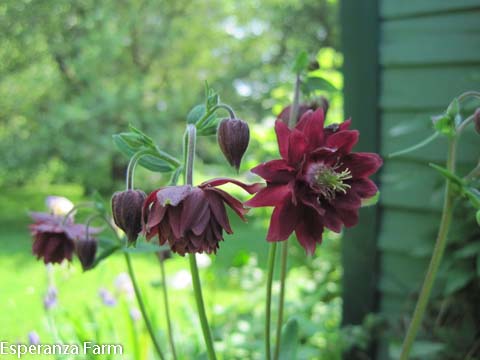
Columbines: mostly blues, a few pinks and maroons
Rhododendrons: mostly decent pinks (no fuschia!), only one white. The one that I bought which should be white….is a rather nice almost red….in the wrong spot naturally.
A few late azaleas
Beauty Bush (Kolkwitzia)
Weigelias: the big standard old fashioned red and the dwarf types
Deutzias: white
Rugosa Roses: white and pink
Pagoda Dogwoods: white, a very good year for them for once.
Kousa Dogwoods: Ivory
Peonies: just starting up
Various wild flowers: Wild Geraniums, Solomon’s Seal, Ox-eye daisies, English daisies, Yellow Hawkweed, clovers, other
(and all the things I can’t recall right now)
Comments Off on What’s Blooming?
Colours Saturday, Jun 1 2013
The Flagpole garden continues to come along elegantly: currently Red, White, Blue, and Gold with a green background. The Red are the big Oriental Poppies, each year they get larger and have more flowers. I picked up a fourth one this year, to help balance the other three. The older three (I think they are four years old now) are nearly the size of bushel baskets; the new one could fit in a quart. They are a true crimson red, ‘Beauty of Livermere’ (and I fervently hope the new one matches…). The flowers are massive, about the size of a baseball. The blue and gold come from the iris: true gold (unknown) and true blue (‘Breakers’ very fragrant), the white from the cerastum. Pure white iris might work well too…but I don’t think there is space.
A rather nice colour scheme. There is a bit of pink rocket in there, I think it has to come out!
It all goes rather nicely with the flags. When it all works, of course, last year the gold iris didn’t bloom for unknown reasons. And the blue iris are new, and seem to be a bit shorter than they ought to be; but we didn’t expect them to bloom, so maybe next year.
The poppies, of course, get nicely hidden by the asters and the shasta daisies later in the summer, so the gaping holes simply aren’t visible.
I can’t take any credit for this garden, it is all Mom’s!
Comments Off on Colours
A few photos from the last week Friday, May 31 2013
gardening and Modern Photos gardening, photography 10:06

Small blue iris originally from Vermont, also Star of Bethlehem.

Blue iris, columbines, in the Little Kitchen garden

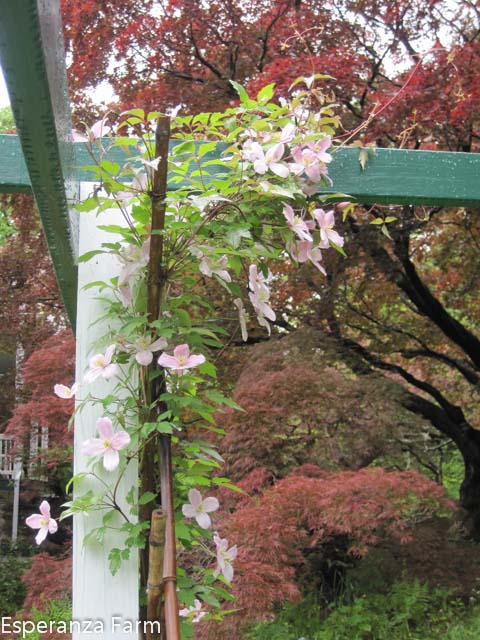
Clematis ‘Mayleen’ on the pergola

Japanese painted fern, sweet woodruff, standard hosta, by the ramp

Double-file viburnum, Exbury Hybrid azaleas, Bleeding Heart, Dame’s Rocket, on the edge of the big garden
Waterproof Flowers Saturday, May 25 2013
gardening gardening, weather 10:30
I am not going to object to the several days of cold rain, though 50, raining, and constant wind, is bracing. The rain now means daffodils next year, among other things (you know, minor things: like enough groundwater!). And it has refreshed the water in the ponds, reducing the duckweed/algae thing. I am glad the tomatoes aren’t out yet, however.
It does give one a good chance to look at what flowers can or cannot stand up to such large amounts of water and wind. Lilacs melt, as only lilacs can, into rather unappealing mush. If the flowers panicles are young and unbruised by the wind, they stand up well. But if they are at all passed their peak…brown mush.
The early clematis ‘Mayleen’ seems to think it is just fine, despite an exposed location where the flowers can get beaten against the trellis in the wind, they are apparently undamaged. None of the others have opened yet.
The evergreen azaleas…mush, pretty mush, but still. They were past their peak anyway, but usually they last a little longer. The exception is one red azalea, its smaller flowers seem to be able to handle the rain.*
The deciduous azaleas are a surprise, despite the huge flowers of the Exbury types, the rain has not damaged them. The native swamp azaleas are quite happy.
The viburnums are variable, snowball types tend to catch the water…mush. The mariesi snowflake types don’t mind.
Columbines love it, although I think it may shorten the individual flower’s life. Tulips disintegrate, but they were essentially done. Camassia can get flattened if it lacks support. Sweet woodruff, tiarella, forget-me-nots, rocket, trillium: all very happy.
The real surprise performers are the iris. They are just starting to open, and as long as they are staked or have short stalks, the rain doesn’t seem to bother them at all, nor does the wind.
*This is an azalea of uncertain parentage, tiny evergreen leaves and equally tiny scarlet red flowers. Think cardinal flower red. It is in a terrible location which has gotten much too shady, but the idea of moving a thirty year old azalea scares me.