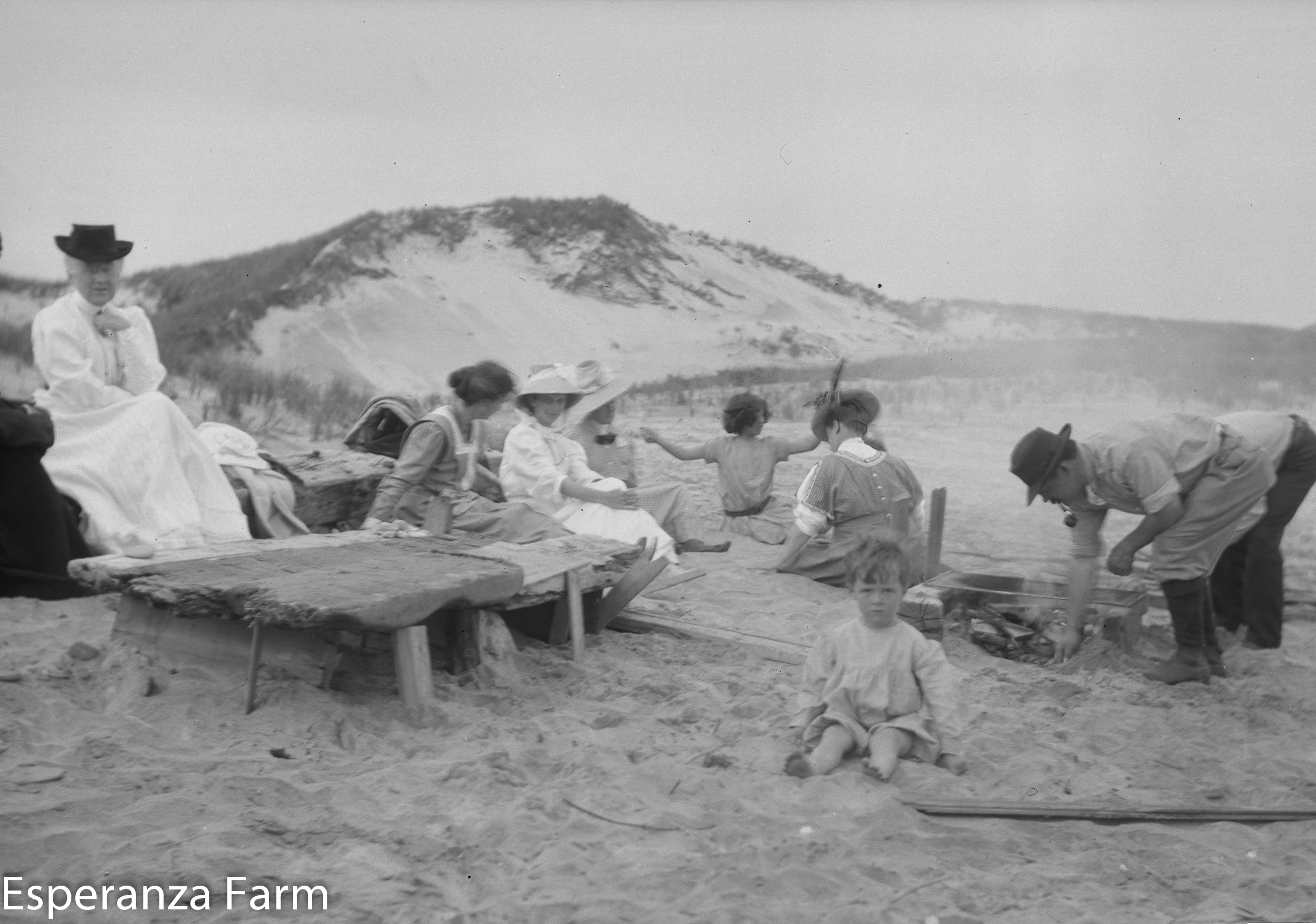
August, 1909, at the beach Saturday, Sep 7 2013 

I know it is after Labor Day, the temperature last night was 41 (and didn’t the tropical houseplants like that!), and I am finally posting beach photos.  Not my beach photos, I don’t like the beach, too much sun.  I’ll visit in the winter and listen to the wind, thank you.

Anyway, August 1909; presumably somewhere Long Island Sound.  The man with the pipe might be George Creevey; who the rest are, in particular the old lady in the hat???

1909002005

Autumn Volunteers Friday, Sep 6 2013 

IMG_6302

Black-eyed susans (rudbeckia), blue lobelia, white wood aster, unknown aster

September Snow Thursday, Sep 5 2013 

Heart leaved wood aster, or white wood aster, is a native flower (sort of in the aster family)*.  It blooms in late August through to frost.  The flowers are small, white, with purple or yellow centers.  It adores dry shade, but is equally content in full sun (though the leaves get burnt).  It spreads by runners and will outcompete most garden plants.  We have a lot of it.  The old tennis court is covered with it.  Last year we gave up mowing the mossy area underneath the big Japanese Maple, the Douglas Spruce, and the Copper Beech.  No point in it, it is very dark and composed mostly of blanket moss.  Or was….It is now a gorgeous carpet of white, looking for all the world like a massive drift of snow, beneath the purple leaved trees.  Quite impressive!


*The botanists are having too much fun taking this family apart and putting it back together, a group of frustrated divorce lawyers!

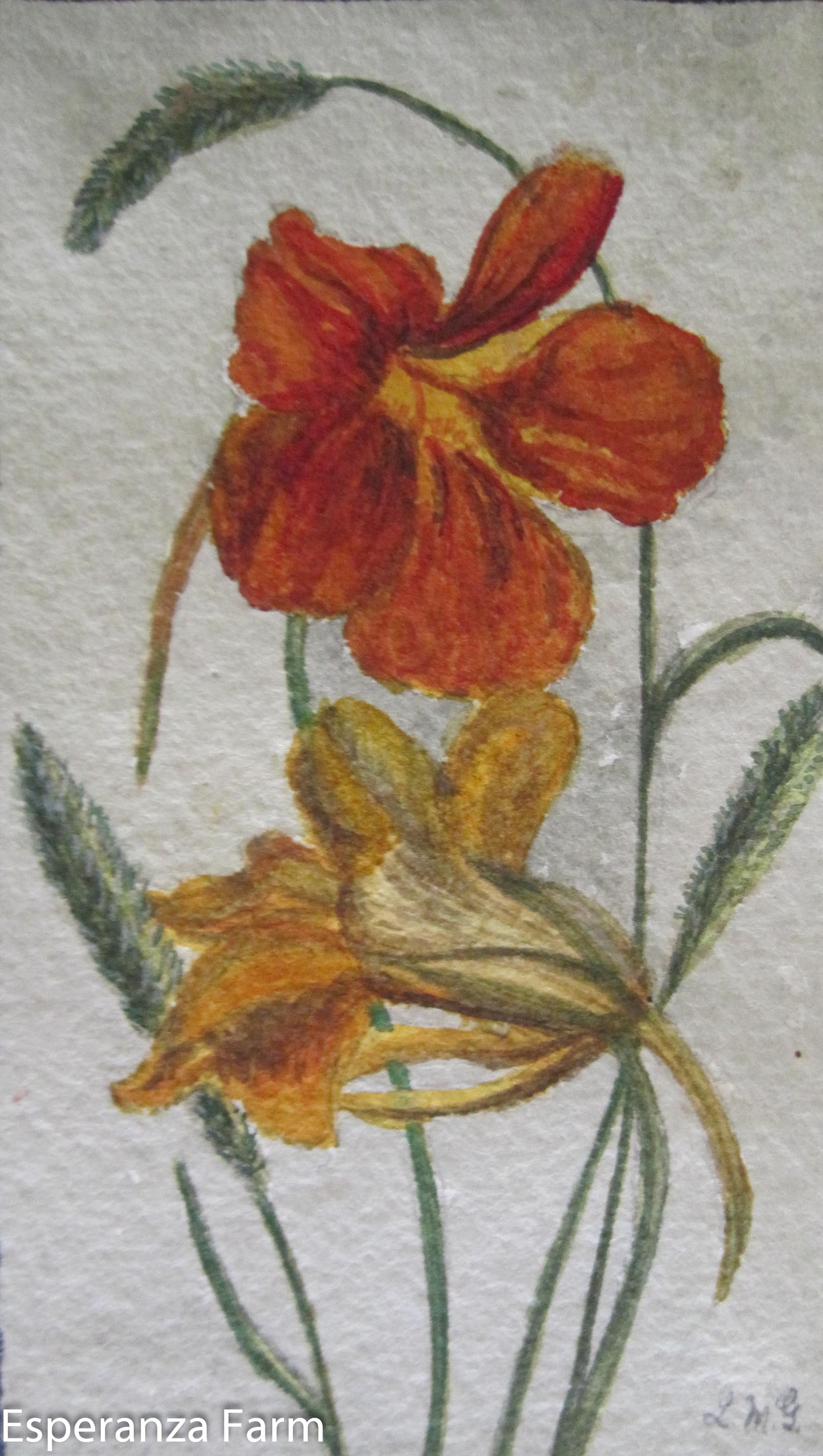
Nasturiums Wednesday, Sep 4 2013 

From the guestbook, August 1878 by Louis Goddard

IMG_9527

Peaches! Tuesday, Sep 3 2013 

Because southern New England has a sufficiently mild climate, peaches grow quite well here.  In the Berkshires, peaches grown in the valleys are susceptible to late spring frosts, which will knock out the crop.  This is also a problem with apples.  Consequently most orchards are on the top slopes of hills.  This seems slightly counter-intuitive (higher equals colder) but it is late spring frost which is the threat, not the actual winter temperatures.  The upper slopes of hills generally have more air movement, this helps to avoid the very late frosts which occur in the valleys as cold air settles over night.  The actual meteorology is not something I understand, but it works!

In any case, our peach tree is on the top of a hill and immediately south of the house.  The house’s proximity creates a zone 6 microclimate for it (and two new clematis), since the wall has a fair bit of solar gain and the wind is cut by the surrounding buildings.*

Despite a chronic and severe infection with one of the wilts, which makes picking the fruit less than romantic;* we always get a fair number of peaches.  I don’t have the guts to thin the peaches like I should, so they are always small.  This year, I have frozen three pies, the makings for at least five cobblers, and we canned 6 and half quarts.  Plus eating a number, and there are still plenty left.  Not bad, considering that distractions and poor weather meant we didn’t do as good a job in the picking/canning/freezing as we ought to have.

*Yes, I know they reclassified us as zone 6…and some years we are, and most years a zone 5 and once in awhile zone 4.  Zone 6 plants do not overwinter here unless they are on the south side of the house.  Zone 5 plants do.  I suspect the plants are more accurate than the map makers.

*The peaches that get infected literally turn to balls of mold on the tree.  Fun.

What’s blooming Sunday, Sep 1 2013 

Autumn clematis: all across the hilltop, whether this is the native ‘wild’ or the introduced, I honestly don’t know.  I know our’s is the introduced type. (ivory)

Goldenrod: at least five types (yellow)

White wood aster (heart-shaped leaves): a bit early, it absolutely blankets the woods here (white)

Whorled wood aster (white)

A variety of asters, from the tiny calico types to the big, purple New England types. (I figure if the botanists can’t tell them apart, I probably can’t either) (whites/blues)

Blue Lobelia (blue)

Red Lobelia (cardinal flower) (RED)

Jerusalem artichoke (a good clear gold)

Lingularia (a mustard gold)

Indian tobacco (small blue flowers)

Black eyed susans (yellow)

Pholx (paniculata) (white/pinks)

Shasta daisies (white)

One late white hosta (white)

Morning glories (dark blue)

Scarlet pimpernel (red)

Marigolds (yellows/oranges/reds)

Sunflowers (yellows)

Hyssop (dusty violet)

Monarda (red)

Jewelweed (orange and yellow)

Some rebloom on the Weigelia (red)

Hydrangeas (white/rose/blue)

Caryopteris (blue)

Japanese Anenome (pink)

other…

Seasons Friday, Aug 30 2013 

I could never live in the South, and certainly not in the Tropics.  About this time of year, despite the abundance of peaches, beans, tomatoes, squash, garden flowers, etc… I start thinking about the cleansing qualities of a good hard frost.  That veggie bed with the slight pong of decaying vegetation? Clean!

I can’t imagine having to deal with bugs, humidity, fungi, and all that ilk year round.


Darkness Wednesday, Aug 28 2013 

I like the dark. I like it especially when I know the territory, as it might be these woods.  There is, of course, always an awareness of the firmly reined-in fear, panic in the old sense of the old god Pan, that something is out there.  Perhaps that control is part of why I like it.  There is a stillness, a waiting quality to the night.  It helps, of course, to be confident that there is nothing natural to fear.  The horse will alert to a bear before I need to react to it. And frankly, there are no people who know these woods as well as I.  And those that can move in them more confidently, in the dark, than myself? Well a) life isn’t a movie; and b) I wouldn’t have a chance wherever or whenever.

In any case, watching the woods, or a house, in the dark* brings new dimension to a landscape.  Certain trees have a whole new aspect, perhaps a density that sets them apart in a way that was not apparent in the daylight or a branch which catches the eye.  The long grass is a dappled shade, whereas the mown lawn is a neat surface of hard lined light and dark. The goldenrod is a heavy scent in the air, the crickets are almost too loud, the rustling of a sleeping bird on the branches, the horse eating in the field.  There are no mosquitoes late in the night.

*semi-dark, in this a lot of light provided by the house.  Moon light works equally well.  Pitch dark is rare, unfortunately.


Light and Shadow Tuesday, Aug 27 2013 

_MG_9771

Guests Sunday, Aug 25 2013 

Apologies for the light blogging this coming week.

One of the awesome things about Esperanza is its ability to absorb guests.  The house was designed for handling upwards of twenty house-guests for months at a time during the summer.  Plus dinner parties coming closer to forty. Hence the guestbook featured in previous entries.

Some of these guests would have stayed in the cottages and many of the them probably doubled or tripled up in bedrooms.  Still there is quite a bit of space.

We can’t manage that these days; but when it is all set up, the house’s infrastructure can easily handle a fair number.  Currently there are, in addition to the three people always here*, we have another six (and another tomorrow) spanning four generations from ages 3 months to 95 years, plus four cats, two of which are guests.  Not bad.

*Due to touchy, prima-donna systems for heating, plumbing, and light along with basic common-sense security, there is always at least one person here, 24-7.

« Previous PageNext Page »