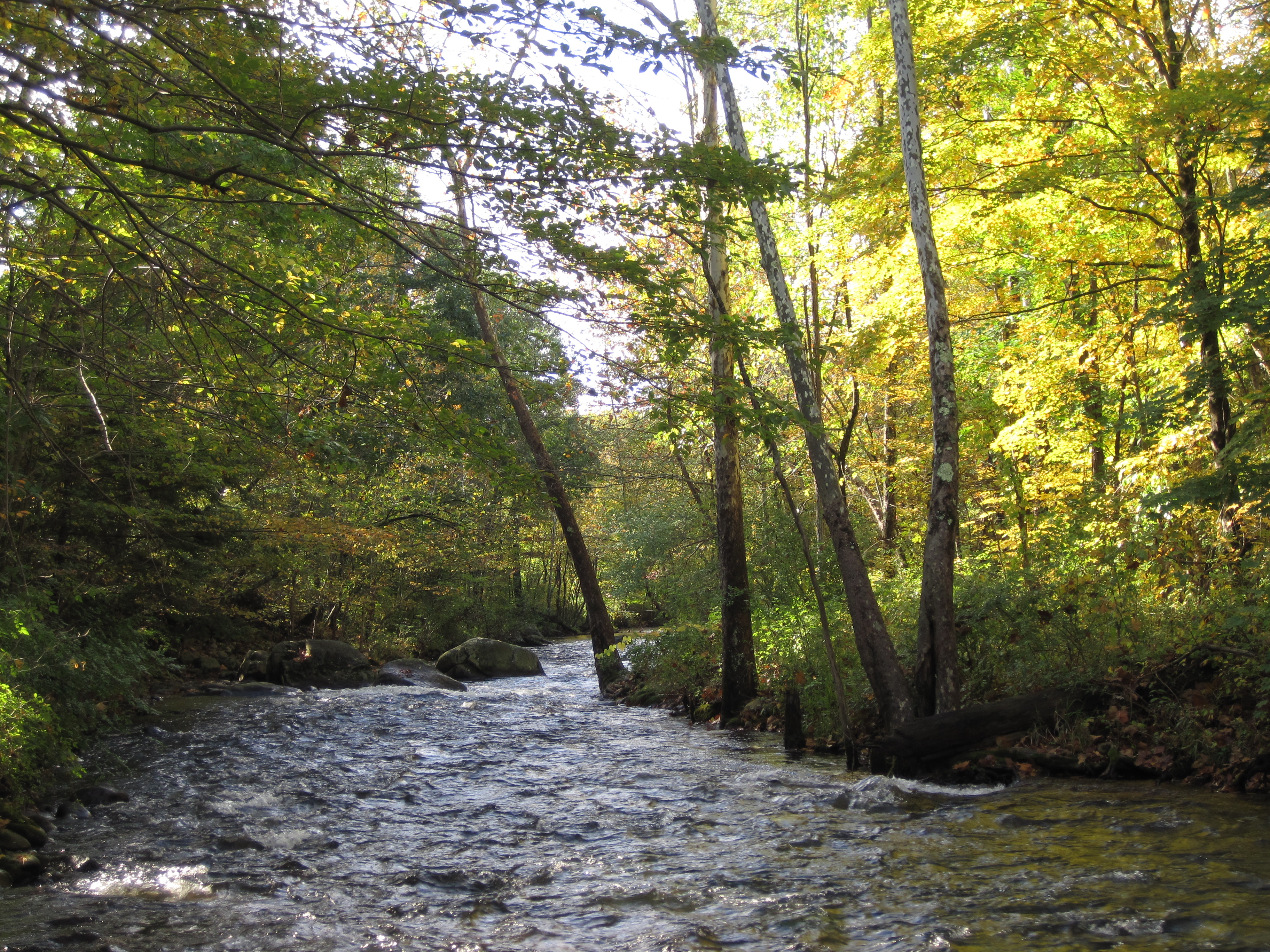
Wondrous works Monday, Oct 27 2014 

‘Will you cherish the wondrous works of God, and protect the beauty and integrity of all creation?’

This was the text of a resolution passed by the Episcopal Diocese of Connecticut on Saturday as a proposed sixth baptismal question (it now has to be run through the General Convention twice before being officially adopted, so 2018 at the earliest). As a lay delegate to the convention, this resolution was one of several that I had a particular interest in.

Those of you who know me, know that I have very little patience with the ‘green’ movement. And when this question was posed last year, it had serious problems with obvious political overtones: ‘trigger words’ and very little Scriptural grounding. A year later, and the kinks were worked out. It now reflects the fundamental truth which has been so often warped: the universe is wondrous and we are part of it.

So what does this have to do with this blog? Well today, I spent time working on the annual cutting of unwanted brush up on the house lot, Holly spent time working in the garden, and Jamie spent time cutting the trees in the Spring Lot that I had marked for removal.

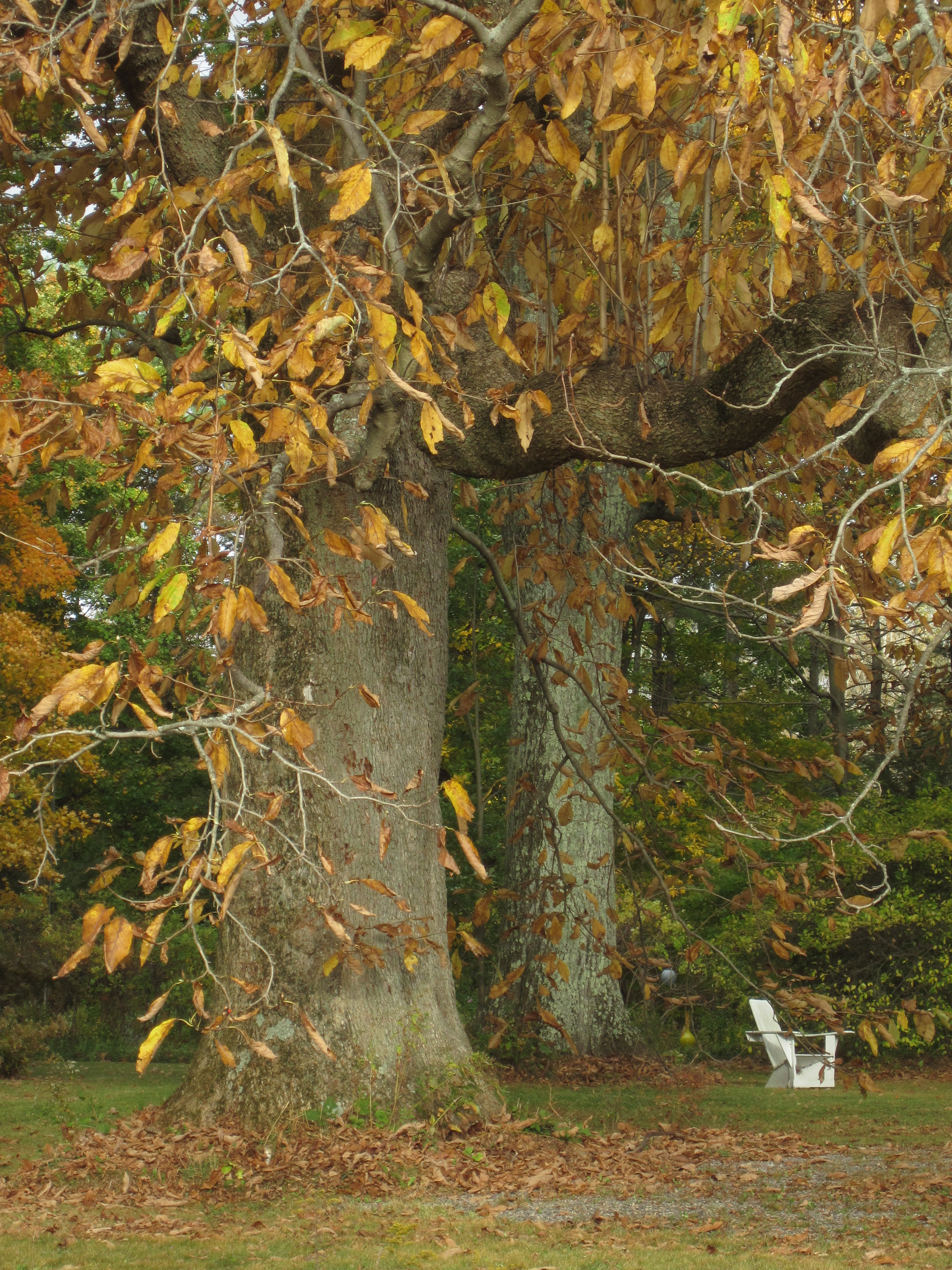
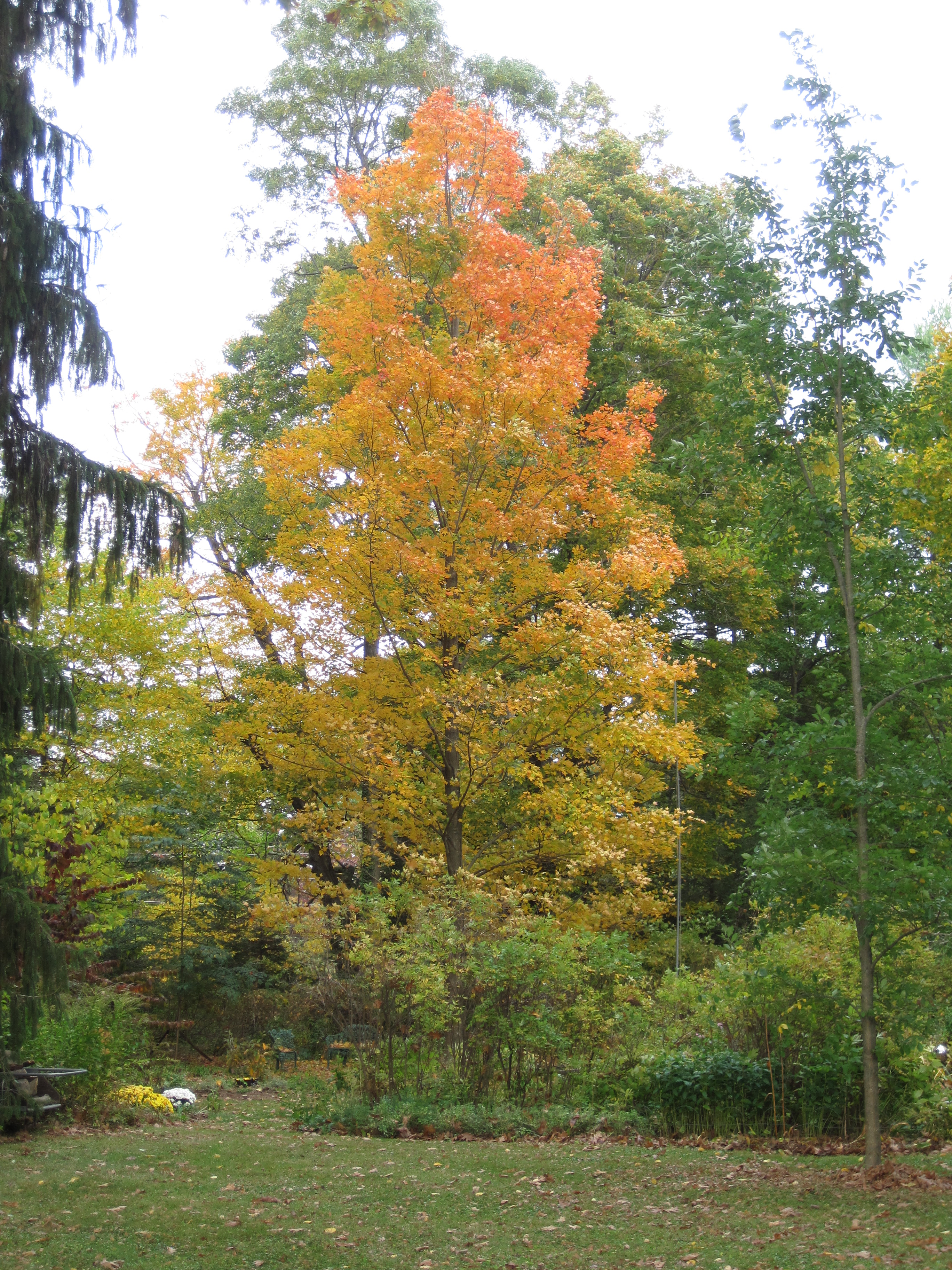
The thing is, the ongoing thinning of the Spring Lot, which will eventually result in a towering* grove of Maple, Oak, Beech, Black Birch, and Ash is a long running project. Its final glory won’t be evident for about a century or so. But in a century or so, God willing, someone will have a stand of forest giants. As I have enjoyed the trees that are giants now, so will they. A cathedral of trees and a pond caught at the break of the hill, where the sunset falls. I won’t see them, and the land almost certainly won’t still be in the family. But that does not matter. It will be there in glory.


*when the little guys, that don’t even hit the lower branches of the canopy are 50 feet in height…..

Suburban Scenes Sunday, Oct 26 2014 

The black cur

Was hunting the new turned fields

Strips of rich earth

Between the standing rows of corn

When he flushed the morning doves

Flying hard across the hedgerow

Where blazed all the colors of the fall.

It was a scene worthy of Bruegel

Had the old master ever known

The colors of a new world.

Yet I marveled more at the farmer’s faith

For he was planting winter rye.

And I knew that before the doves’ return

And the golden grain

There would be the bulldozers

Like monstrous city pigeons

Whose success is unrivalled

Even as they die.

The houses would rise from earth entombed.

New England Swamp Tuesday, Oct 21 2014 

Down in the Maple Hollow in the morning

008

Every once in awhile Friday, Oct 17 2014 

011

Almost garish Thursday, Oct 16 2014 

004

025

Insulting bears Wednesday, Oct 15 2014 

One of the places I work at is a store which sells bird food; one of the major complaints (or reasons for not buying) is that there are bears in the area. This is commonly followed by: ‘but that (raiding bird feeders) is because we are moving into their habitat’*

I find this insulting to the bears. The modern eastern black bear is a highly adaptable, incredibly successful animal. Current estimates for its annual population increase in Connecticut and Massachusetts are at 15% to 20% Increase each year since the 1990’s. There were No black bears in Connecticut after c. 1840 and probably much earlier. In the 1980’s the gov’t admitted that there was a breeding population that had returned to the state sometime after World War II. Today the population is estimated at between 500 and 800 bears, there are over three thousand in Massachusetts, which also saw its original population extirpated by the 1800’s.**

We are not moving into bear habitat in New England. The early colonialists did. But the current population? That has moved into the state and has increased, even as the human population has increased. Why? Heavy forest combined with lots, and lots, of garbage cans, dumpsters, bird feeders. And that forest? really heavy on black/red oak, lots of acorns there.

This is not some absurdly sensitive predator that can’t deal with the slightest disturbance to its food chain. This is an intelligent, problem solving, omnivore, with a highly efficient metabolism, and good reproductive success.  Give it a bit more credit. It can thrive in New Jersey for heaven’s sake!


*I also have to refrain from commenting, since the person almost always has an address of x lane, circle, court, or drive all of which indicate modern subdivisions, that if they are so concerned about the environment, why are they supporting suburban sprawl?

**That is an incredible number, since Massachusetts is only around 10,554 square miles: or one bear for every 3.5 square miles. And female bears have ranges of around five to seven square miles, with males a bit larger…

Shadows Monday, Oct 13 2014 

016

Asters Friday, Oct 10 2014 

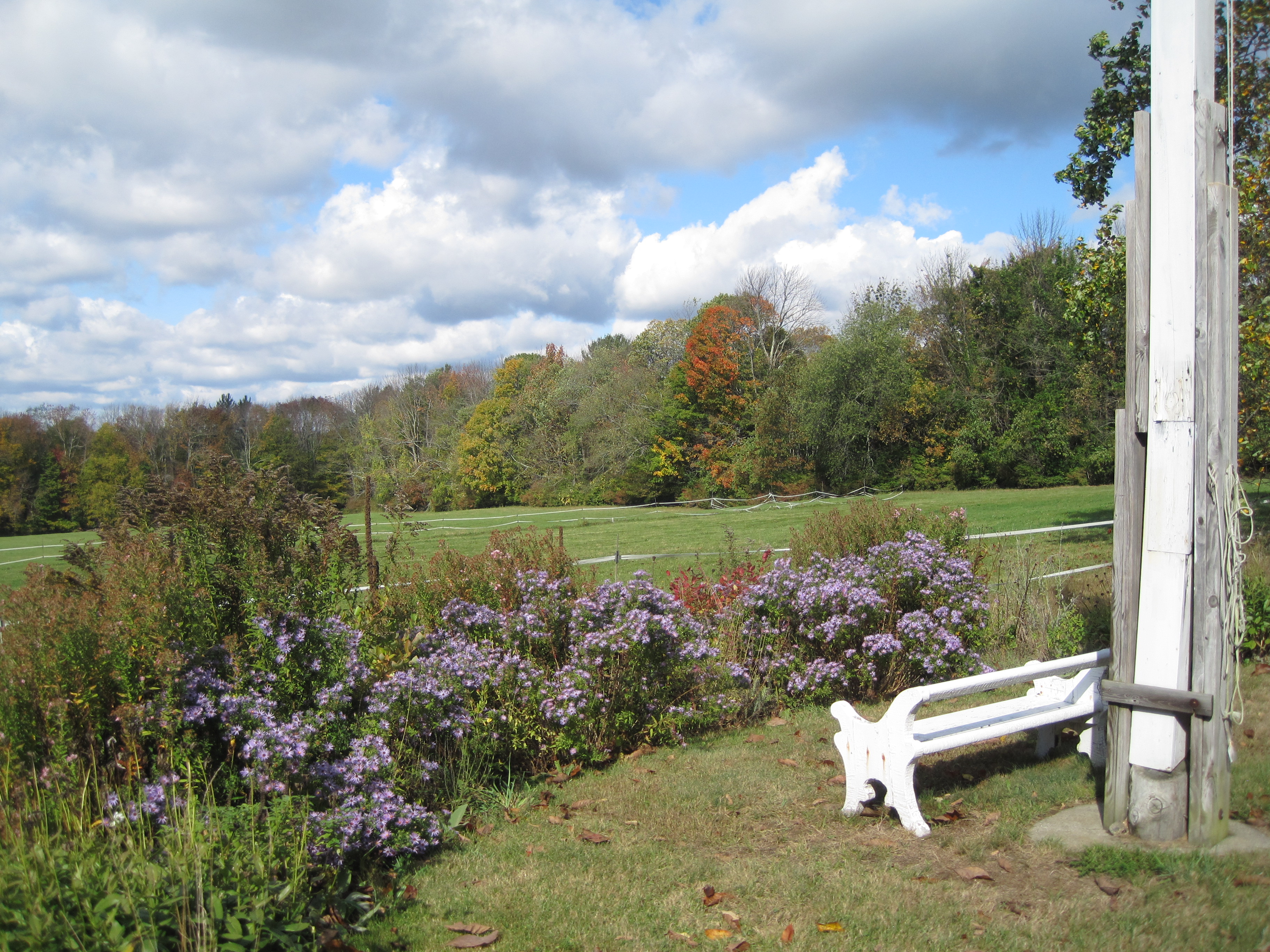
Even following a dry season, the fall asters are much happier with the shasta daisies brought under control. As are the blueberries, which had a nice touch of red to balance the dusky blue. The tall dry seed heads are the remains of the pink aster; the tall ones to the left are the goldenrods. Of course, what really makes the garden work is the bench!

017

A pleasant valley Wednesday, Oct 8 2014 

014

010

Fall in southern New England, and for once no trout fishermen in view! No complaint on the trout fishermen, but they often aren’t photogenic. This location is one of the better pools on the river.  And a nice bridge, not one of our modern decaying concrete box beams.

What is that little building? Thursday, Oct 2 2014 

It is likely obvious to most of my readers 🙂 but it occurred to me that some might be intrigued by the little building with its lovely diamond paned casements in the previous post.  An awfully fancy tool shed! For it is a tool shed these days and potting shed. But actually it is the Little Kitchen, a peculiarly Esperanza (Esperanzonian?) term.  Built in the late 1880’s (its windows match the diamond panes found elsewhere from that period, notably the Butler’s Pantry) it was a summer kitchen. Now, the main kitchen was used as well since the cook was usually cooking for around ten people; but the Little Kitchen was used for making jams, jellies, preserves, etc.  Anything that would tie up the main cook stove all day long.  With a massive vegetable garden and orchard, it is probable that it was in use almost daily throughout the summer.

It is a remarkably well built structure, we did have to square it up a few years back, but otherwise!

« Previous PageNext Page »