Ginkgo Tuesday, Nov 4 2014 

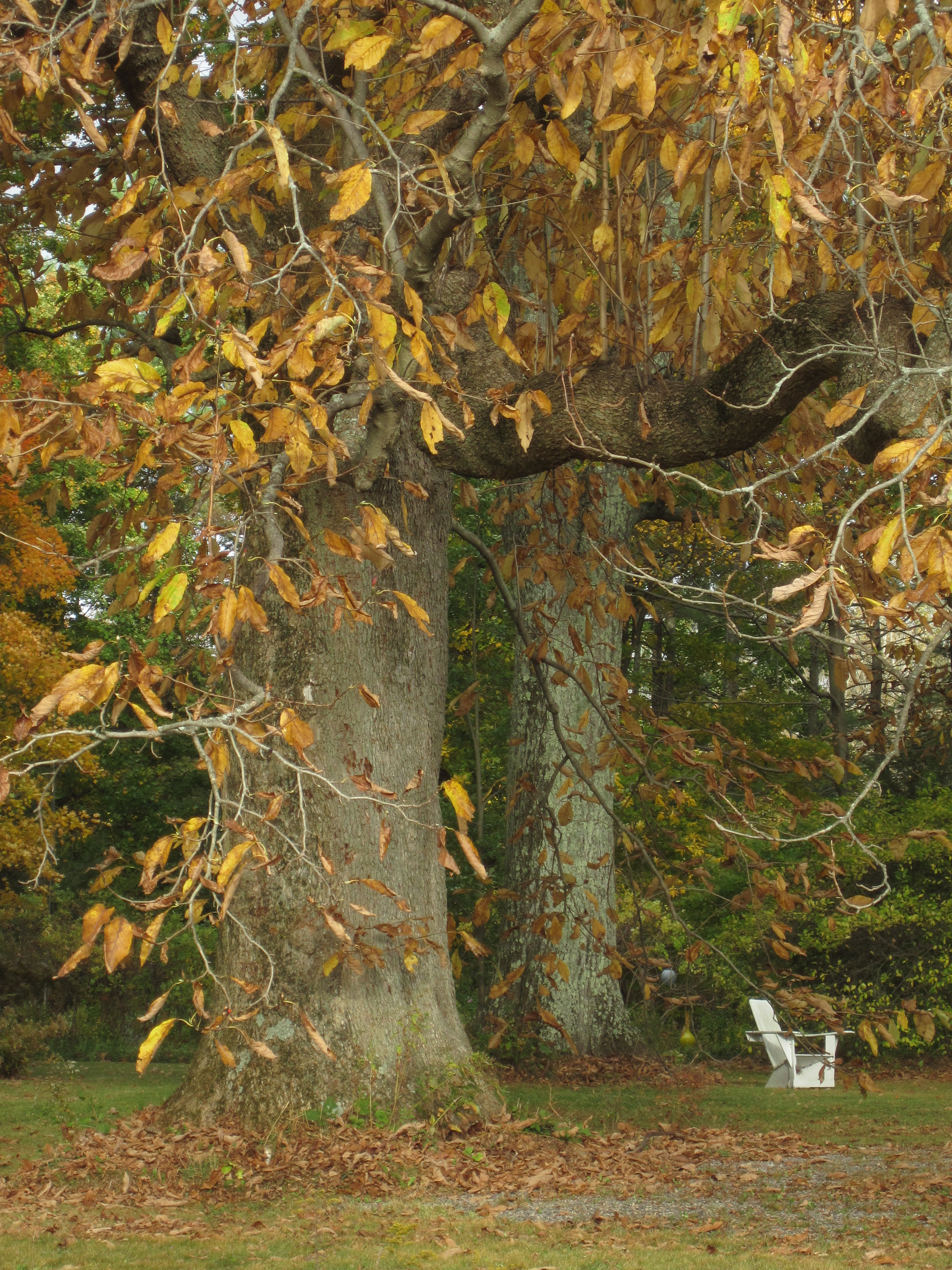
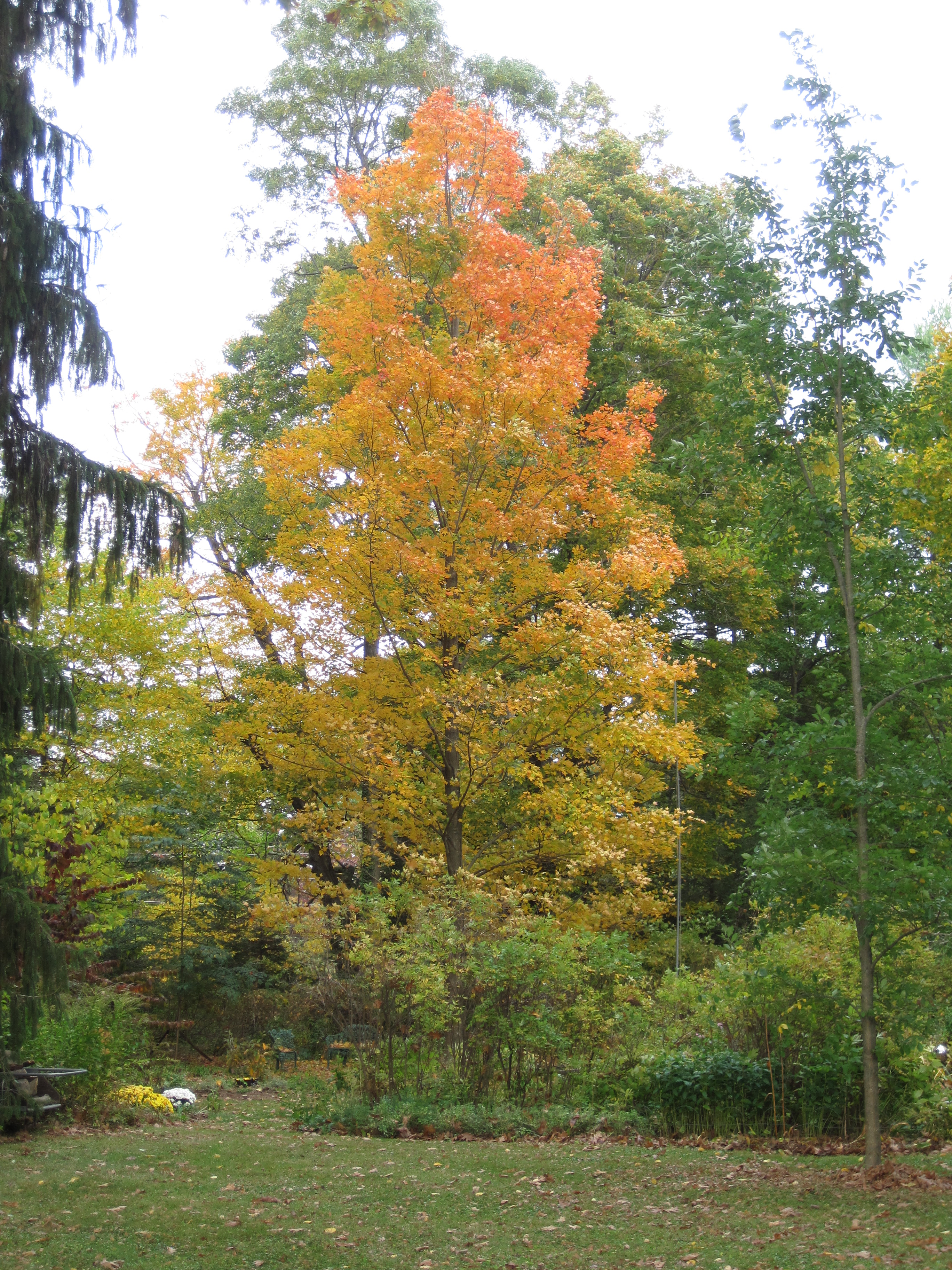
Still! waiting on frost here, let alone cold enough temperatures to make the ginkgoes drop while green; so we get to enjoy the lovely pure gold (and the easier clean-up). The big* ginkgo is a tree we just don’t think of as ‘big’; it barely hits 60 feet, which when surrounded by 80-100 foot giants isn’t much. But it definitely is getting broader in the crown, particularly to the south and east. Again not easy to notice, because of its position on the northeast corner of the house. You only really see it from down in the meadow, when one notices how the big pines are now solidly hidden, aside from their tops of course!

*The little ginkgo is spreading like mad, but mysteriously lost its leader two years ago and shows no sign of regrowth, apparently it will be much, much wider than tall.

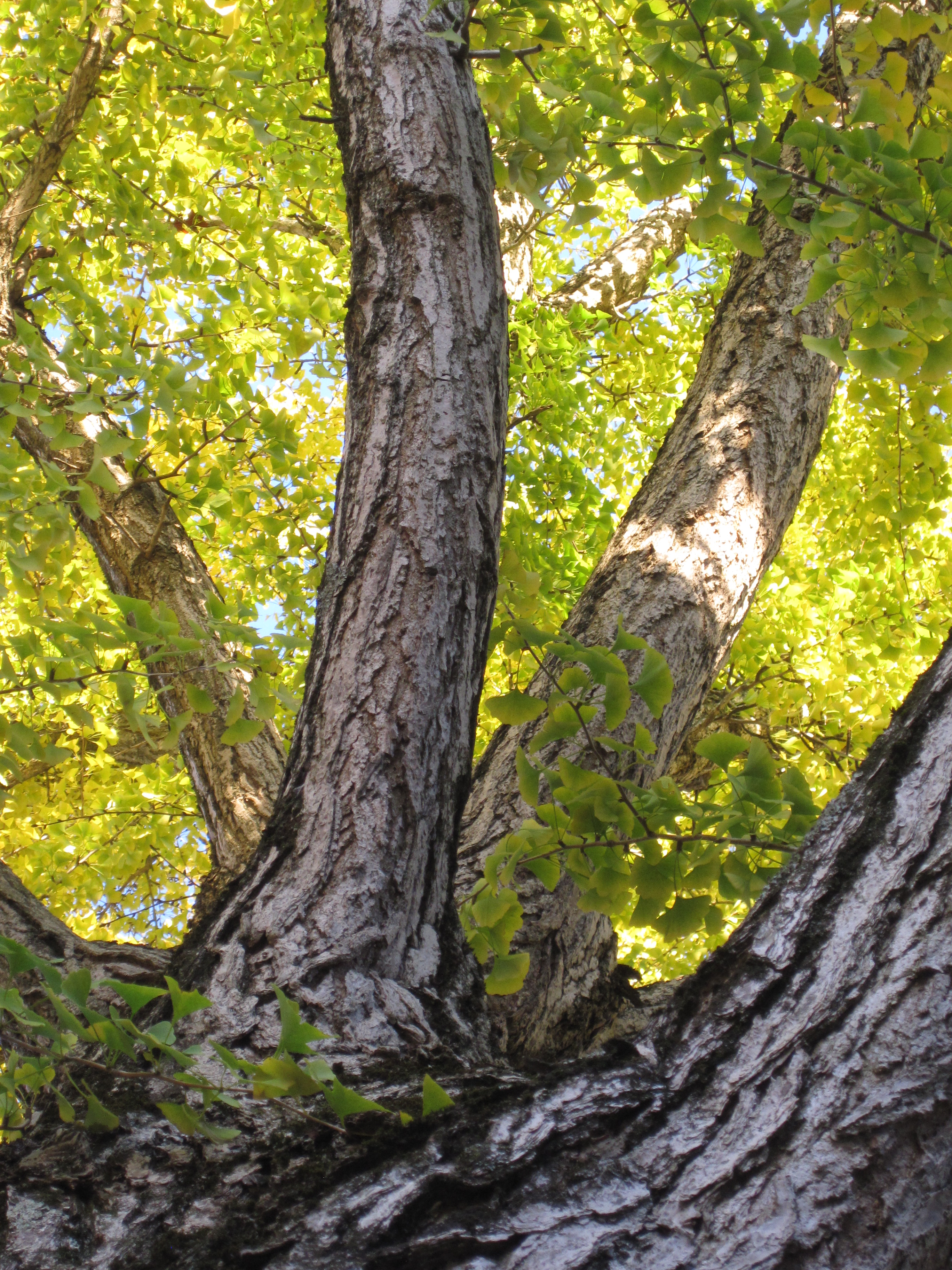
Here is a view looking up into the big ginkgo a few days ago, before it went solidly gold. The gold works in from the edges of the leaf, so the wonderful scallop pattern of the leaves is at its most prominent for just a week or so in the fall. It also works in from the top/sides of the tree, so the core is greener than the top.
004


Japanese Maples Sunday, Nov 2 2014 

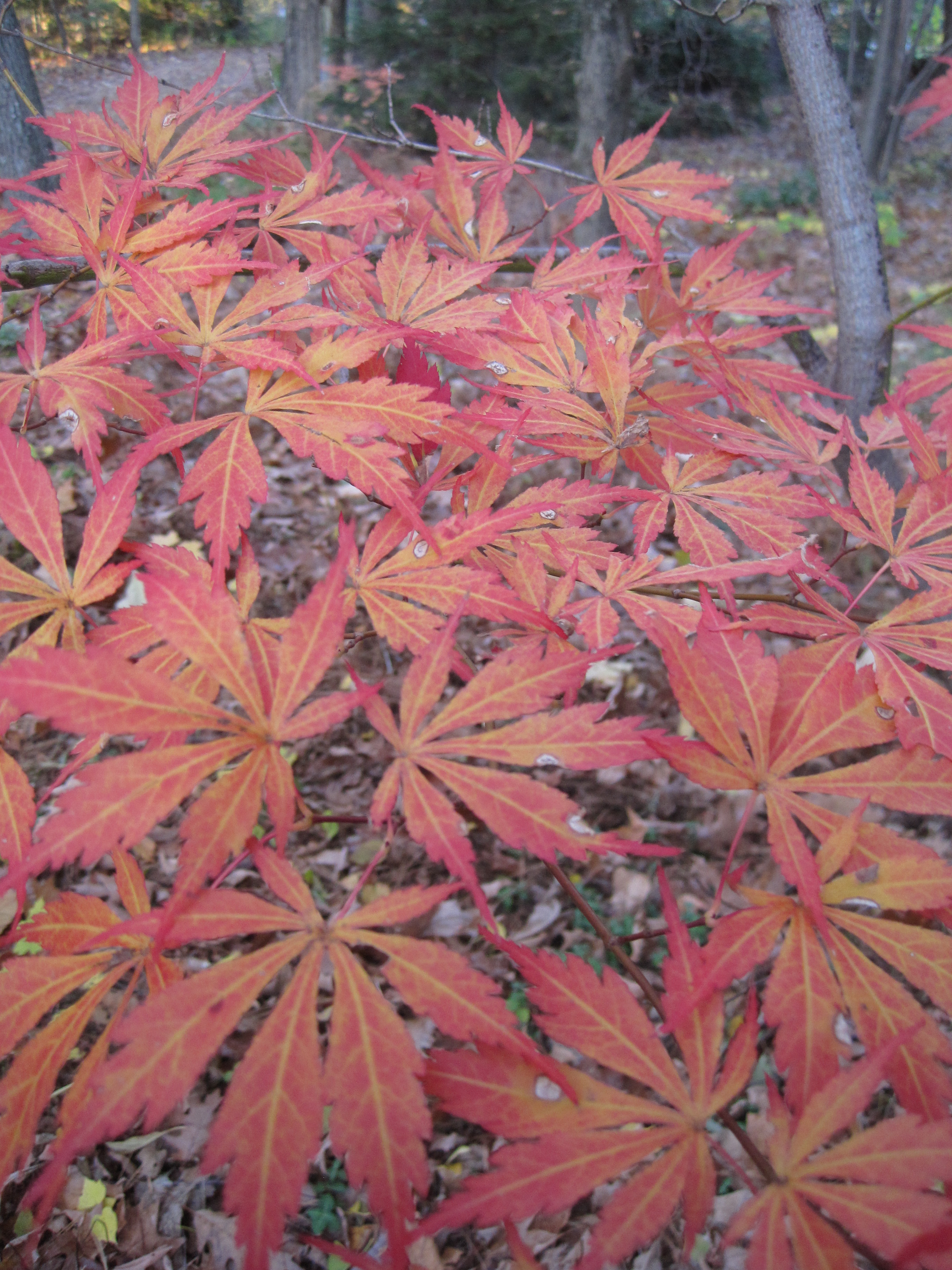
Japanese Maples aren’t usually planted for their fall color, which is a pity. Our various seedlings tend to fall into two types of color: pure scarlet or flame orange. (and a lot of muddy ones where the red just doesn’t quite do it, but is definitely red) A few are orange. The greener the bark, the oranger the coloration in the fall. In general, the orange/green have relatively green summer foliage, which is probably why they are less common (until recently we tended to select on the basis of summer foliage).  For one reason or another, we decided to plant two rather nice green ones flanking the drive, I decided I liked them, and we have since added several more. Which means that we have succeeded, somewhat not accidentally in developing what (in several decades) will be a real grouping of orange maples in the Rabbit Hole drive, an accomplishment that really was only apparent this year, as several are very small still.  The fall color, no surprise, comes from the two different parents, along with the trunk/twig coloration. The orange seems to come from the fine cut-leafed dwarf maple parent, the red from the bigger, rather coarsely cut full sized parent. The red is always a pure color with no shading on the leaf. The orange tends to shade towards the veins/edges, creating an appearance similar to Stewartia or Dogwoods, where the tree is not a single color.

Unfortunately, the coarser shape appears to be the dominant gene in determining leaf shape, though the orange ones are slightly finer. Only one ever approached the parent type, and it died on me (naturally). Red is also the more common fall color.

Red:

007

002

Orange: (all of these are still fairly small), but you can see the green cast to the bark on branches over about 2 years in age, which is the giveaway; the reds have purple bark.

013

Your not random photo Friday, Oct 31 2014 

One of today’s accomplishments was lifting the gladioli. A number had doubled and or made little bulblets, so it was a good year for them. Now if I can just figure out how to store them this year in a rodent proof fashion…

015

And sometimes you lose Thursday, Oct 30 2014 

For the last few years, we have had remarkable success with keeping the critters at bay.  Until a few days ago, that is. In the span of the last two days: a 30 foot square patch of crocus, half a row of kale, the majority of the chard, about a third of the parsley, whatever peas were left, the tops of the carrots and parsnips, some sections of oakleaf hydrangea, one yew, and (most insulting) one, prized turban type winter squash.

The crocus was a vole family, the squash probably mice, the rest were deer* in the vegetable garden.  Measures have been taken to deal with this ranging from moving the rest of the squash, to Mole Med (a castor oil based product) in the crocus, to the ever pleasant Liquid Fence for the deer. What I would like to know with the latter is, why does the wind always shift so I get it on me?

It could have been worse, the umbrella pine, hollies, azaleas, English oaks, and various other slow growing things were not chewed on.  Still!


*The temptation to take a pot shot from the back porch is strong….

Wondrous works Monday, Oct 27 2014 

‘Will you cherish the wondrous works of God, and protect the beauty and integrity of all creation?’

This was the text of a resolution passed by the Episcopal Diocese of Connecticut on Saturday as a proposed sixth baptismal question (it now has to be run through the General Convention twice before being officially adopted, so 2018 at the earliest). As a lay delegate to the convention, this resolution was one of several that I had a particular interest in.

Those of you who know me, know that I have very little patience with the ‘green’ movement. And when this question was posed last year, it had serious problems with obvious political overtones: ‘trigger words’ and very little Scriptural grounding. A year later, and the kinks were worked out. It now reflects the fundamental truth which has been so often warped: the universe is wondrous and we are part of it.

So what does this have to do with this blog? Well today, I spent time working on the annual cutting of unwanted brush up on the house lot, Holly spent time working in the garden, and Jamie spent time cutting the trees in the Spring Lot that I had marked for removal.

The thing is, the ongoing thinning of the Spring Lot, which will eventually result in a towering* grove of Maple, Oak, Beech, Black Birch, and Ash is a long running project. Its final glory won’t be evident for about a century or so. But in a century or so, God willing, someone will have a stand of forest giants. As I have enjoyed the trees that are giants now, so will they. A cathedral of trees and a pond caught at the break of the hill, where the sunset falls. I won’t see them, and the land almost certainly won’t still be in the family. But that does not matter. It will be there in glory.


*when the little guys, that don’t even hit the lower branches of the canopy are 50 feet in height…..

Every once in awhile Friday, Oct 17 2014 

011

Almost garish Thursday, Oct 16 2014 

004

025

Asters Friday, Oct 10 2014 

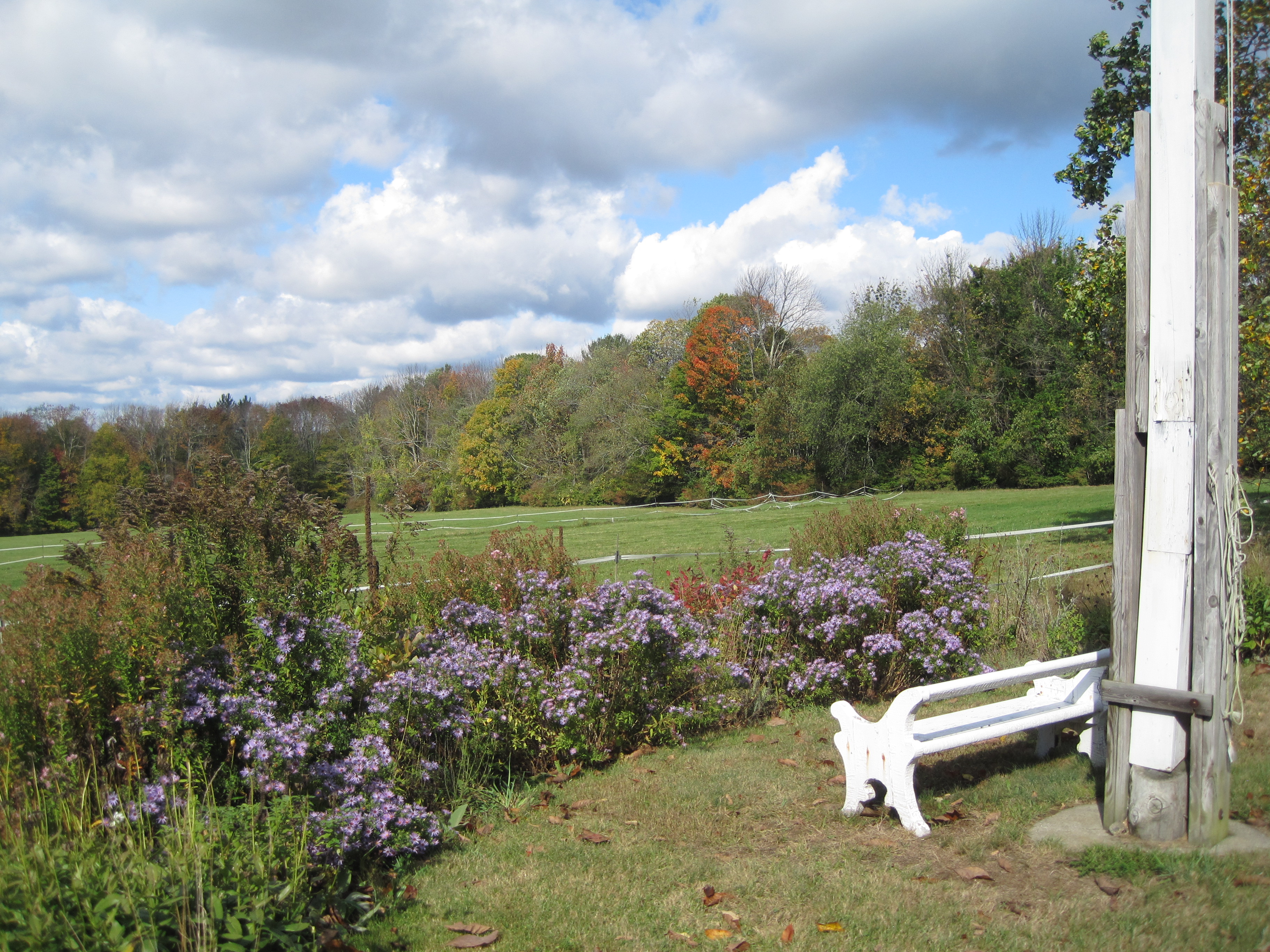
Even following a dry season, the fall asters are much happier with the shasta daisies brought under control. As are the blueberries, which had a nice touch of red to balance the dusky blue. The tall dry seed heads are the remains of the pink aster; the tall ones to the left are the goldenrods. Of course, what really makes the garden work is the bench!

017

New garden picture Saturday, Oct 4 2014 

008

A new view! From left to right: inkberry, ninebark, russian cyprus, witch-hazel, itea (hiding), enkianthus.  The bright yellow in the mid ground are some chrysanthemums, to the right of them are the azaleas and double-file viburnums; the rose garden (which will be quite happy to have more sun) is mid-ground left.

Bleeding trees! Wednesday, Oct 1 2014 

and buildings!

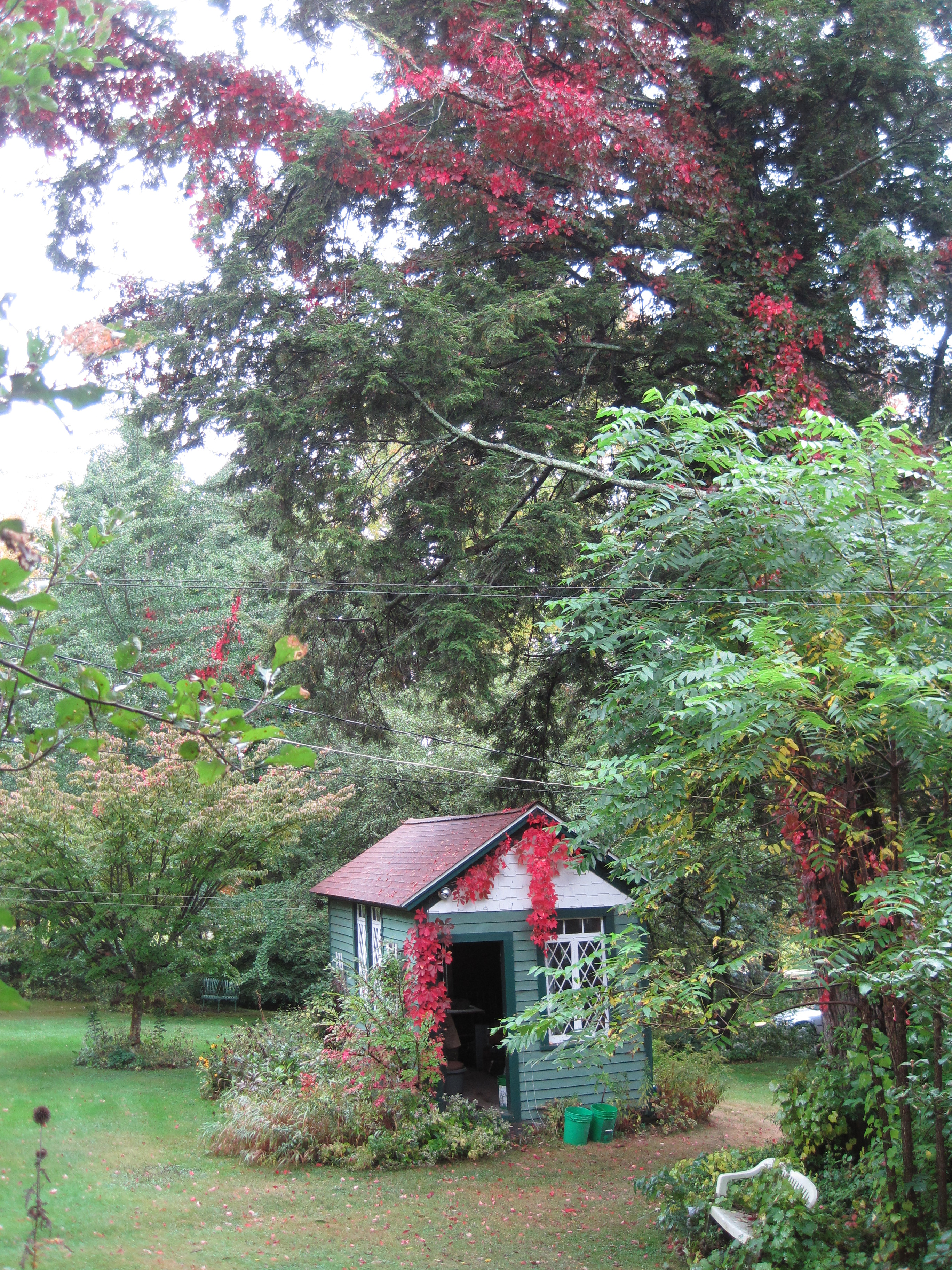
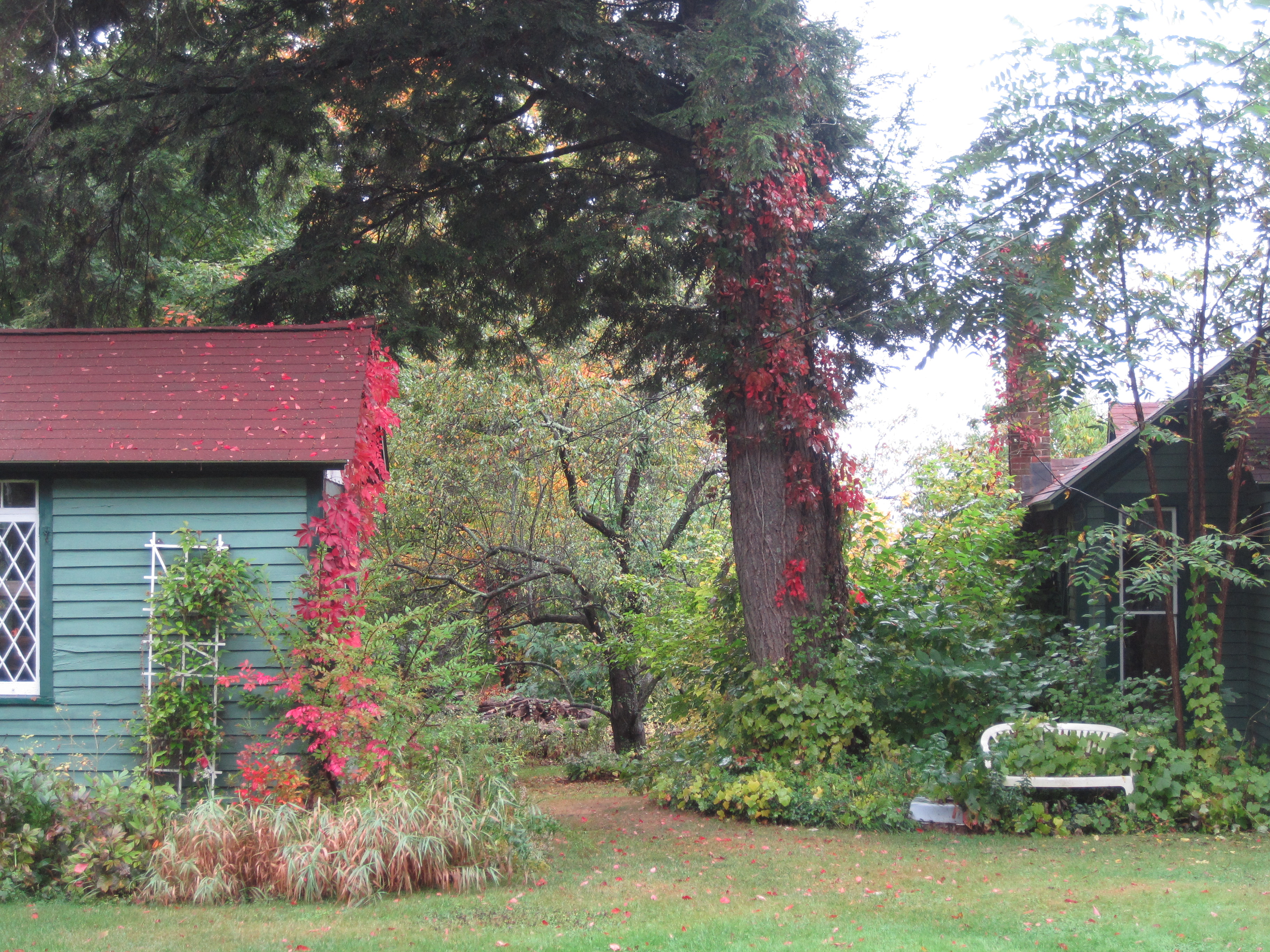
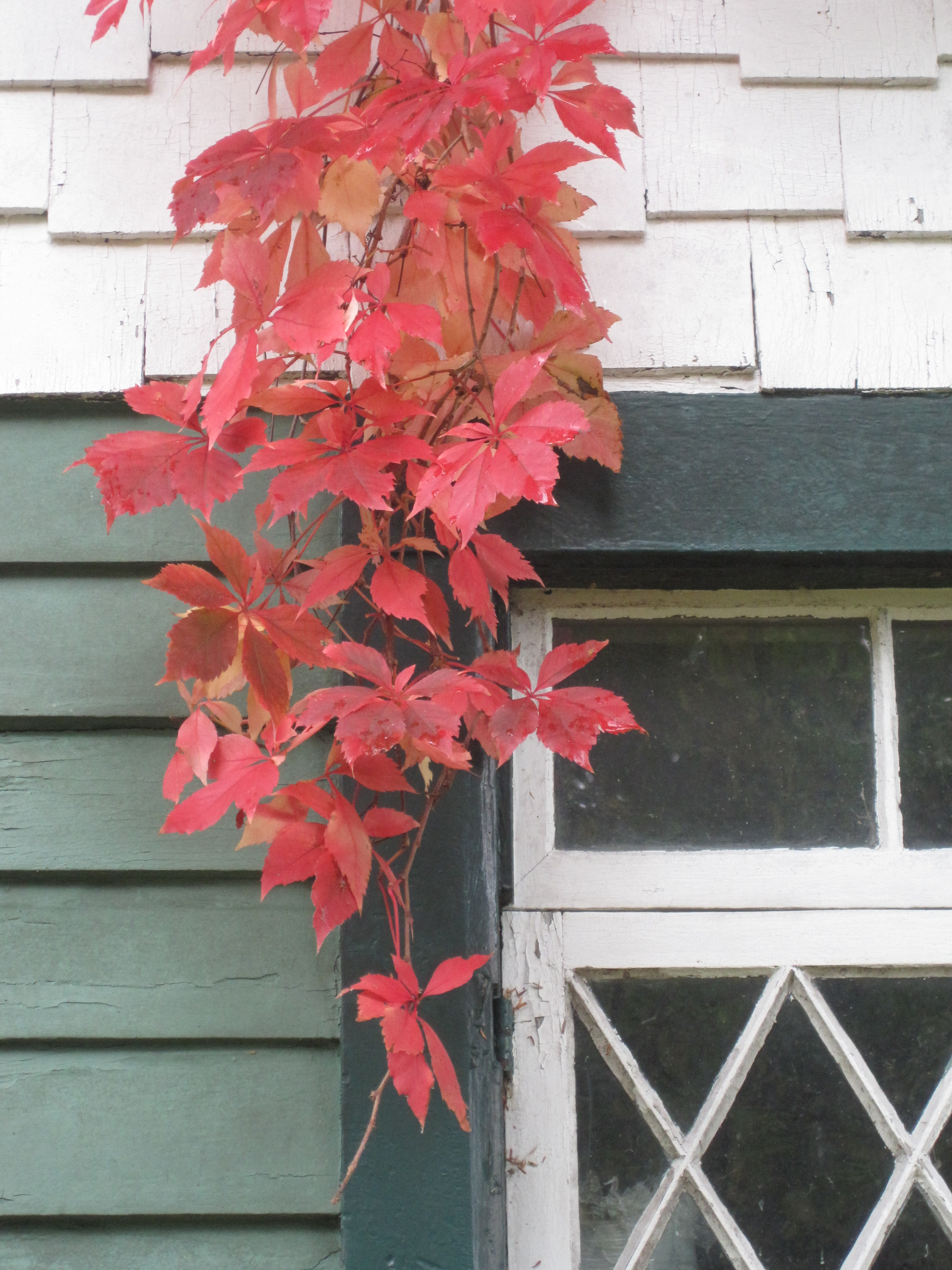
Well not really, actually. The woodbine (virginia creeper) is particularly happy this year. These pictures don’t do justice to the one growing in the hemlock at all, nor to festooned chimney on the little house (not visible in the first picture). But take note of the gingko tree in the background, the woodbine has quite quietly established itself in it.

009

I know, a bit overgrown…

013

Woodbine in the gingko:

012

011

« Previous PageNext Page »