Still hanging in there!

gardening and Modern Photos cercis canadensis, eastern redbud, gardening, photography 20:50
to this…..seems a bit long!

But there are a lot of projects to get done inside in the meantime. Not much more that can be done outside. The ground is frozen and the wind is hunting hard across the forest.
Comments Off on Six months
gardening and Landscapes and Trees gardening, weather 10:25
About two fluffy, sticky inches likely to be gone by evening. Very pretty. (remind me of that in March…) Driving home from a meeting last night, just as it was turning from rain to snow, was gorgeous: cut crystals in the headlights.
What is distinctly odd about it though is that we actually have not had a killing frost yet. But I am glad that we spent time alternately mulching into the lawn and raking up leaves yesterday. We are trying a new tactic on leaves this year. Instead of collecting them with the lawnmower, we are running the lawnmower with the leaf catcher attachment, but no bags, spreading the cut leaves far and wide as we go.* There actually is a noticeable difference to the feel of the North Lawn* where we have done this: all those oak and magnolia leaves are back on the lawn in little pieces and it is definitely springier/softer, even in another year of nasty fall drought. The question is whether it will work with the denser ginkgo leaves, we shall see next spring. It is much better than taking dozens of bags of leaves off the lawn each year. Maybe it will even slow the appalling subsidence of the lawn!
*I am pondering whether the pipe could rotated a bit so it makes a better rooster tail and wider spread….
**The North Lawn is dominated by two full sized Black oaks, two Cucumber Magnolias (one at full size), a good sized Tulip tree, a mature ginkgo, and three young trees: elm, maple, and beech. There are A lot of leaves.
Comments Off on First Snow!
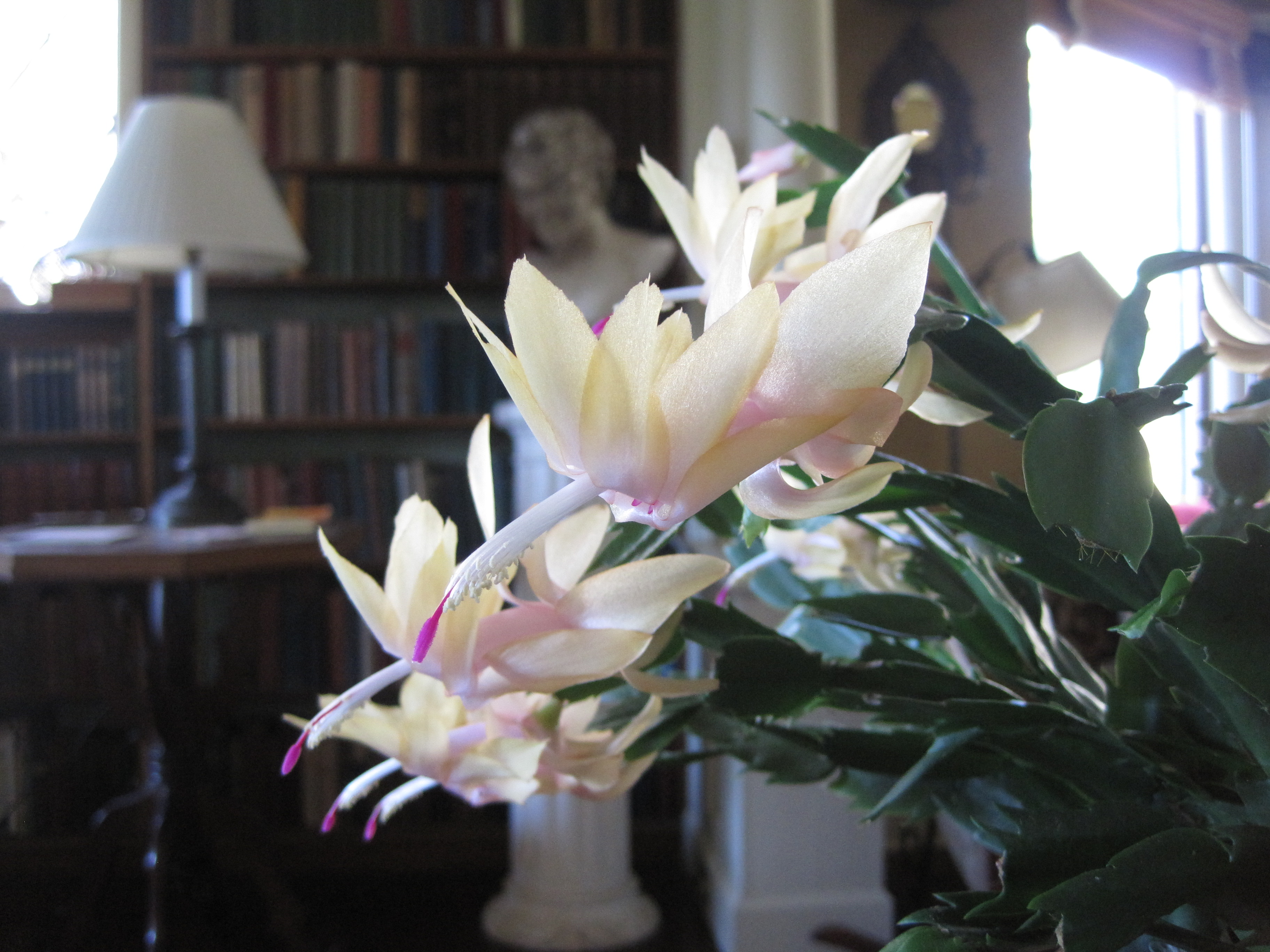
gardening christmas cactus, gardening 18:10
has left the building or something. So you are stuck with a picture again. This time a set of highly confused Christmas cacti blooming like mad. Naturally, they will be done by Thanksgiving, which is when there are guests this year. Grrr.

Comments Off on The muse
gardening and Landscapes and Modern Photos gardening, landscapes, photography 23:03
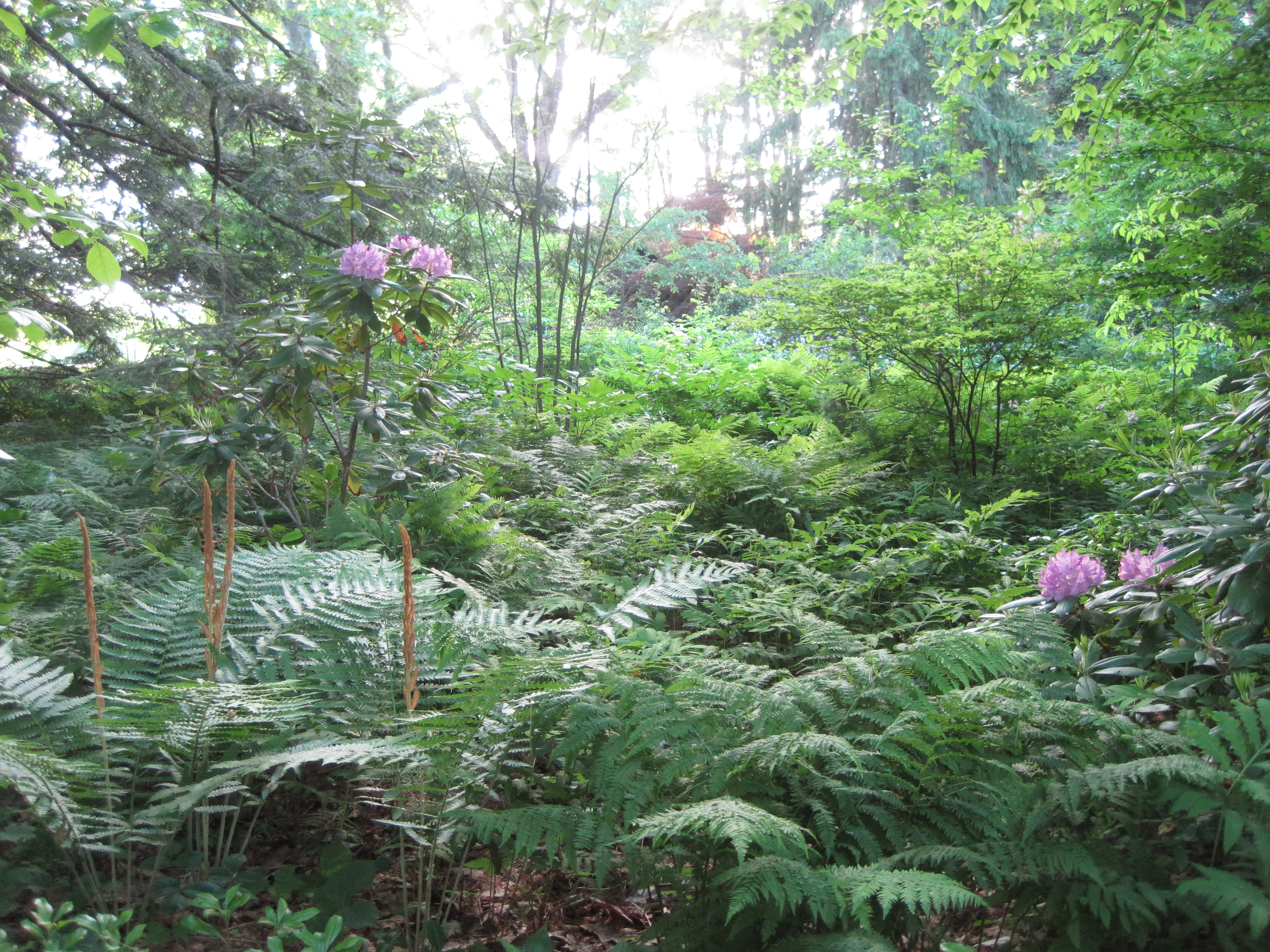
Hard to believe that this:

Was this back in June!
Comments Off on Seasons change
gardening and Modern Photos and Trees and Uncategorized gardening, ginkgo, photography 22:52
Still! waiting on frost here, let alone cold enough temperatures to make the ginkgoes drop while green; so we get to enjoy the lovely pure gold (and the easier clean-up). The big* ginkgo is a tree we just don’t think of as ‘big’; it barely hits 60 feet, which when surrounded by 80-100 foot giants isn’t much. But it definitely is getting broader in the crown, particularly to the south and east. Again not easy to notice, because of its position on the northeast corner of the house. You only really see it from down in the meadow, when one notices how the big pines are now solidly hidden, aside from their tops of course!
*The little ginkgo is spreading like mad, but mysteriously lost its leader two years ago and shows no sign of regrowth, apparently it will be much, much wider than tall.
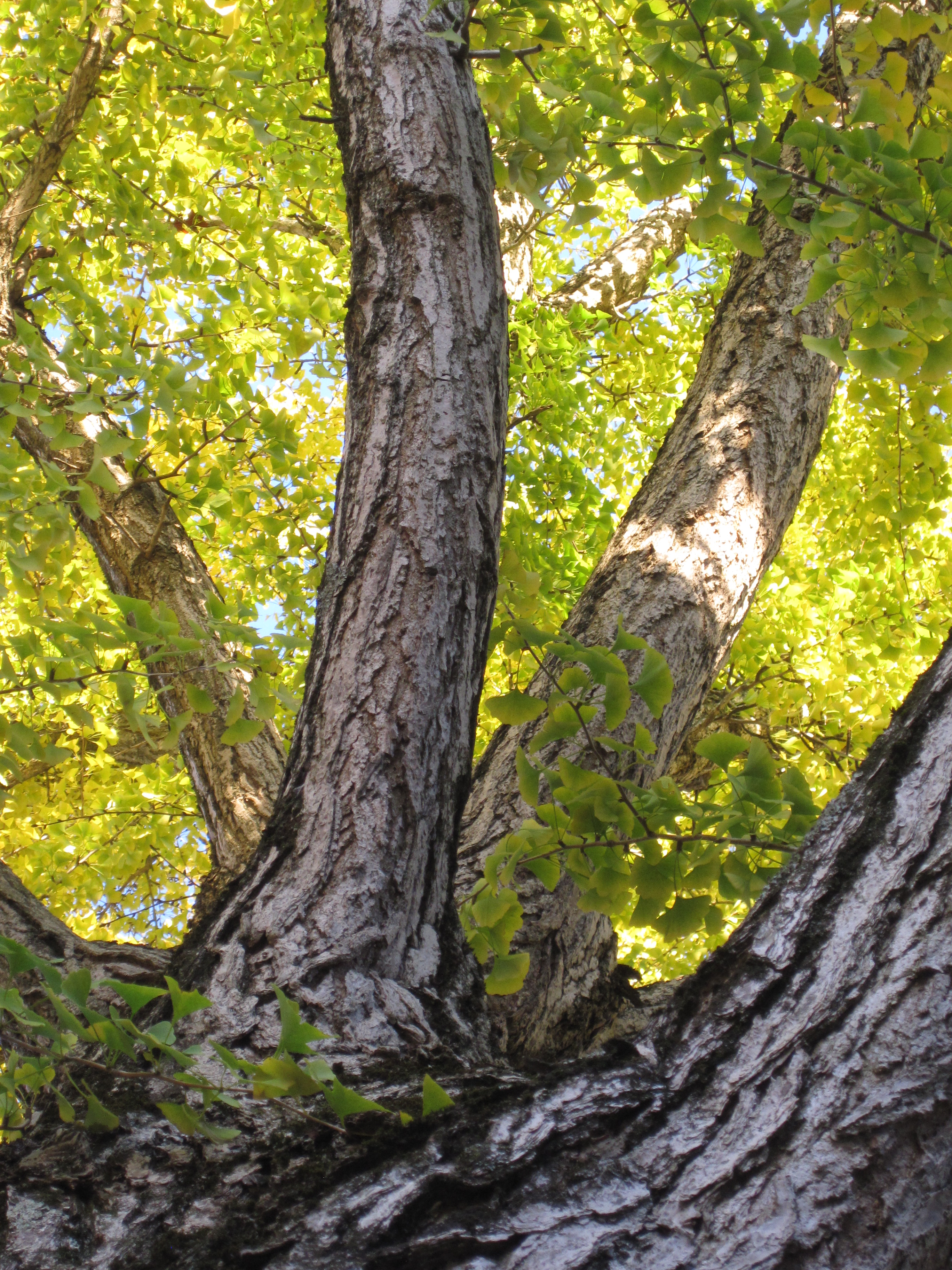
Here is a view looking up into the big ginkgo a few days ago, before it went solidly gold. The gold works in from the edges of the leaf, so the wonderful scallop pattern of the leaves is at its most prominent for just a week or so in the fall. It also works in from the top/sides of the tree, so the core is greener than the top.
Comments Off on Ginkgo
gardening and Landscapes and Modern Photos gardening, japanese maples, photography 20:29
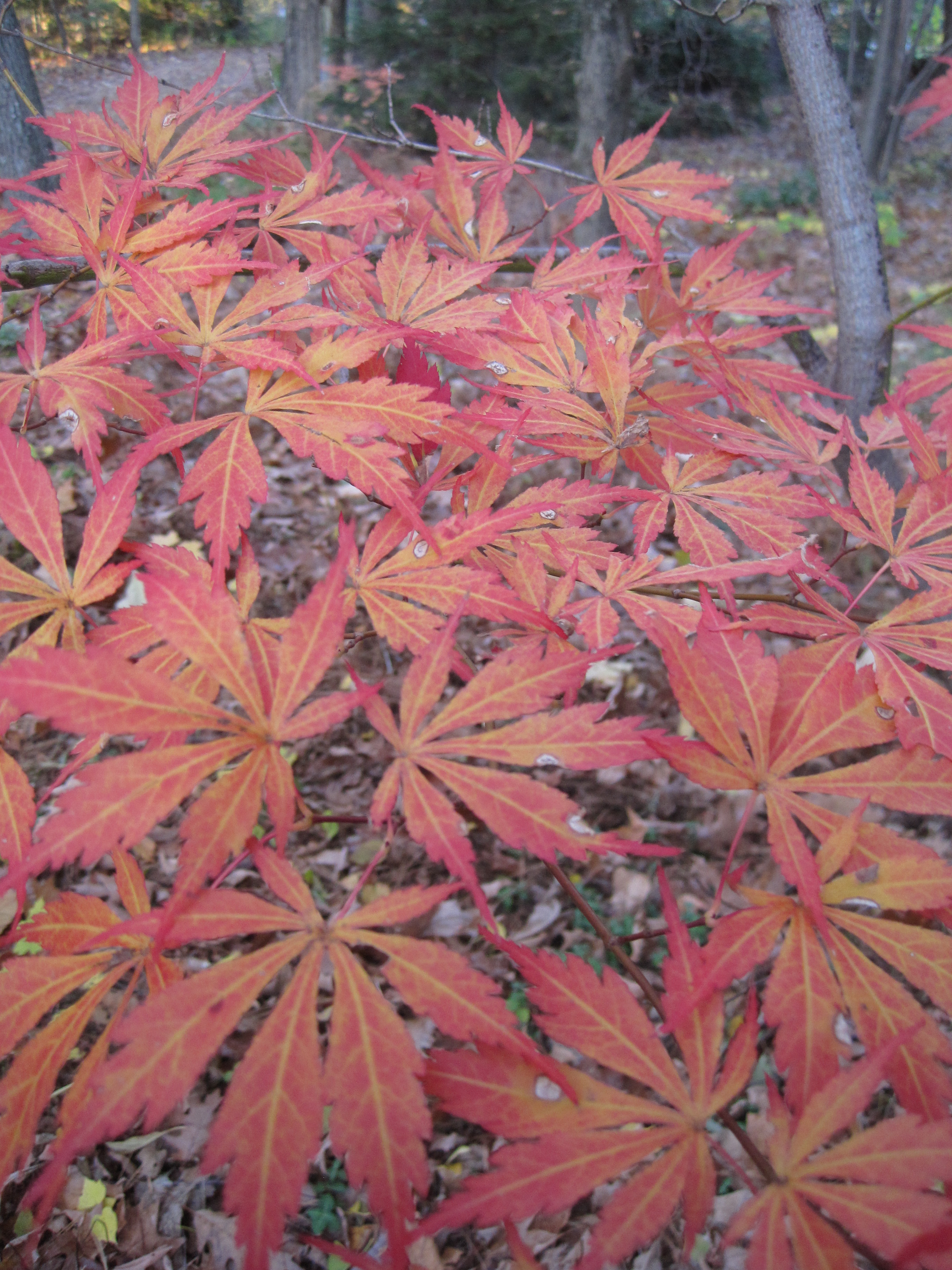
Japanese Maples aren’t usually planted for their fall color, which is a pity. Our various seedlings tend to fall into two types of color: pure scarlet or flame orange. (and a lot of muddy ones where the red just doesn’t quite do it, but is definitely red) A few are orange. The greener the bark, the oranger the coloration in the fall. In general, the orange/green have relatively green summer foliage, which is probably why they are less common (until recently we tended to select on the basis of summer foliage). For one reason or another, we decided to plant two rather nice green ones flanking the drive, I decided I liked them, and we have since added several more. Which means that we have succeeded, somewhat not accidentally in developing what (in several decades) will be a real grouping of orange maples in the Rabbit Hole drive, an accomplishment that really was only apparent this year, as several are very small still. The fall color, no surprise, comes from the two different parents, along with the trunk/twig coloration. The orange seems to come from the fine cut-leafed dwarf maple parent, the red from the bigger, rather coarsely cut full sized parent. The red is always a pure color with no shading on the leaf. The orange tends to shade towards the veins/edges, creating an appearance similar to Stewartia or Dogwoods, where the tree is not a single color.
Unfortunately, the coarser shape appears to be the dominant gene in determining leaf shape, though the orange ones are slightly finer. Only one ever approached the parent type, and it died on me (naturally). Red is also the more common fall color.
Red:


Orange: (all of these are still fairly small), but you can see the green cast to the bark on branches over about 2 years in age, which is the giveaway; the reds have purple bark.
Comments Off on Japanese Maples
gardening and Modern Photos gardening, gladiolus, photography 17:42
One of today’s accomplishments was lifting the gladioli. A number had doubled and or made little bulblets, so it was a good year for them. Now if I can just figure out how to store them this year in a rodent proof fashion…

Comments Off on Your not random photo
For the last few years, we have had remarkable success with keeping the critters at bay. Until a few days ago, that is. In the span of the last two days: a 30 foot square patch of crocus, half a row of kale, the majority of the chard, about a third of the parsley, whatever peas were left, the tops of the carrots and parsnips, some sections of oakleaf hydrangea, one yew, and (most insulting) one, prized turban type winter squash.
The crocus was a vole family, the squash probably mice, the rest were deer* in the vegetable garden. Measures have been taken to deal with this ranging from moving the rest of the squash, to Mole Med (a castor oil based product) in the crocus, to the ever pleasant Liquid Fence for the deer. What I would like to know with the latter is, why does the wind always shift so I get it on me?
It could have been worse, the umbrella pine, hollies, azaleas, English oaks, and various other slow growing things were not chewed on. Still!
*The temptation to take a pot shot from the back porch is strong….
Julie's Pond and Landscapes gardening 22:49
There is enough left, plus a picture or two, that reconstructing this bench which once looked out over the pond is possible. I don’t think we will rebuild the planters, however. Nor will we attempt to replant the hyacinth garden, though it must have been quite elegant in a Victorian fashion: too shady for one thing, leaving aside the practical problems!
Here is Morris Smith, circa 1885, looking east:
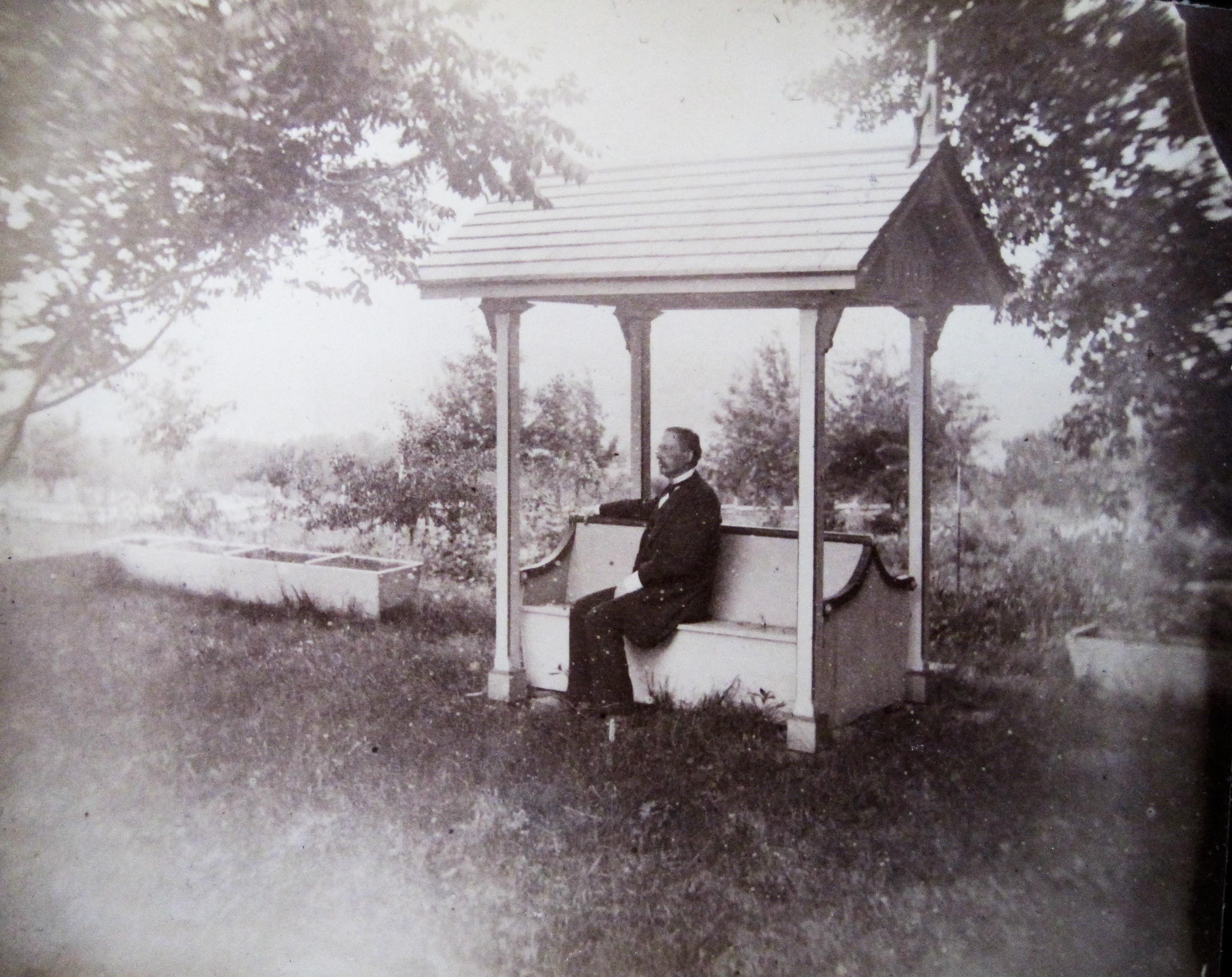
Looking up at the remains of the bench today: the triangular shape mid-ground, right.

Comments Off on Winter Project?
 Acair Fearann