Late July garden Friday, Aug 8 2014 

051

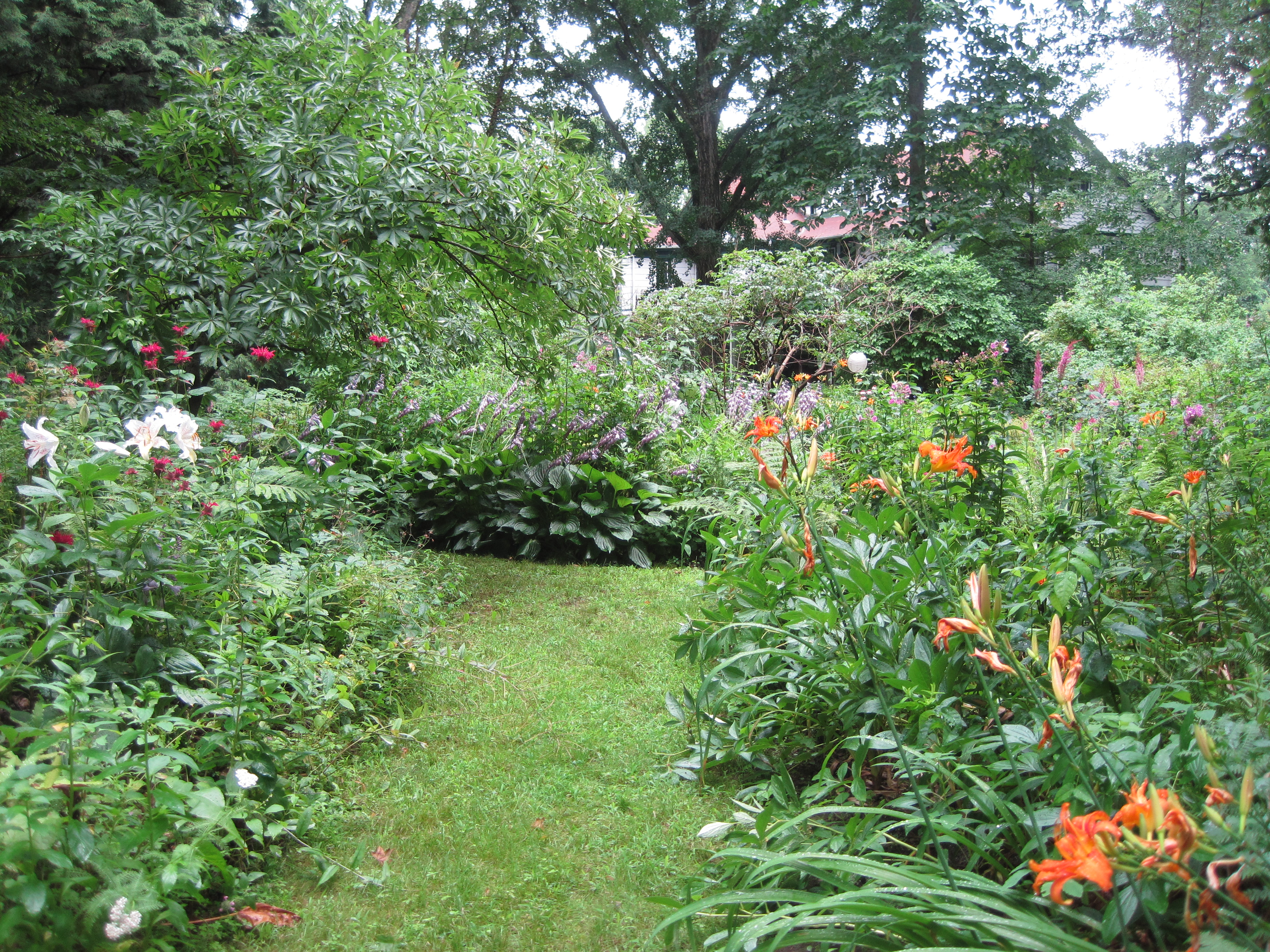
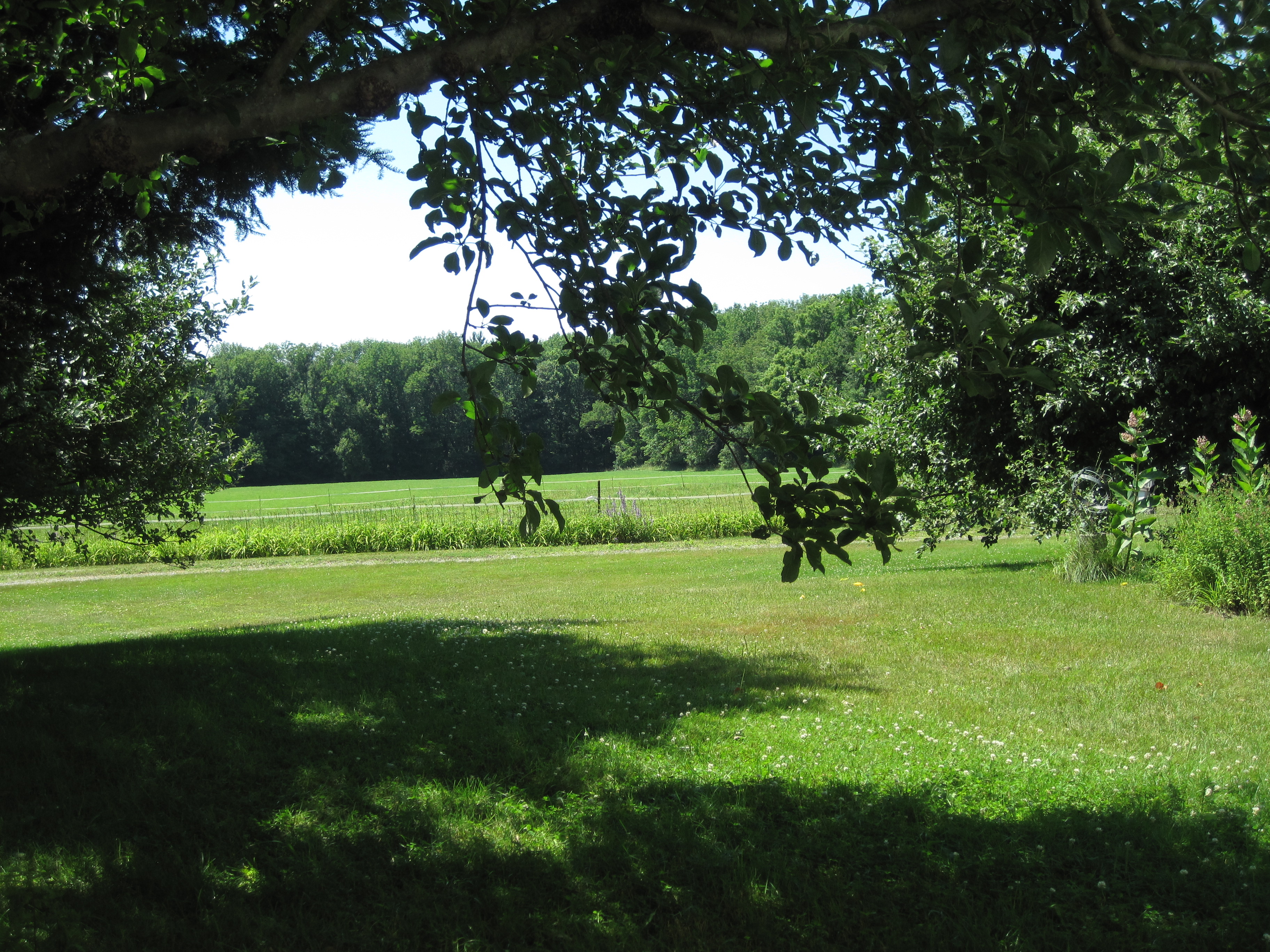
Left: Jacob Kline and Raspberry Monarda, Casa Blanca Oriental Lily; center, old standard blue hosta; right, regular orange ditch/day lily, tall, late pink Ostrich Plume astilbe.

Everything except the lilies and monarda are done now, but some other things have come along.

Simple Gifts Thursday, Aug 7 2014 

Cod, fresh corn, and green beans (from the garden) for supper. Simple gifts!

In a change from supper. There are many things in the world, both local and not, that I deplore; but there is great beauty nonetheless.  The beauty of the most simple sunflower; the thistles, monarda, yarrows, a multitude of flowers loaded with bees, butterflies, moths, and hummingbirds; the peace of the pond where the wren (pair) was busily foraging in and amongst the deadfall; and where a solitary wood-duck was taking its ease. There, uncounted frogs fled from my steps. There the young buttonbushes, spicebushes, and maples flourish. I can do little indeed, but here I can take care.

Beneath the Library Windows Tuesday, Aug 5 2014 

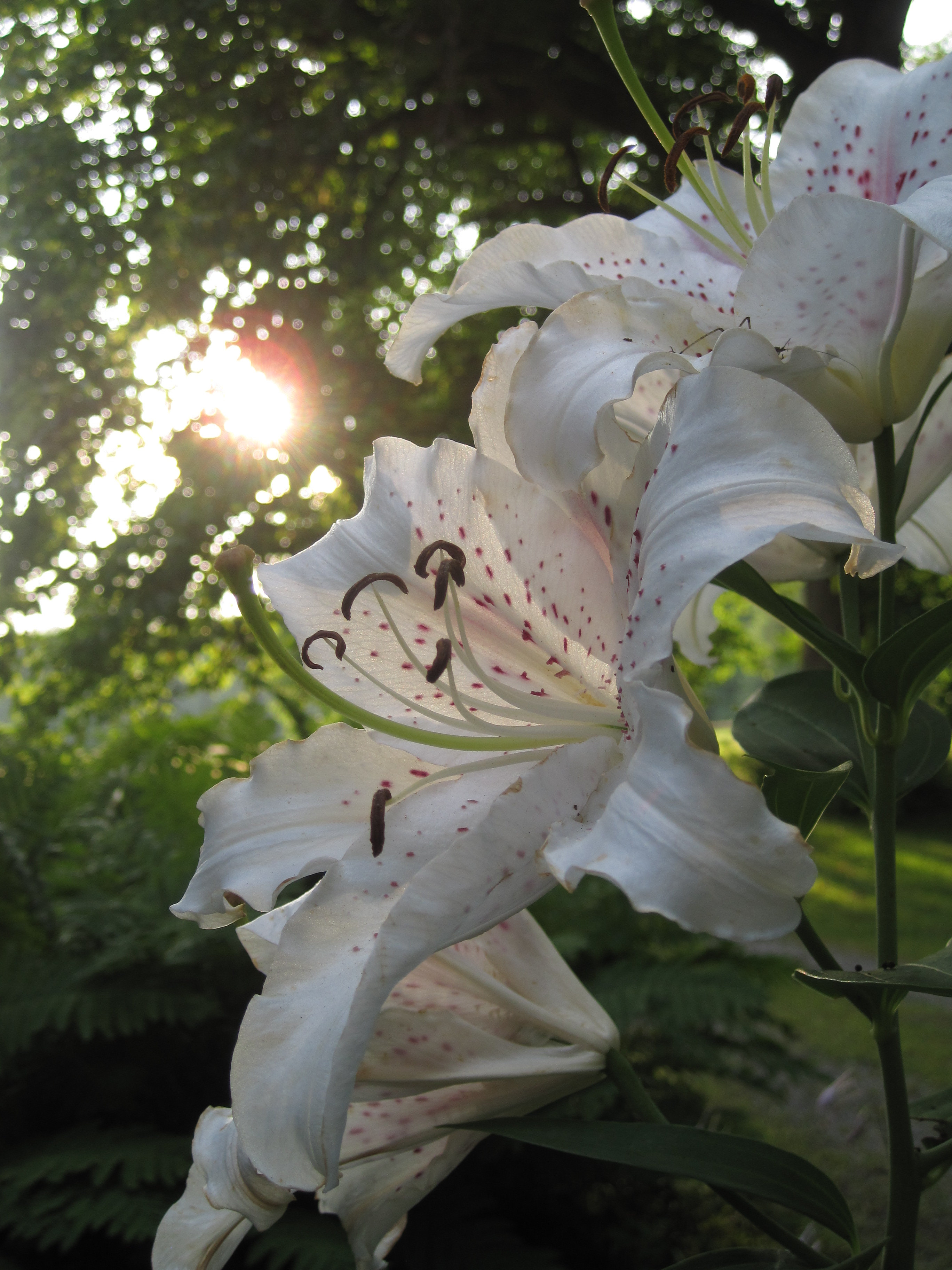
At dusk…Oriental lilies, what could be better?

006

The singing tree Sunday, Aug 3 2014 

The big, lone hemlock towers above the south lawn at a good 75 feet plus in height. It is one-sided, having lost its twin which stood about five feet to the north some years ago, and during the winter it looks quite thin indeed.  But not in the summer, it gets additional leaves in the summer…. For most of its height, and on many of its branches it is covered in woodbine (Virginia Creeper). In the fall the entire north side of the tree is red. The woodbine vines at ground level are nearly two inches in diameter.

Woodbine blooms in late July here, hundreds upon hundreds, perhaps thousands, of tiny flowers.  So I wasn’t too surprised when I walked under the tree the other day, I knew what I was hearing.  The low, barely audible hum, almost as if there was a distant generator running somewhere. The same sort of smooth, constant hum one associates with transformers or big power-lines.  But only audible directly beneath the tree, step out from underneath and you can no longer hear it.  The entire tree must be loaded with every sort of bee imaginable. The birds abandon the tree for a few days, not surprisingly! They’ll be back and in the late fall will have direct access to the biggest bird-feeder imaginable.

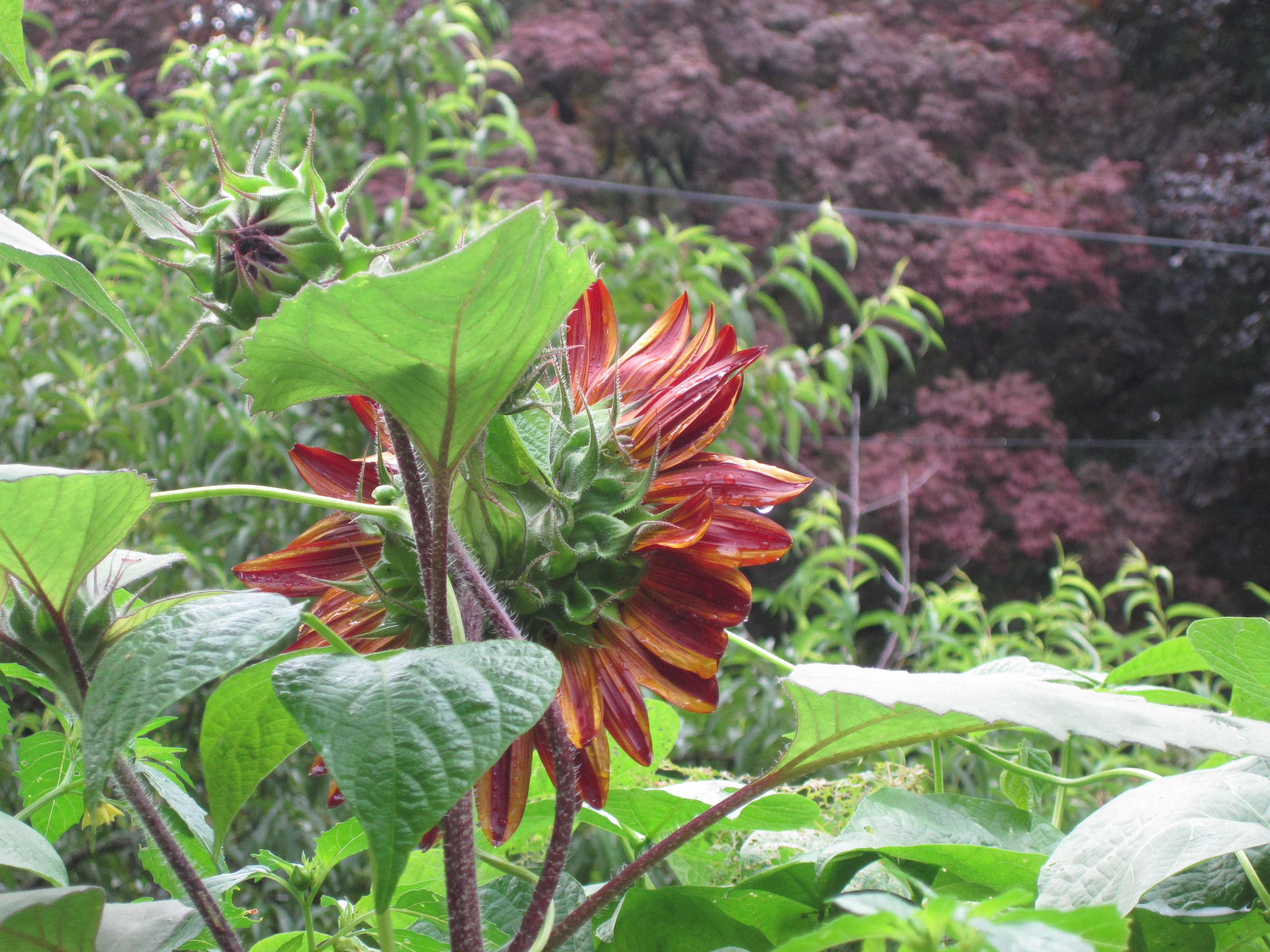
Sunflower: Chianti Tuesday, Jul 29 2014 

064

Late July, Esperanza Thursday, Jul 24 2014 

There is much I could write about, much I could take photos of…

But instead, I would ask you to consider the scent of white Oriental lilies, bigger than the span of a hand, that incredible floral scent, for some of us it reminds one at once of Easter (the promise of resurrection if not eternal than at least of the coming season) and of high summer: that time of long days and great bounty when the garden overflows and people slow down just a little.

Consider also, a path carved towards the setting sun through the high grass, this year the shadows and the short grass give the feeling of carved jade. Or perhaps a flaming orange line, set against the green hills, all the daylilies blooming and when the sun sinks all that glorious color will fail…but tomorrow, perhaps? Maybe the steel-blue hostas bowing down across the paths in the deep shade?

Or maybe the sun, golden, setting now. By the week’s end it will be setting on the western hedgerow and not on the northern hedgerow. How fleeting is this summer!

Sky rockets Monday, Jul 21 2014 

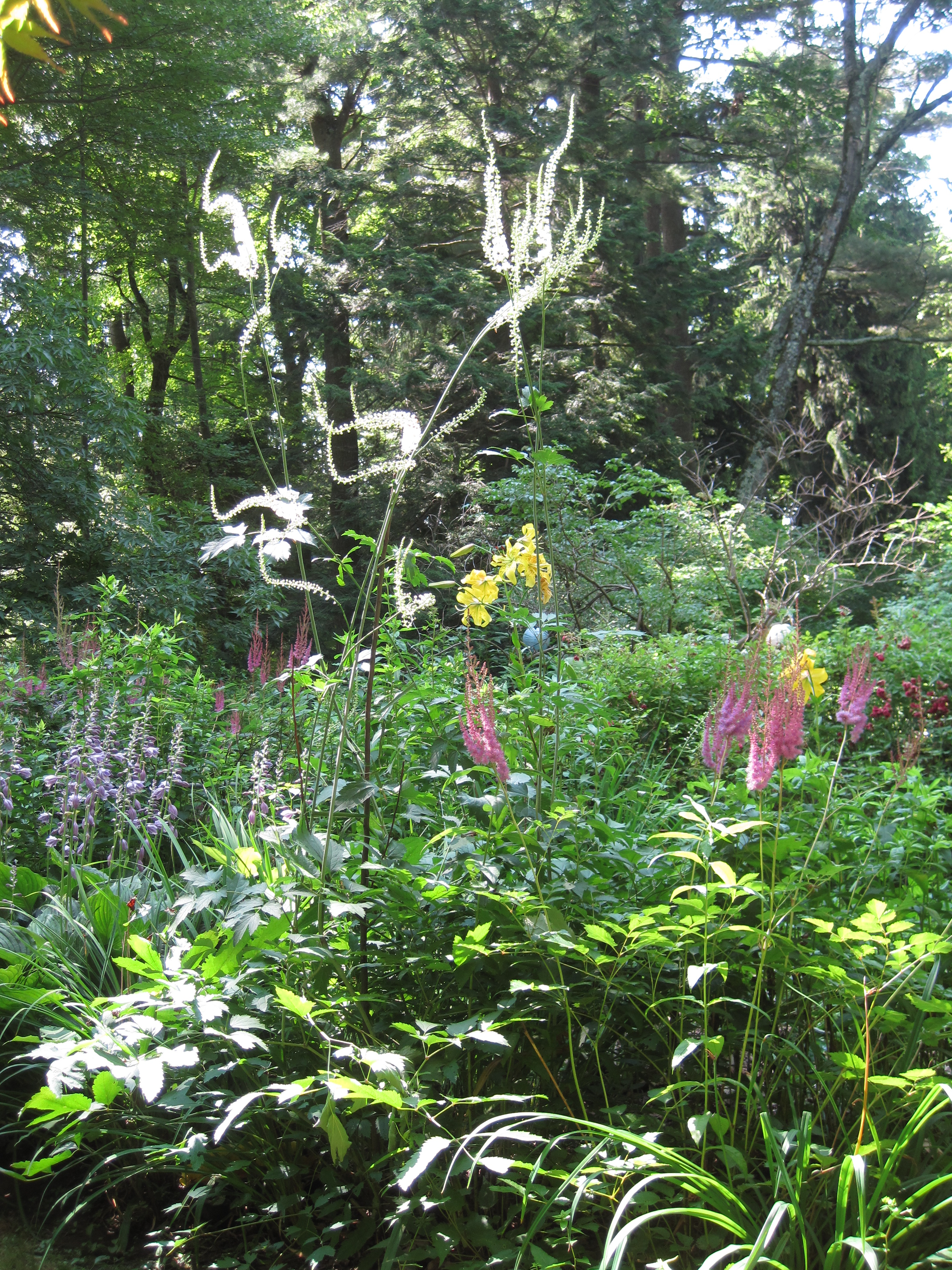
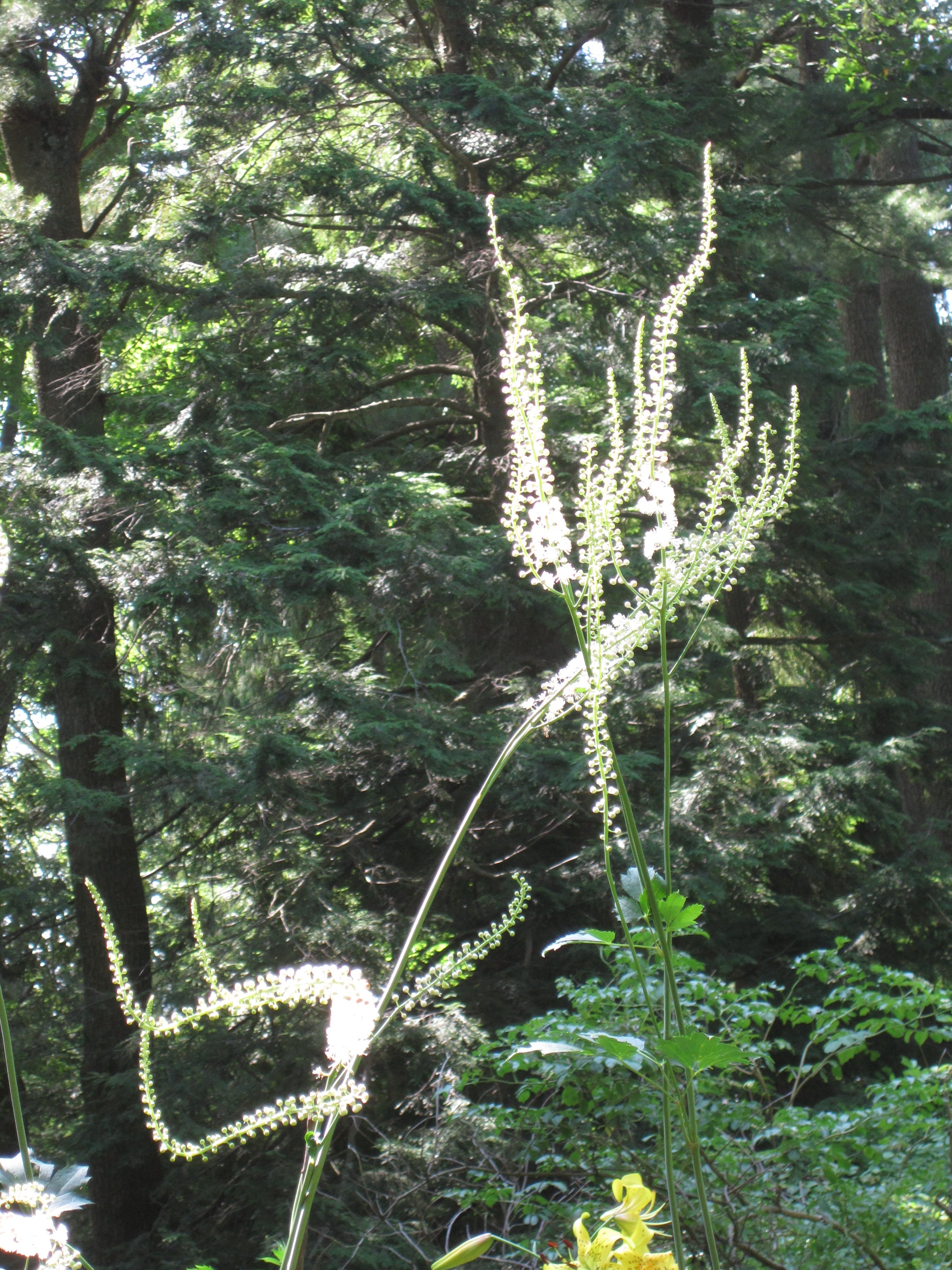
Lots of dynamic flowers in the garden right now: snake-root, ostrich-plume astilbe, big lilies, hostas, daylilies…I sort of wonder just how big we could get the snake-root to grow if we deliberately fertilized it. The bees adore it.

105


104

Note to self Friday, Jul 18 2014 

If you are contemplating the structural integrity of the chimney while yanking vines off of it….a) there are too many vines; b) perhaps the chimney ought to be considered?

Actually, the chimney in question is just fine. Still it crossed my mind while beginning to attempt to nibble at the Green Blob engulfing Minnietrost (small outbuilding).  Something about overgrown multiflora rose*, weigela, forsythia, burning bush, strawberry bush, pagoda dogwood, and all tied together by enthusiastic grape-vine, wood-bine, and akebia vine.  The vines are especially enthusiastic because of the absurdly large (80ft) hemlock that towers over the whole assemblage.  The woodbine goes most of the way up it….and what berries the birds don’t eat, grow.  Of course, what the birds do eat and Everybody, Everybody from crows to hawks to itty bitty sparrows perch in that hemlock so lots of birds perch and lots of birds eat fruit and lots of birds….

I’m leaving the woodbine on the chimney through fall, I simply cannot bring myself to yank off what is a veritable bounty of berries before then. The grape and akebia, however, have been removed.

Soft hearted.

*I have a plan for the rose: chainsaw at the base (and yes it is that big), attach a chain to it, and then floor it in an appropriate vehicle.  Yanking it out that way means that the trimming of the weigela and forsythia will be a bit brutal (thanks the to the akebia vine growing throughout) but I think it is the only way to go.

Revealing Secrets Sunday, Jul 6 2014 

023

An excellent place to quietly read. A good view of the comings and goings, while being essentially invisible, and an elegant view in and of itself. I particularly like the way the west porch rises above the trees, enough exposure to be interesting but not too much.

026

024

On the colour of white Tuesday, Jul 1 2014 

We gardeners tend to chase after the more difficult colours: blues, true reds, dark almost black shades. White, however, is rather overlooked.  Yet, there are many ‘white’ flowers which aren’t white at all: Goatsbeard, most astilbes, most roses, elderberries, lilies, hydrangeas, etc.  Varying shades of ivory, with peach, buff, or pink overtones are much more common.  True white is much less common.  And getting a true white that is highly reflective (a matter of cell structure I suppose) is even harder. But when you do get it!  Some of the tall, peach leaved campanulas will produce a bright, reflective white. A few roses do: the little fairy rose, the straight wild white rugosa, the York rose (alba semi-plena), ‘Casa Blanca’ in oriental lilies along with the true Easter lily (lily longiflorum, which usually isn’t sold to gardeners, but can always be picked up at Easter).

The pure glistening white of cold, new snow? That is the white of those flowers, and a lovely thing it is on a hot, mid 90’s, humid day.

« Previous PageNext Page »