Cimicifuga racemosa Monday, Jul 23 2012 

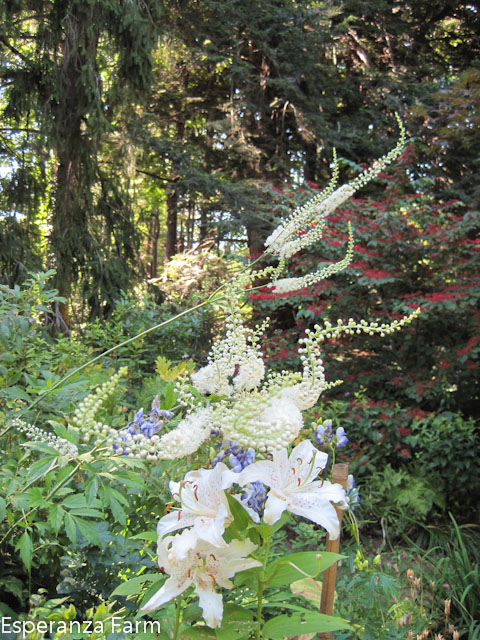
Also known as Actaea racemosa, Black Cohosh, or Bugbane is one of the Northeast native plants that deserves much wider use.  It happens to be one of my garden favourites, so perhaps I am biased.  Blooming in late July into August its towering candles of ivory add an incredibly dynamic element to the garden as they often bend and twist, earning it the local name: Black Snakeroot.  The various pollinators, from bees to beetles, adore it.  Its flowers can easily last several weeks with the seedheads remaining through the winter as architectural elements, while its heavily cut foliage works as a good backdrop for smaller plants.

It happens to flourish in the heavy, poor draining, partially shaded clay of this area.  In this it is unlike almost every other garden plant out there!  A big specimen should be treated as a herbaceous shrub, as they can easily be 2+ feet tall and as wide, with the flower stalks hitting seven feet.  It is also very long lived.  Conversely, it is also slow to reach flowering maturity, expect to wait several years when starting them from seed. It is drought and rain tolerant. About the only thing it doesn’t tolerate is a heavy winter mulch layer on its crown, treat it like a fern.  It can be very late in coming up in the spring. 

Here is a small one in amongst an Oriental lily and some monkshood, the red in the background is a double-file viburnum:
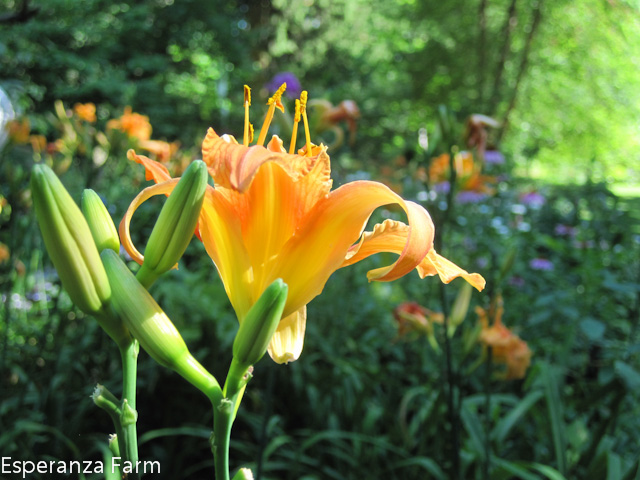
Orange Daylily Sunday, Jul 22 2012 

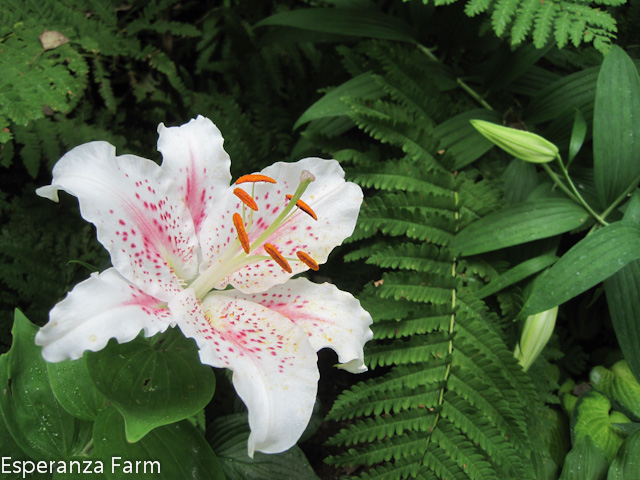
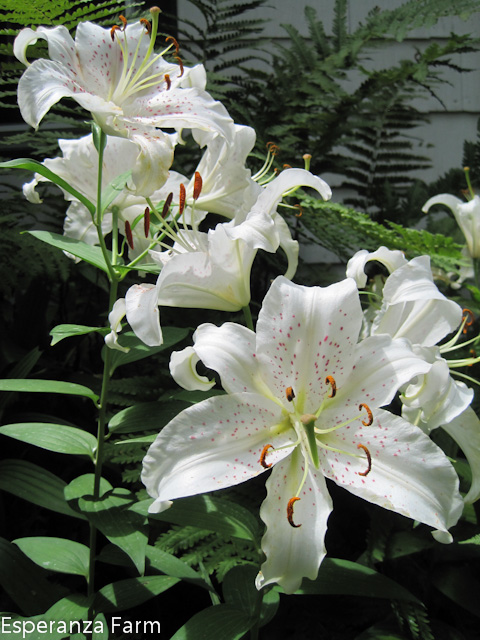
Stargazer Monday, Jul 16 2012 

lilies:

Daylilies II Saturday, Jul 7 2012 

To go with the post below:

Taken about two days ago, showing a section, you can see all the flower spikes.

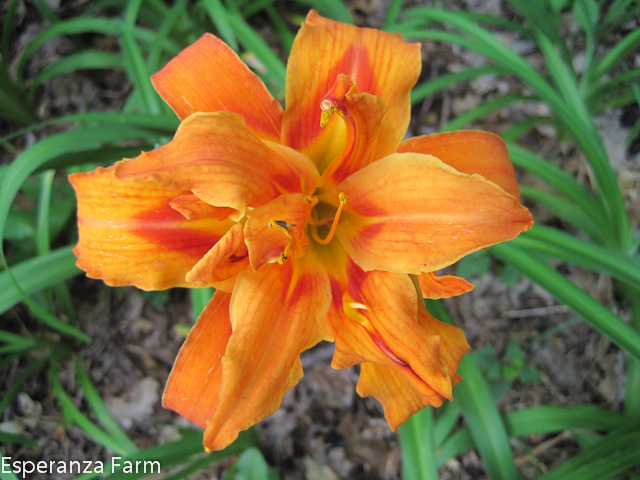
The double orange type.

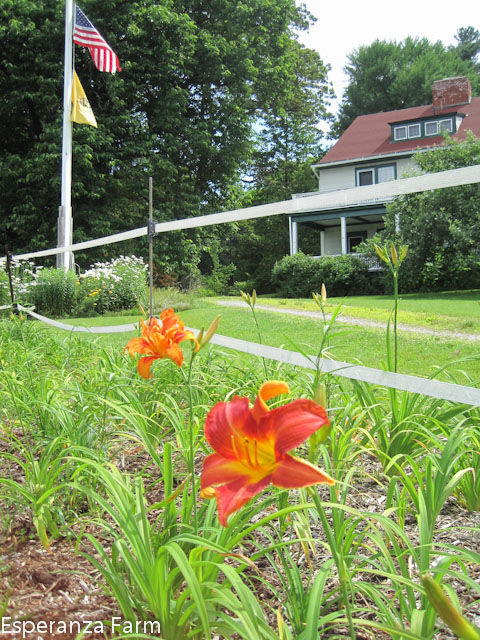
Last year, showing one of the red ones and a double orange.

Daylilies Saturday, Jul 7 2012 

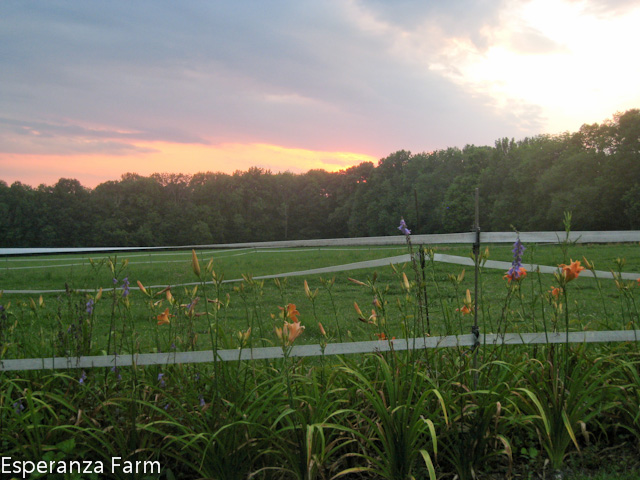
Despite being under the fence struck by lightning, the daylilies are coming into their own.  The stretch is about 70 feet long and three feet wide, so it is a lot of daylilies.  The vast majority are the very tall, very bright orange, double ditch lily type.  Take the standard orange ditch lily and make it bigger, oranger, and doubled or tripled.  They most closely resemble a flock of gaudy birds hovering above the field.  It works because they are surrounded with green: 10 acres of hayfield as their backdrop, with a screen of green hedgerows/hills, and a front of green lawn; the arc of pure-white shasta daisies west of the flagpole also helps to balance the effect.

I am however, pondering moving some of the burnt-orange/red throated ones to the front of the line.  Somehow, most of them got on the west (field) edge.  Being slightly more incline to bend, shorter, and a darker colour, I think they might give a depth to it.  More digging!

On Lily Beetles Thursday, Jul 5 2012 

We have no shortage of pests in New England, the Asian Lily Beetle is one of the recent, truly nasty ones.  These voracious, almost impossible-to-kill beetles have taken lilies from being sure-fire garden staples to labour-intensive plants. 

What I have noticed, though, is preferences on their part.  While happily defoliating any member of the lily family; their preferred diet appears to be the bright yellow Asiatic lilies.  This is followed by the other Asiatics (although they don’t care for ‘Landini’, an almost black, purple Asiatic, appearing only rarely on it).  The Species lilies, especially Turks-cap ‘martagnon’ types are next, and last are the true Orientals.  However, defoliation occurs quickly on both the Species and Orientals, and the plant doesn’t seem to be able to survive it.  So, a mild dislike on the beetles’ parts doesn’t perhaps mean much.  Still it is interesting to note this.  Of course, seeing as the critter is here…not planting yellow/yellow-based Asiatics probably wouldn’t help the matter.

At least I am not squeamish about squishing the larvae anymore….ick!

Zap! Friday, Jun 29 2012 

We have had several vigourous thunderstorms recently, with ground strikes near the house.  One strike took out the barn’s lighting, another we knew had hit close by (if the window goes white with light….sort of a dead giveaway).  But we couldn’t decide where, as there was no visible damage. 

Then I noticed that the daylilies…those gorgeous daylilies with at least one bud stalk for every fan…beneath the West Meadow fenceline looked oddly brown today.  The fence is electric wire, the gate is a metal t-post, as is the corner post, and the daylilies run between those two and have grown up above the bottom wire, which is not live*.  I think you can guess the rest.  It is the oddest thing, though.  It looks exactly as if a six inch wide band of herbicide was applied, with the bottom wire in the middle.  Anything within three inches is brown, anything that was directly touching is crispy, charred, and otherwise carbonized. 

*Usually!

Down the Garden Path Thursday, Jun 28 2012 

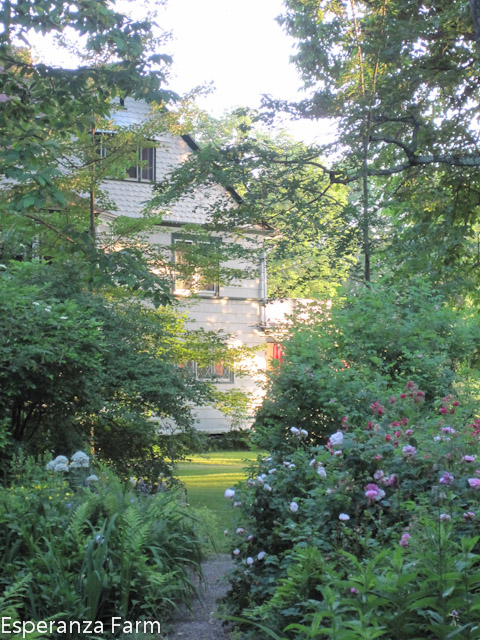
(or, down A garden path…multiply by ten around here…)  The white/pink flowers that are visible are all old centifolia roses, no younger than 75 years of age.  Scale is difficult in this photo, but the house peak is about forty feet, if that helps.

What is blooming? Wednesday, Jun 20 2012 

In lieu of content.

Thanks to the weird spring we had, the flowers are all blooming fast.  The ‘Fourth of July’ rose, a bright red floribunda rambler of unknown parentage, is nearly finished and will be done before the Fourth of July.  The Goatsbeard, a July staple here, is nearly done.  The Shastas and Snakeroots, which should be July-August will be starting soon.

So:

Straight orange daylilies (the ditch lily), cultivars and doubles will be starting in a few days.

June lilies are finishing

All of the roses: rugosas are almost done, the centifolias have peaked, the David Austin varieties are starting

Astilbes are going

Lady’s Mantle

Campanulas, all types

Ozark/Evening primrose

Nepeta Nepeta Mint

Delphinium

Ox-Eye daisy

Pinks

Blue-eyed grass

Milkweed

Cranesbill Geranium

Brown-eyed Susans

Blue Flax

Salvia

Scabiosa

Foxglove

Morning Glories

Nasturiums

Bread-seed poppies

Bachelor’s Buttons

Red Hawkweed

Yarrow

Adenophora

Clematis

Elderberries

Hydrangeas

Numerous others I have forgotten…


1911 versus 2011 Saturday, Jun 16 2012 

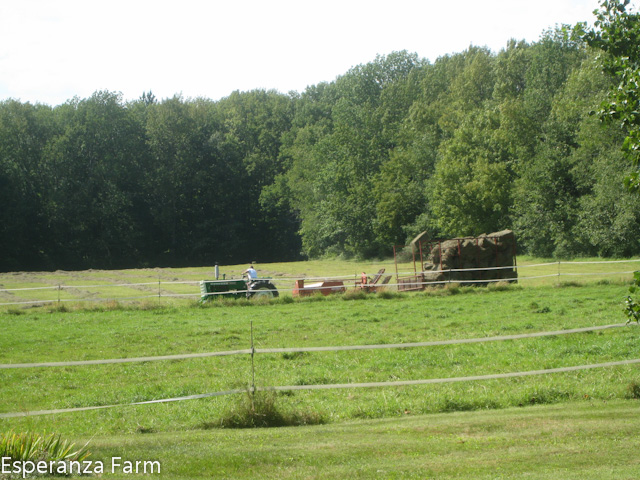
you can see the chucker in action in the modern photo, that eliminates two or three people, right there. 

Good thing, since extra bodies don’t seem to be around this year, but what a good year!  My guess, conservatively, close to ten tons of hay, and bone dry at that, so very light.*

We are pretty much a cheering squad, a friend does the actual work…

« Previous PageNext Page »