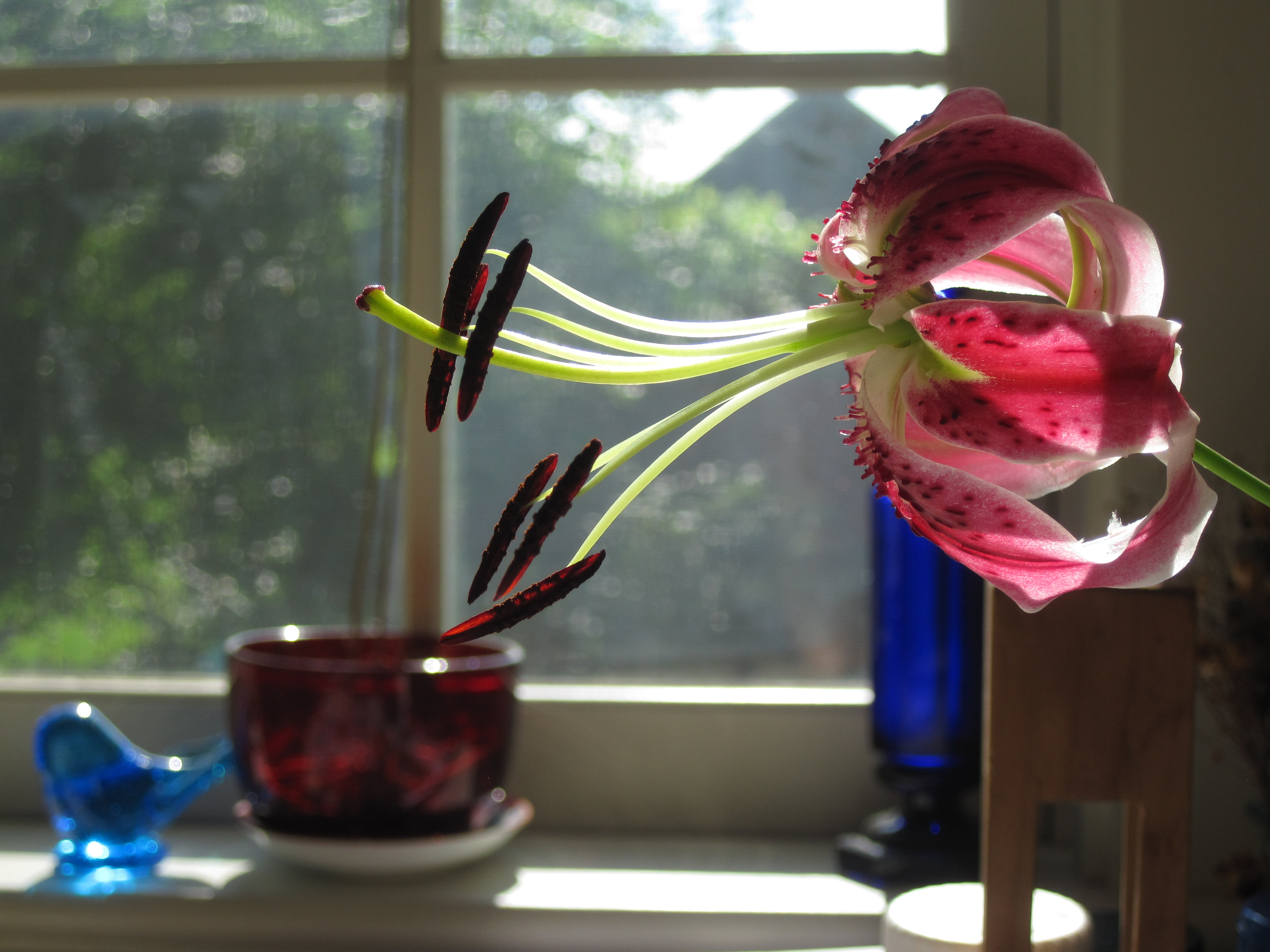
From some time ago (it is 50, raining, and dark): the lily is ‘Black Beauty’ and about as extreme a form as you can get it seems to me!
Comments Off on Random Photo
gardening and Modern Photos gardening, photography 19:25
From some time ago (it is 50, raining, and dark): the lily is ‘Black Beauty’ and about as extreme a form as you can get it seems to me!
Comments Off on Random Photo
gardening and Landscapes gardening, vegetable gardening 22:00
Nice to have…
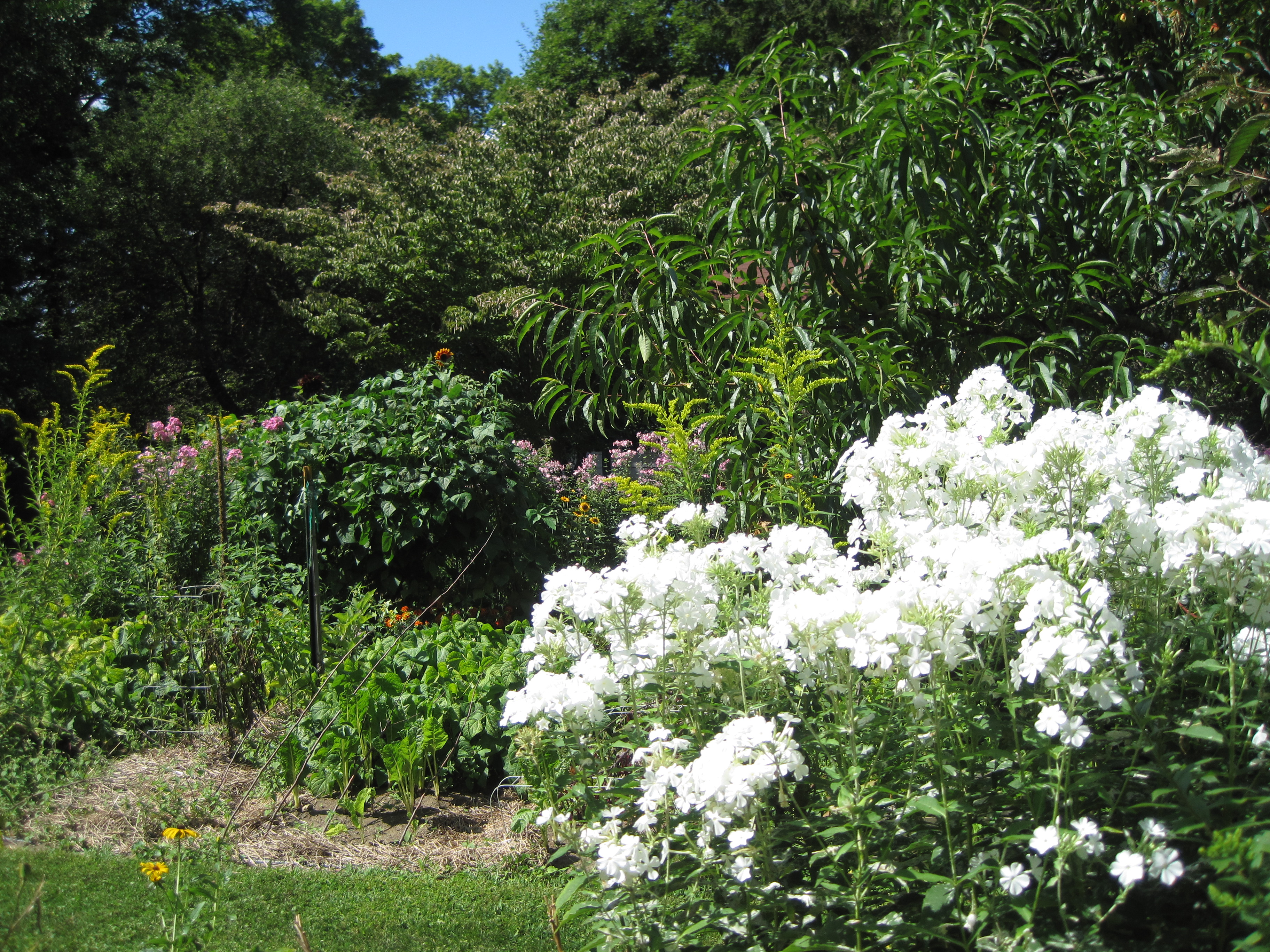
In this case, a whacking great clump of white phlox. In the vegetable garden of course…. Maybe next spring I’ll divide it? It is a tall, late white, with good mildew resistance. What more does one want? (It is at least in a pre-arranged spot, that little yellow black-eyed susan down at the bottom? In a row of baby kale!
gardening and Landscapes gardening, native plants 14:58
I am hopeless at it, mostly because I never bring a guide with me and never bring the plant back. (Trees are easy, I’m contemplating all those herbaceous things!)
Still, there is some learning going on. Flat-topped goldenrod for example, has leaves that look more like a slightly overgrown tarragon than a goldenrod. The beautiful wild blue relative of our fall garden asters has smooth leaves that feel like kid leather; it looks very weedy indeed…until now, when its color has the cultivated varieties well and truly beat. Blue wood aster has slightly paler, yellow leaves than the more common white wood aster, and a more pronounced notch at the base. Grey goldenrod has leaves that look almost like a sage leaf, but without the pebbly texture. The calico asters, with their thousands of little flowers, are very stiff, with lots of little branches and leaves. One of the goldenrods that bloom all along the stems has a beautiful purple stem, the other doesn’t. The purple one has better form (and naturally is not growing in an area that is likely for long term survival: south of the barn where I must, must, do some weed whacking). And so forth. The goal, of course, is to be able to edit the meadow lawn areas correctly in the spring. For example, now that I know the difference between the flat-topped goldenrod and the regular goldenrod, I can remove the latter and keep the former in one area where the flat-topped type gives the right look. (besides being rarer) Thankfully, because I didn’t know what the weird tarragon like thing was this spring (though clearly Not tarragon) and did remember that it was where the flat-topped goldenrod had been I didn’t pull all of it…quite!
Some things are easy: yarrow, one of the black-eyed susans (the felt leaved one that blooms all summer and the deer Love, naturally)
Comments Off on Plant Identification
gardening and Modern Photos gardening, photography, sunflowers 13:54

Comments Off on Considering sunflowers
Esperanza and Landscapes gardening, philosophy, trees 17:47
Esperanza has a horrid, Brigadoonish*, feel about it. Alright, it isn’t horrid. It is lovely, I like the musical. But the fact is that being outside of time can’t happen, when it does…Brigadoon actually has a rather dark underside to the story and the older tales it is based on are darker still.
But I was fretfully contemplating a few trees in various stages of mature/decline/stone Dead. Trees should outlive people, that is one of the points about planting them. But they still die. Just like people, just like pets. When you have a history going back 140 plus years, some trees, important trees, will die.
It’s a long list. There was a horse chestnut on the east lawn in the 1870’s, that was gone by the 1890’s, two big maples on the north lawn, two big elms, we are on our second copper beech, at least four full sized white pines, one of the big Norway Spruces*, the old cottonwood, several white birches, several huge apple trees, several full sized sugar maples, at least one Norway maple, several hemlocks….
And those are just the trees that spring to mind and were big enough to require outside help in removal…
Sometimes I wonder, what hell would it be to live forever?
*The others are just as big now, 80-100+ feet, but this was one of the originals.
gardening and Landscapes gardening 10:44
Our continuing experiment with several patches of uncut lawn grass, heavily interspersed with yarrow, aster, thyme, goldenrod, black eyed susan, violets, etc continues to be fascinating. In addition to adding a sculptural element: after two years the paths are increasingly well defined, along with a sense of movement; the ecological change is staggering.
Last night I had the occasion to sit out near one of the patches and listen. The tall grass was the source of all of the insect noise, so loud that it was almost distracting. The short grass lawns were dead silent. It was no surprise that the two phoebes were hunting the tall grass. Each bird had his/her patch of fence line and all of their hunting took place in the tall grass areas.
I’ve also noted that the young white oak only began to grow well when it was in taller grass. Now that may be coincidence, or the taller grass may in fact trap more water and keep the soil cooler.
What are the drawbacks? Well, the more insect life thing does mean a greater possibility of ‘bad’ insects: yellowjackets and ticks. I haven’t figured out the best way to control the goldenrod and heart-leaved wood aster (both of which are take-over artists), and I have yet to figure out how best to cut the tall-grass areas. Late fall, I think, but how? String trimmer or scythe and then rake it all up seems to be the best idea so far.
Best management practices and the tweaking thereof will continue to evolve!
gardening and Modern Photos gardening, sunflowers 20:51
gardening gardening, trees 20:24
The tulip tree, happily growing in a prime location, and not that old relatively speaking (planted early 1970’s) has a rough measurement of circumference at 5ft up of: 106 inches; which though is shy of three feet in diameter. The magnolia clocks in at 190 inches, 15 plus feet, give or take, or a just a hair over five feet in diameter… I suppose I ought to stop considering the tulip tree to be small? I mean it is, frankly, if you were looking at it from the standpoint of the Pacific Northwest, or Old-Growth, or high quality timber, but it isn’t Small…
Comments Off on A random fact
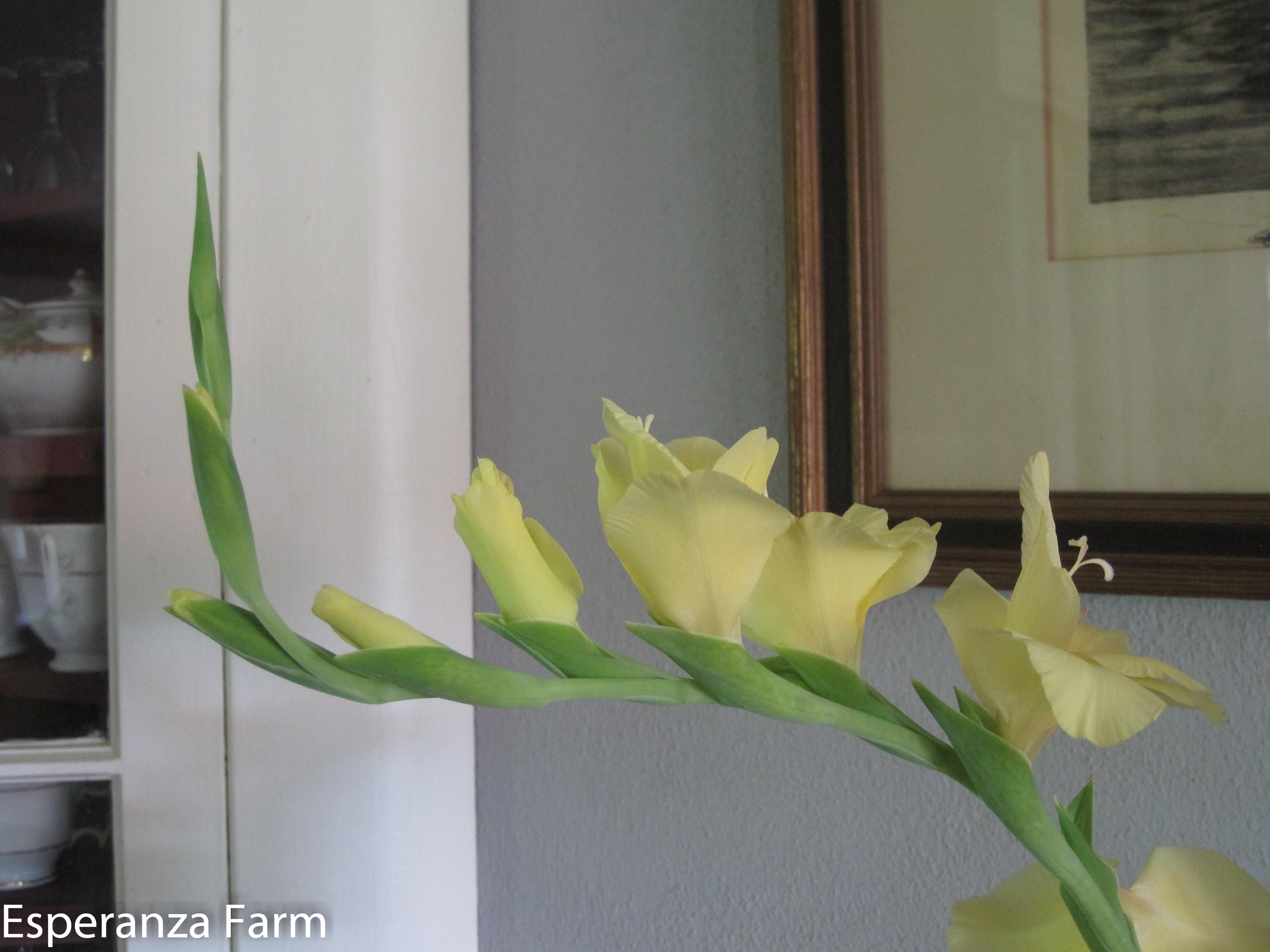
A flower that has fallen solidly out of fashion; but frankly there are few others out there that are such consistent producers of clean, elegant, easily kept cut flowers. They also, with a bit of thought, can be used as accents in a garden Something to be said for that; the fact that they are ‘easy’ notwithstanding…

August is when things start to bake, but actually you can end up with a number of flowering plants. In fact, for a few weeks it is almost easier to have lots of flowers than mid July (which is very green).
One of our earliest, tall goldenrods has come into bloom. You can’t get a good look at it because the bees are going mad (I’d love to know where the honey bees are coming in from)
The snakeroots are still tall, white bottle rockets. They are nicely balanced by the white and cinnamon clethras, much small white spires.
The shasta daisies, coneflowers, and black-eyed susans give a good mix of white/pink/golds
Pure red is added by the cardinal flowers, the earliest of the lobelias.
White/ivory is added by the wild yarrow which has happily colonized the tall grass lawns.
More pink and red comes from the Joe Pye weed, monarda (bee balm) and agastaches. The hyssop continues with a pale blue.
The creeping wild mints and oreganos add some unexpected pink/rose down near the ground.
A bit of light periwinkle blue comes from the big globe thistles
A clear lemon yellow comes from the wild helianthus, a volunteer on the road sides around here.
The Oriental lilies are just about done this year, they really raced through the season, which is too bad.
The all time winner is probably the flowering raspberry. It has been blooming non-stop since early June.
Clematis ‘Duchess of Albany’ is blooming nicely, having gotten ahead of the Japanese Beetles.
Coming up next: the asters (including heart leafed and wood) along with the goldenrods and a few Japanese anemones.
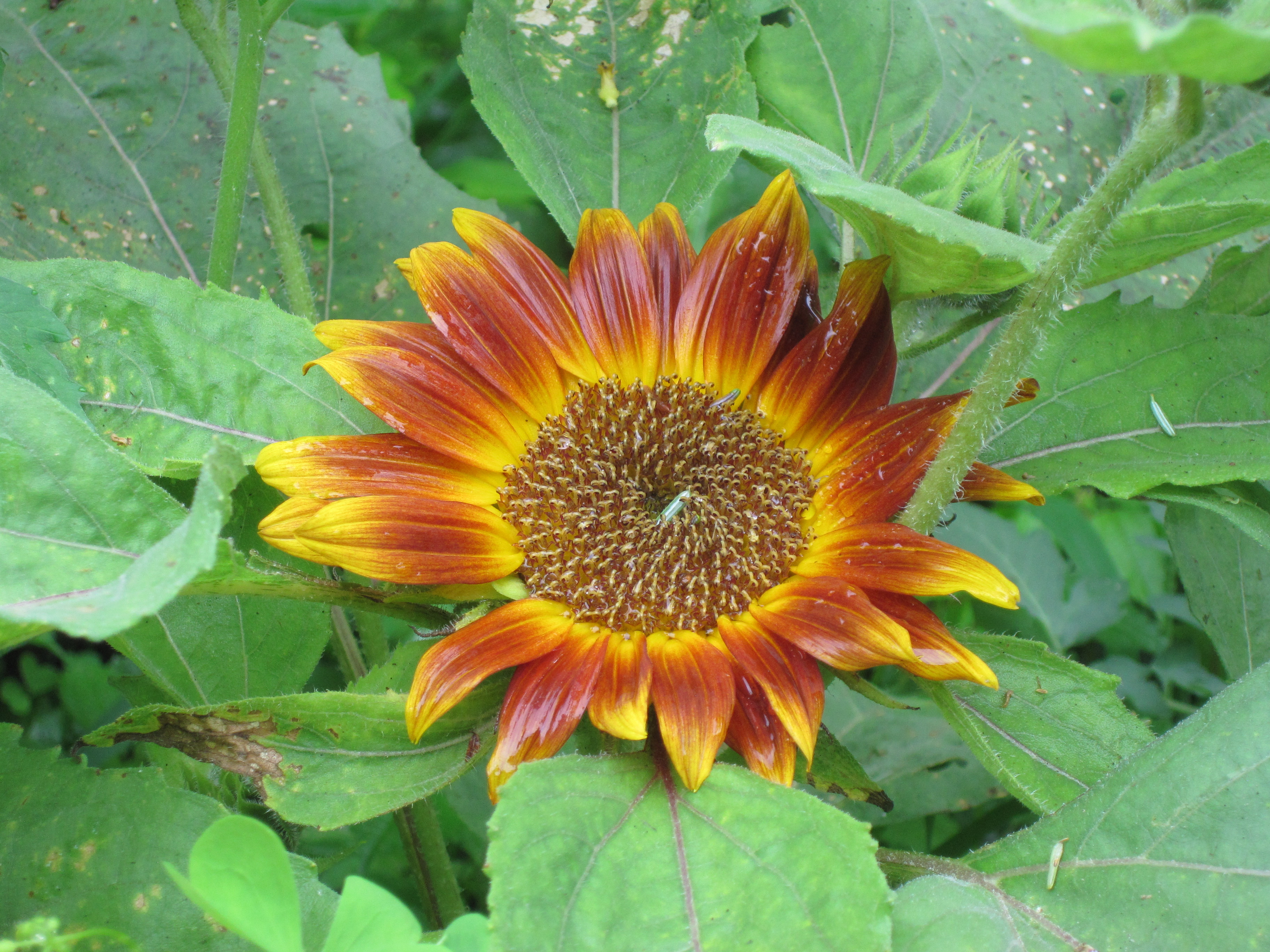
And of course the annuals: sunflowers, cosmos, and morning glories.
There is a reason you can’t move without tripping over a bee, other pollinator, or hummingbird around here…
Comments Off on What’s Blooming?
 Acair Fearann