To go with the post below:
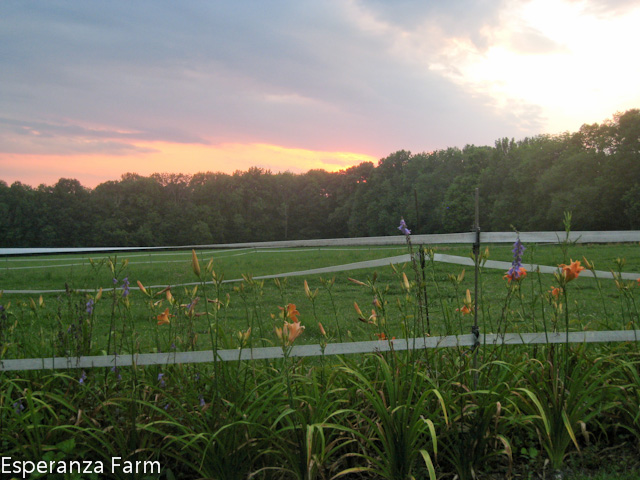
Taken about two days ago, showing a section, you can see all the flower spikes.
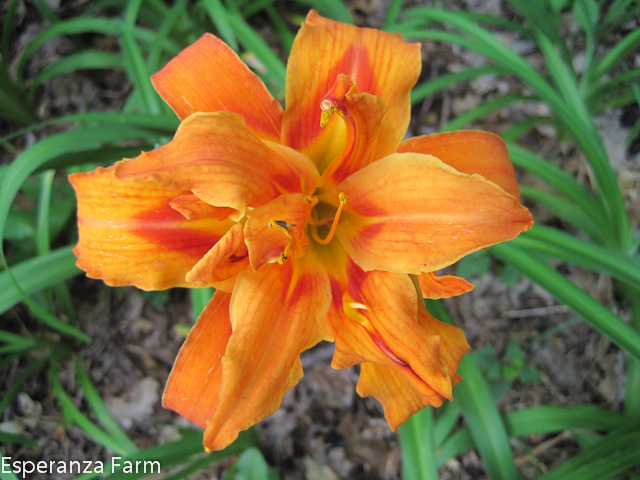
The double orange type.
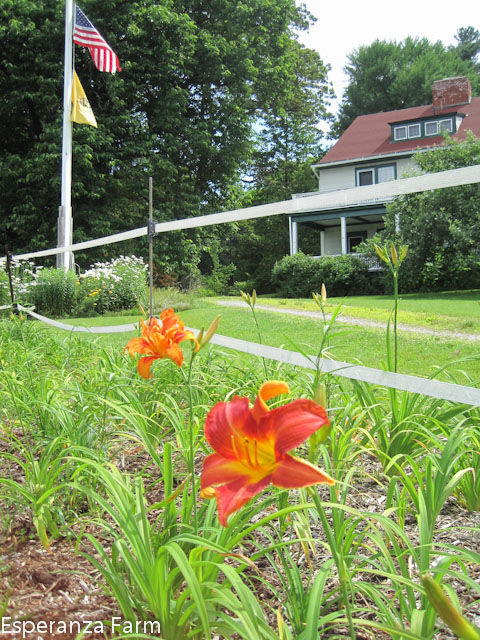
Last year, showing one of the red ones and a double orange.
Comments Off on Daylilies II
gardening and Modern Photos gardening, photography 14:55
To go with the post below:
Taken about two days ago, showing a section, you can see all the flower spikes.
The double orange type.
Last year, showing one of the red ones and a double orange.
Comments Off on Daylilies II
gardening and Modern Photos gardening, photography 20:45
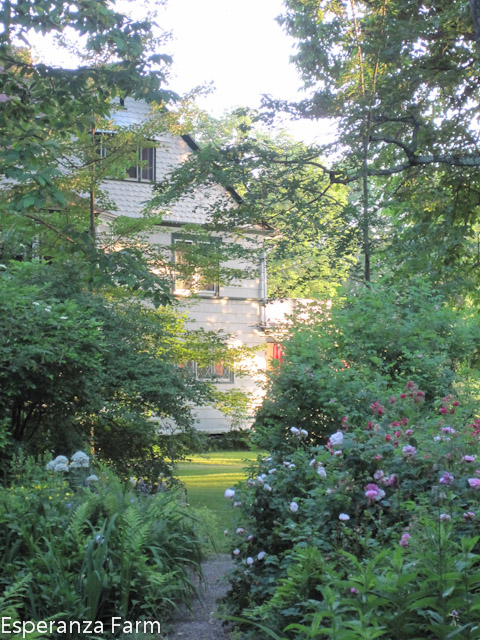
(or, down A garden path…multiply by ten around here…) The white/pink flowers that are visible are all old centifolia roses, no younger than 75 years of age. Scale is difficult in this photo, but the house peak is about forty feet, if that helps.
Modern Photos farming, photography 12:53
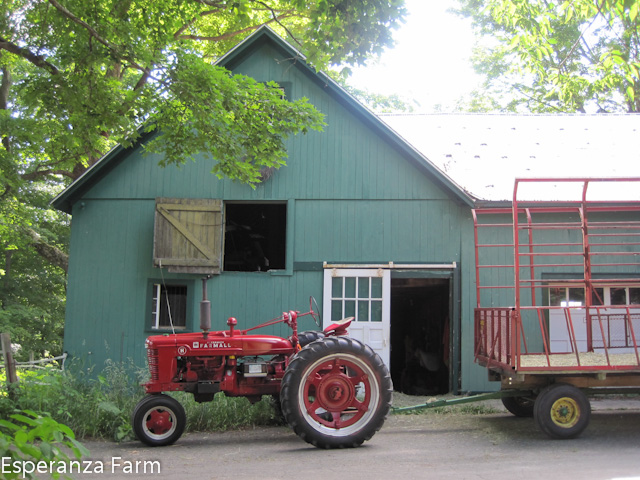
Comments Off on Red and green
Julie's Pond and Modern Photos photography, summer 16:19
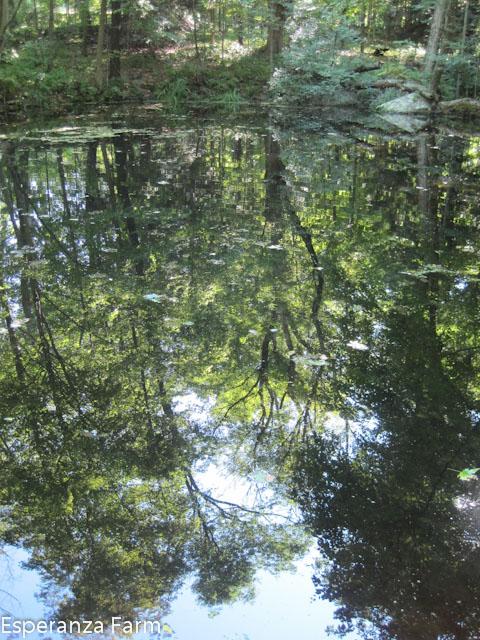
Julie’s Pond. It used to be deep enough, a century or so ago, to swim in. I think there are entirely too many frogs, snakes, and turtles to contemplate such action now (plus about a foot or two of muck). But it is hot enough that even I would almost contemplate a cool swim, and it doesn’t get colder than a spring fed pond!
Comments Off on Pity it isn’t deeper
Historic Photos and Modern Photos farming, gardening, history, photography 19:16

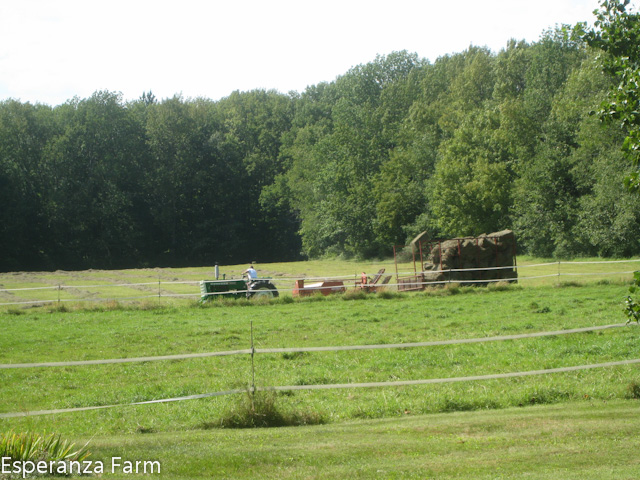
you can see the chucker in action in the modern photo, that eliminates two or three people, right there.
Good thing, since extra bodies don’t seem to be around this year, but what a good year! My guess, conservatively, close to ten tons of hay, and bone dry at that, so very light.*
We are pretty much a cheering squad, a friend does the actual work…
Comments Off on 1911 versus 2011
Modern Photos farming, gardening, photography 15:29
for hay. Connecticut is not an agricultural powerhouse, though like every single state it does have an agricultural sector; it is best known for nursery plants, Christmas trees, and intensive, specialty farms. It is not known for sprawling fields. And honestly, why should it be? Though the Connecticut valley holds some of the finest soils in the world*, the state is small, densely populated, hilly, and rocky. You cannot have a thousand acre field here.
Nonetheless, I grew up bucking hay at least once a year and usually more. At one point we went through 700 bales (55lb square) a year. * This year, I asked for 60. Our field currently produces 1400 bales a year, generally high quality, off of about ten acres. The man who does it, does not make money off of it. He likes doing it, he can use the hay for his cattle, and he has the equipment. In this case, all vintage tractors (several gorgeous Elliots and Farmalls) that need several days steady running a year; they have another life as show tractors.
Hay is an increasingly scarce product here. Hayfields invariably make high quality subdivisions, while hay (though the price has gotten painfully high) is not a high value crop. It is however, labour and equipment intensive in the most spiky and unpredictable fashion. You need at least: one tractor (preferably two), a cutter/conditioner, a tedder, a rake, and a baler. Hay wagons are also recommended. And A Lot of gasoline. Then you need the people to drive the equipment and buck the hay, and you need them at some undefined point in June and again in late August, and you need them to work in the full sun and fast. Why fast? Once hay is down, if it is rained on in the field it goes from 6 dollars a bale to 1.50. Hay weather is also thunderstorm weather.
I will, no matter where I live, for the rest of my life start to get edgy the first weekend in June. Will the hay be good? Are there enough people? Will it rain? Still, I love the thundering roar of the tractors, the smell of hay, of gasoline, the ka-chunk sound of the balers; I loved the challenge of stacking hay as fast as it came off the elevator, the trick of grabbing the hay as it came off the spiked chain without snapping the twine or slipping near a lethal piece of equipment, the trick of stacking six high alone, eight or more with a helper. Who is faster, the stacker or the loader?
Do I mind not having the stress? No. Do I miss it? yeah.
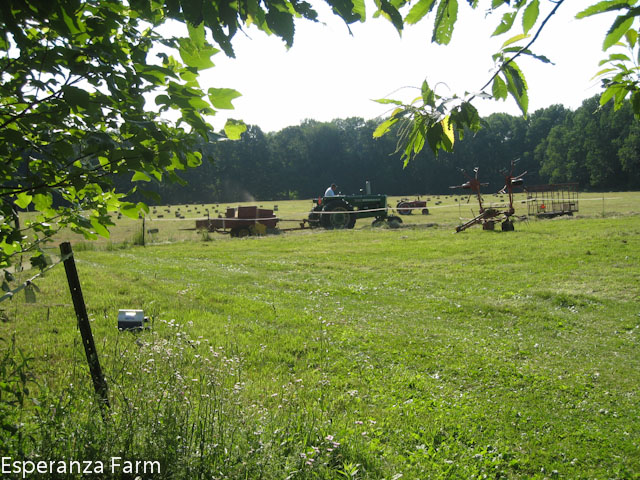
Two years ago, the Elliot in the foreground with the baler, the tedder is the piece unhitched to the right, a Farmall in the distance.
*Connecticut once produced shade-grown tobacco of a quality rivalling the famed Cuban strand.
*I also stacked innumerable hay and straw bales at the farm where I worked.
*Wordpress’ spellcheck hates ‘Farmall’…that says something, doesn’t it?
gardening and Modern Photos gardening, photography 20:40
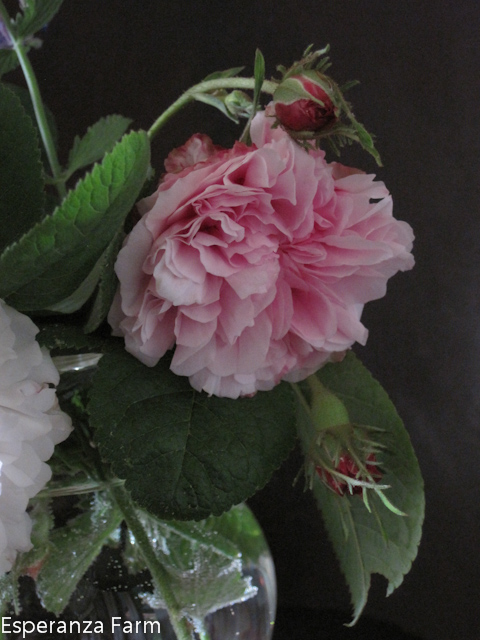
Comments Off on Centifolia Rose
Modern Photos photography 20:14
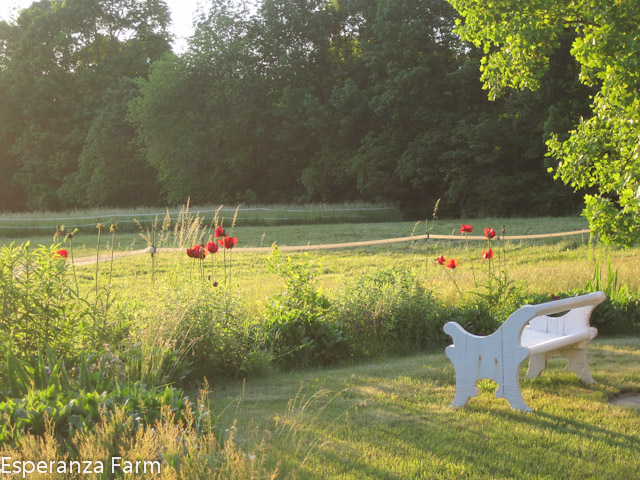
Comments Off on Summer’s Promise
Modern Photos and Trees photography 14:29
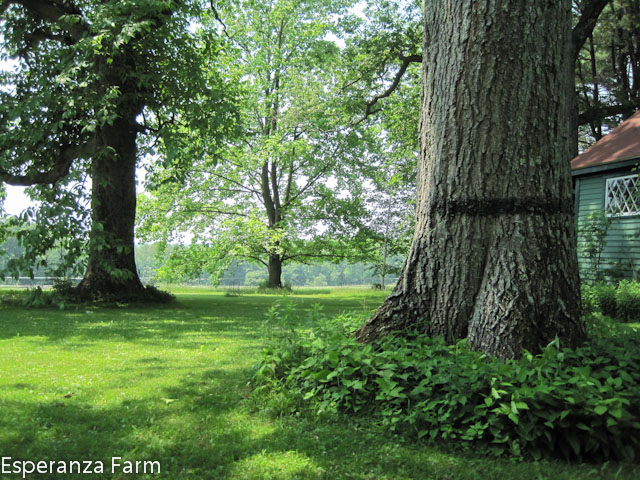
Comments Off on Photo of the day
 Acair Fearann