Summer’s last flowers Monday, Oct 15 2012 

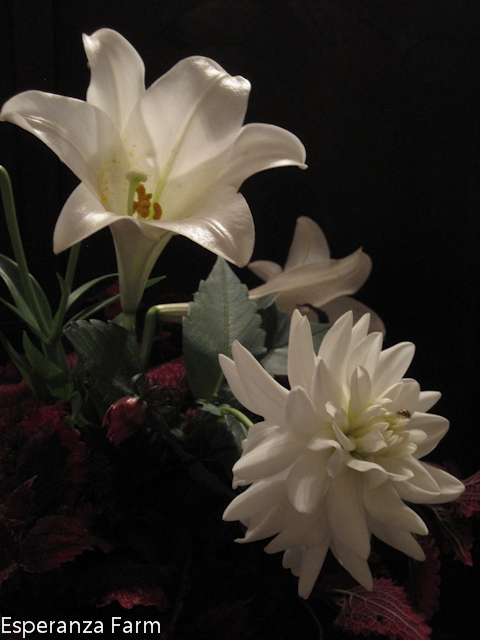
There are, of course, plenty of asters, mums, and other hardy perennials still going.  But the first frost was a killing one, so dahlias, coleus, and a confused Easter lily (on its second round of flowers for the year) got cut for a bouquet.

Fallen Giants Sunday, Oct 14 2012 

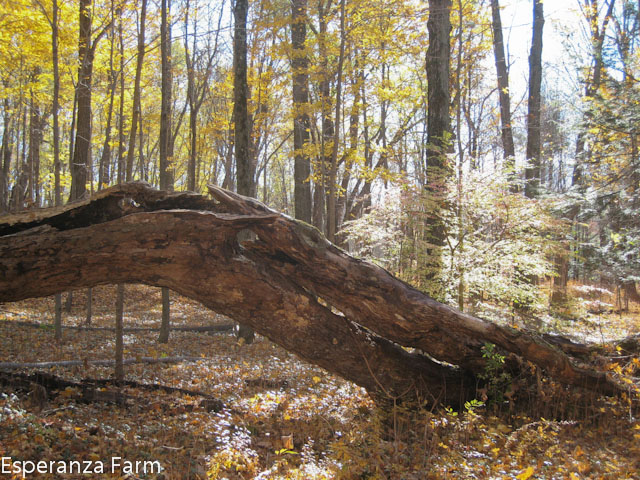
This old maple has since rolled over, but there is something wonderfully animalistic about the trunk here…

a bit of size perspective, one could duck and walk under the arch.

Photo of the Day Thursday, Oct 11 2012 

Don’t Fall in II Sunday, Oct 7 2012 

Sky Holes Friday, Oct 5 2012 

Usually a tree dies gradually, or falls over abruptly taking surrounding branches with it.  Rarely, therefore, is its space in the canopy easily viewed.  In the picture below, however, we have just such an instance.  This was an extremely healthy sugar maple until late last summer.  At that time it got struck by a major lightning bolt.  This blew bark off exposed roots, wilted the ground vegetation surrounding the tree, and left a foot to two foot wide spiral burn all the way down the trunk.  The burn was immediately obvious with patches of charred bark and exposed inner bark layers.  Because it was late in the summer, the tree’s early leaf drop was not immediately indicative of total death (in particular because Hurricane Irene had stripped many other trees).  It was, however, suggestive, as the leaves that dropped had a wilted appearance.

Taken about a week later, this shows the burn mark, some of the wilted ground vegetation, the creamy white object on the lower right in the bank is a root with the bark completely blown off.  The red is inner bark, the dark patches are actually charred sections.  Note the ash in the background has a healed lightning strike scar:

This picture, taken this summer, shows that the tree was immediately killed.  Buds are apparent on the highest branches, formed last summer, but never leafed out.  What is interesting is that many of the twigs are still there, by next year decay will have set in and the tree will have a ‘deader’ aspect, as opposed to the weird ‘winter tree in a summer scene’ appearance.   The dying branches beyond it belong to a large ash, which was already in decline.  It too has been affected by the strike and is far weaker this year.  The dead tips of the maple on the top right corner of the photo may have been caused by the strike, but may be due to the old age of the tree in question.

A close up:


Don’t Fall In Monday, Oct 1 2012 

Old Door Thursday, Sep 27 2012 

Photo of the Day Monday, Sep 24 2012 

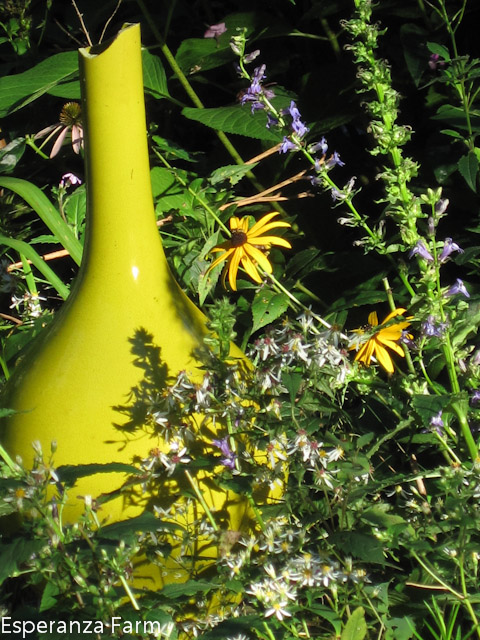
What one does with a badly broken jar; the flowers are blue lobelia, white wood aster, black-eyed susans, and coneflower

The refinishing of floors Thursday, Sep 20 2012 

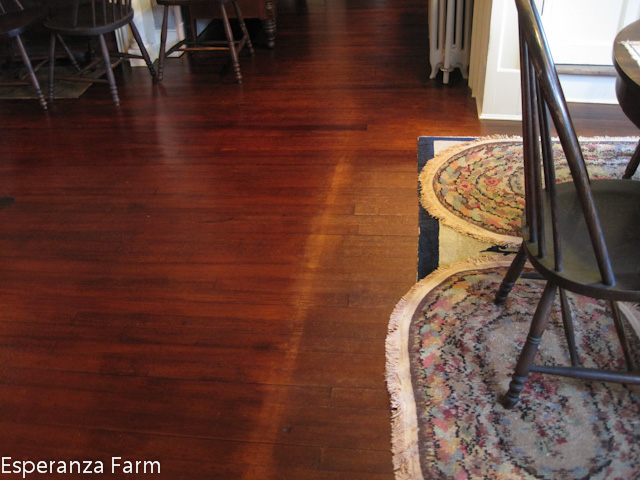
I am actually not the person that did the work, Jamie did it and well; I just ran off with the rug that was in desperate need of repair…thereby exposing a section of the floor.

Hard to say what the wood is, it may be hard pine.  Originally coated with shellac, making restoration fairly straight-forward.  Shellac is suspended in alcohol (you can actually get shellac in flake form).  Clean it, then rub it down with denatured alcohol which re-amalgamates whatever shellac was left, then two coats of shellac with some areas needing three (heavy traffic, sun, water, or tape from a taped down rug).  No sanding required.

This photo is about as close as we come to a ‘before’ image: the floor on the right is not yet done, the light mark is a where a rug was taped down.  You can see the difference in the quality of the color/light.

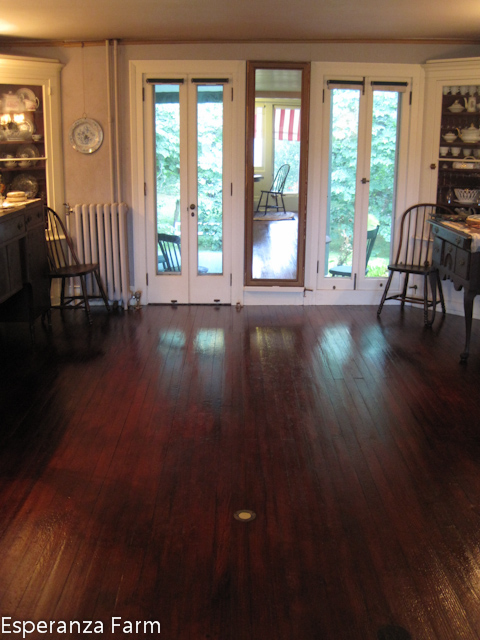
The floor refinished.  The circle in the center is a floor outlet.  This picture is also a nice illustration of the standard tendency for old houses to be built less than straight: look at the wall, the plaster is not cracked, the ceiling height really is that different!

Photo of the Day Wednesday, Sep 19 2012 

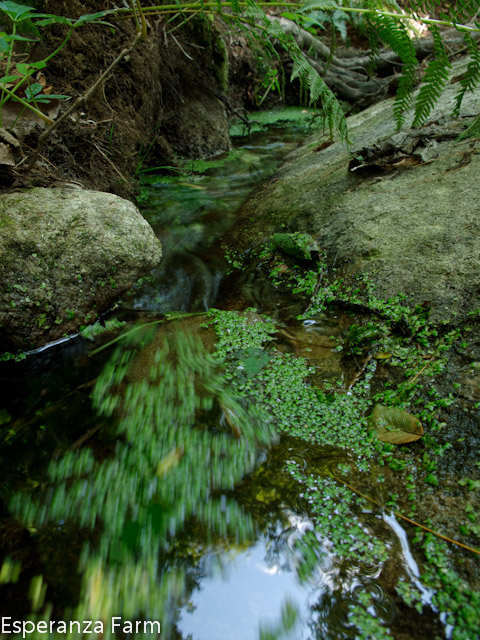
Taken at the outflow of Julie’s Pond last year; this year there is no flow.  The green stuff is duckweed, the bane of people with ponds around here.  It is a floating plant and can’t survive even moderately rough water with any success; but if the conditions are right it can completely blanket a still pond during the summer. If I have to choose between it and algae though, I will take the duckweed any day.

« Previous PageNext Page »