The Barway Friday, Dec 5 2014 

008

This is an interesting contrast to the picture of the old stump of a few days ago. Only about fifty yards from the stump, this area has been heavily thinned in a way that the other hasn’t (I am waiting, patiently for decades if need be, for several massive giants to come down in that other area. Until they do, finished thinning is sort of useless, since young sugar maples can essentially sit in stasis while in a heavy closed canopy, and when those big ones do come down….things will be different.

I have to admit the other picture has a more dramatic feel to it.

Woodland Monday, Dec 1 2014 

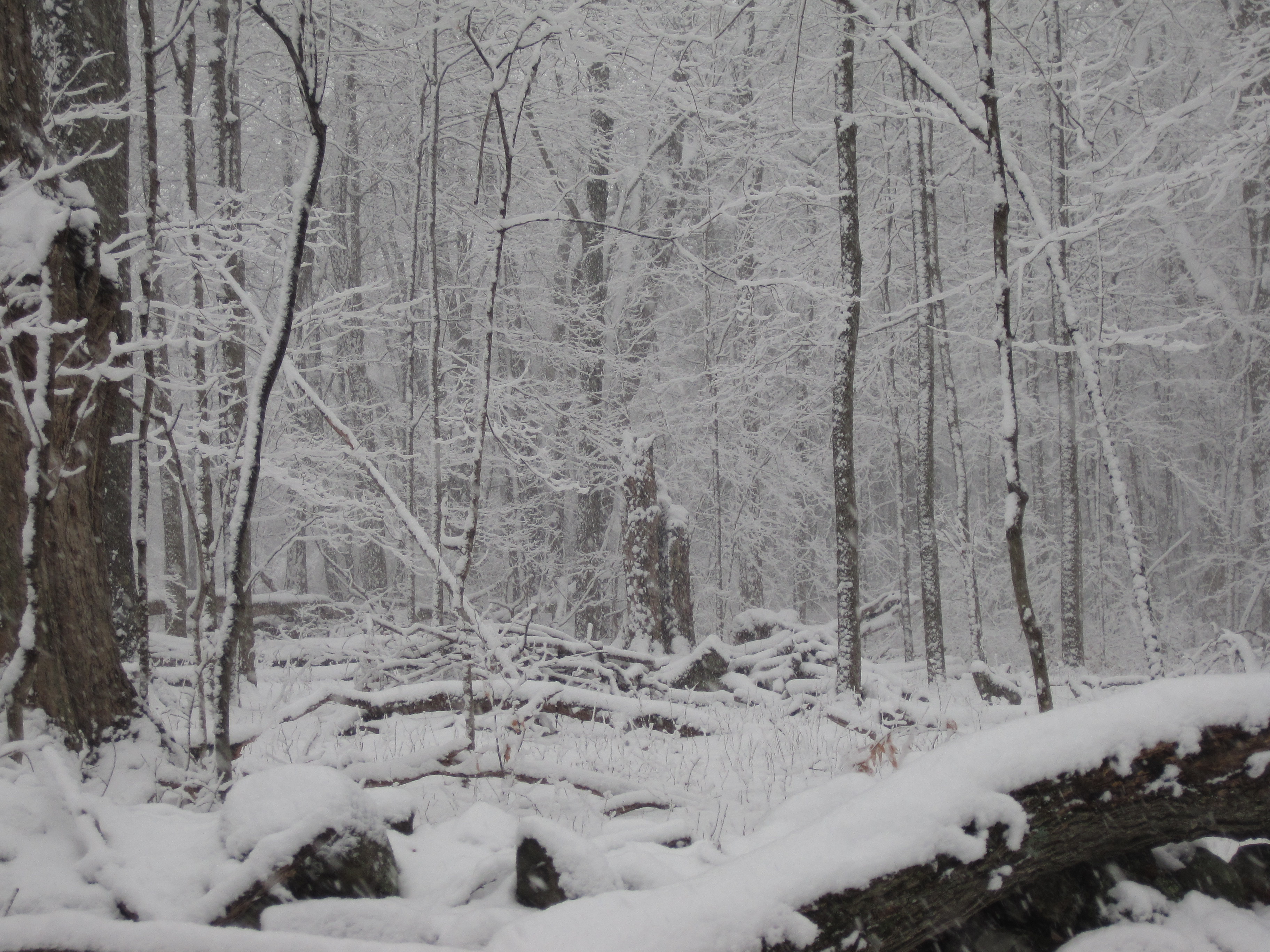
It has mostly melted now, but I rather liked this image of one of the old sugar maples in the Spring Lot, now a snag.

009

Winter Wednesday, Nov 26 2014 

006

Photo for the day Thursday, Nov 20 2014 

IMG_6028

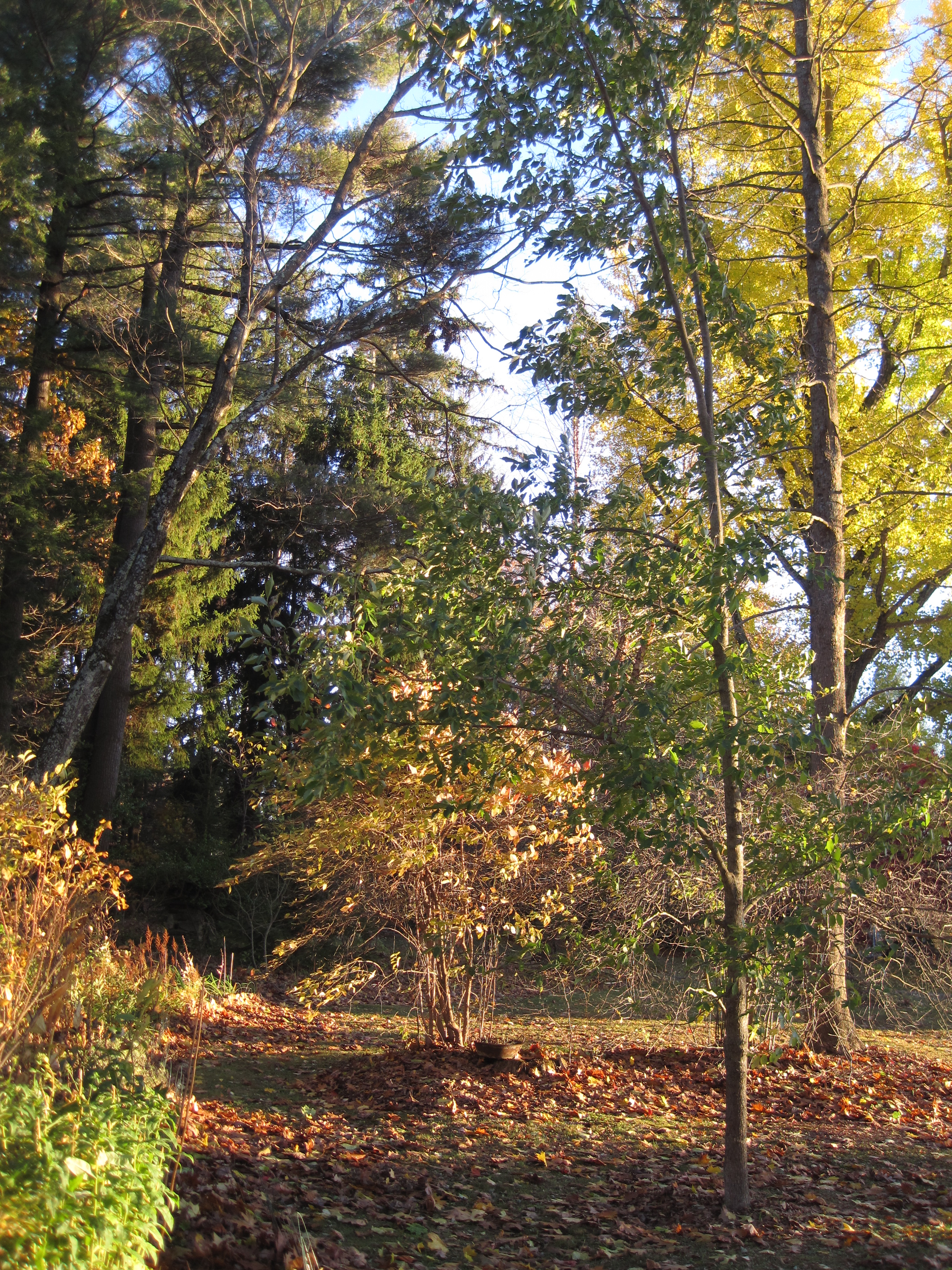
Taken a few weeks ago. I always like subtle colors of the beeches, (top right in this instance a European Copper Beech) and the oaks (center, an ordinary volunteer black).  Top left is a Sugar Maple,. The closer trees are the apples which hold their leaves quite late.

The last gold Monday, Nov 17 2014 

Before the snow and the cold rain! Now it finally looks like November here, the dark trees and the grey fog that steals through the woods. This was October, though barely a week ago.

008

First Snow! Friday, Nov 14 2014 

About two fluffy, sticky inches likely to be gone by evening. Very pretty. (remind me of that in March…) Driving home from a meeting last night, just as it was turning from rain to snow, was gorgeous: cut crystals in the headlights.

What is distinctly odd about it though is that we actually have not had a killing frost yet. But I am glad that we spent time alternately mulching into the lawn and raking up leaves yesterday.  We are trying a new tactic on leaves this year. Instead of collecting them with the lawnmower, we are running the lawnmower with the leaf catcher attachment, but no bags, spreading the cut leaves far and wide as we go.*  There actually is a noticeable difference to the feel of the North Lawn* where we have done this: all those oak and magnolia leaves are back on the lawn in little pieces and it is definitely springier/softer, even in another year of nasty fall drought. The question is whether it will work with the denser ginkgo leaves, we shall see next spring.  It is much better than taking dozens of bags of leaves off the lawn each year.  Maybe it will even slow the appalling subsidence of the lawn!


*I am pondering whether the pipe could rotated a bit so it makes a better rooster tail and wider spread….

**The North Lawn is dominated by two full sized Black oaks, two Cucumber Magnolias (one at full size), a good sized Tulip tree, a mature ginkgo, and three young trees: elm, maple, and beech. There are A lot of leaves.

November night Saturday, Nov 8 2014 

The last cloud shattered light
Burnt out the hurrying leaves
From barren trees
All was fallen down to night

Seasons change Wednesday, Nov 5 2014 

Hard to believe that this:

012

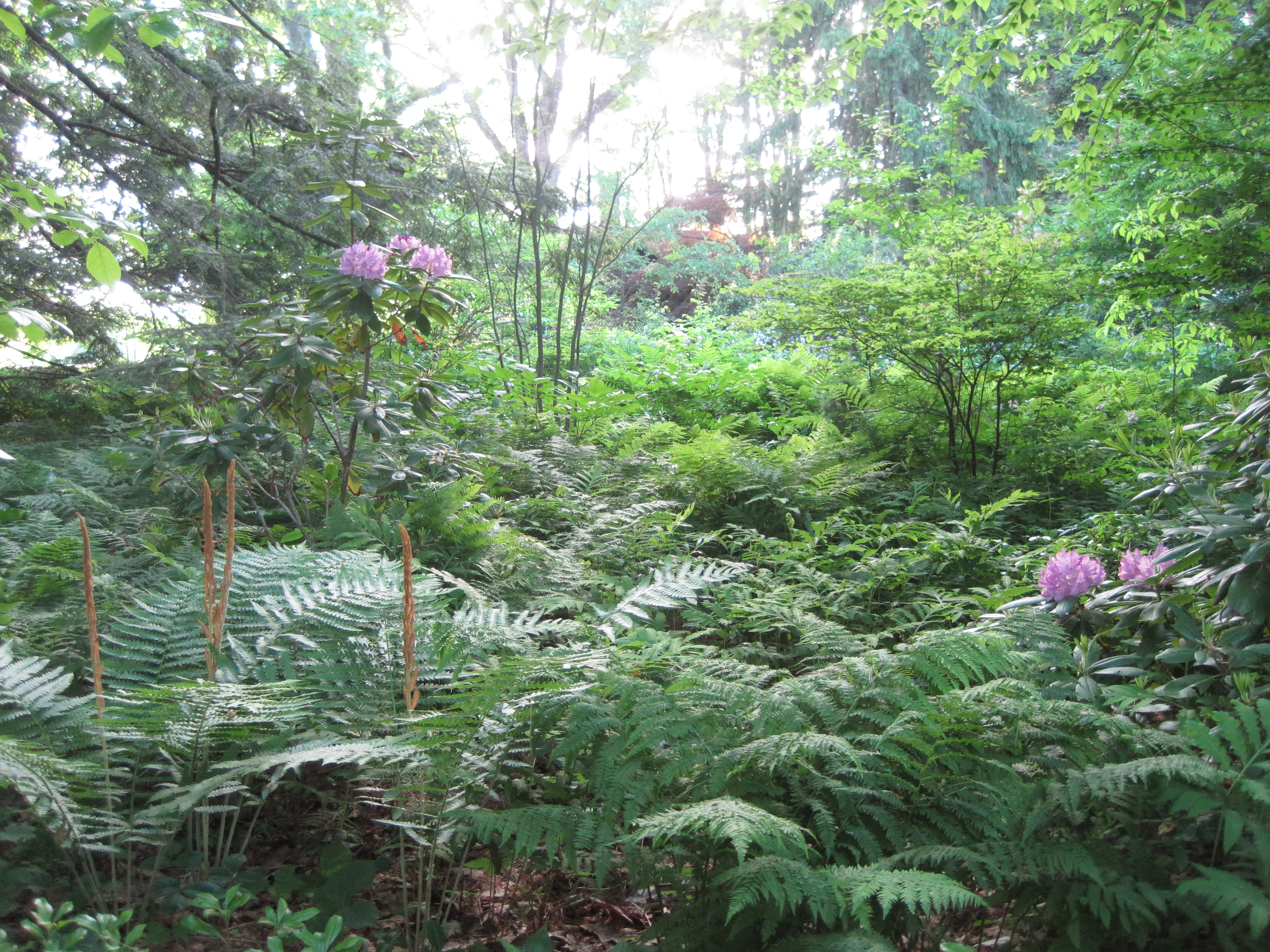
Was this back in June!

144

Japanese Maples Sunday, Nov 2 2014 

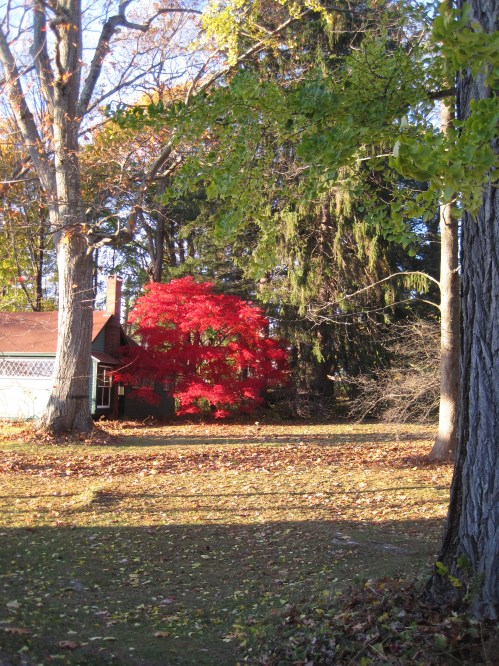
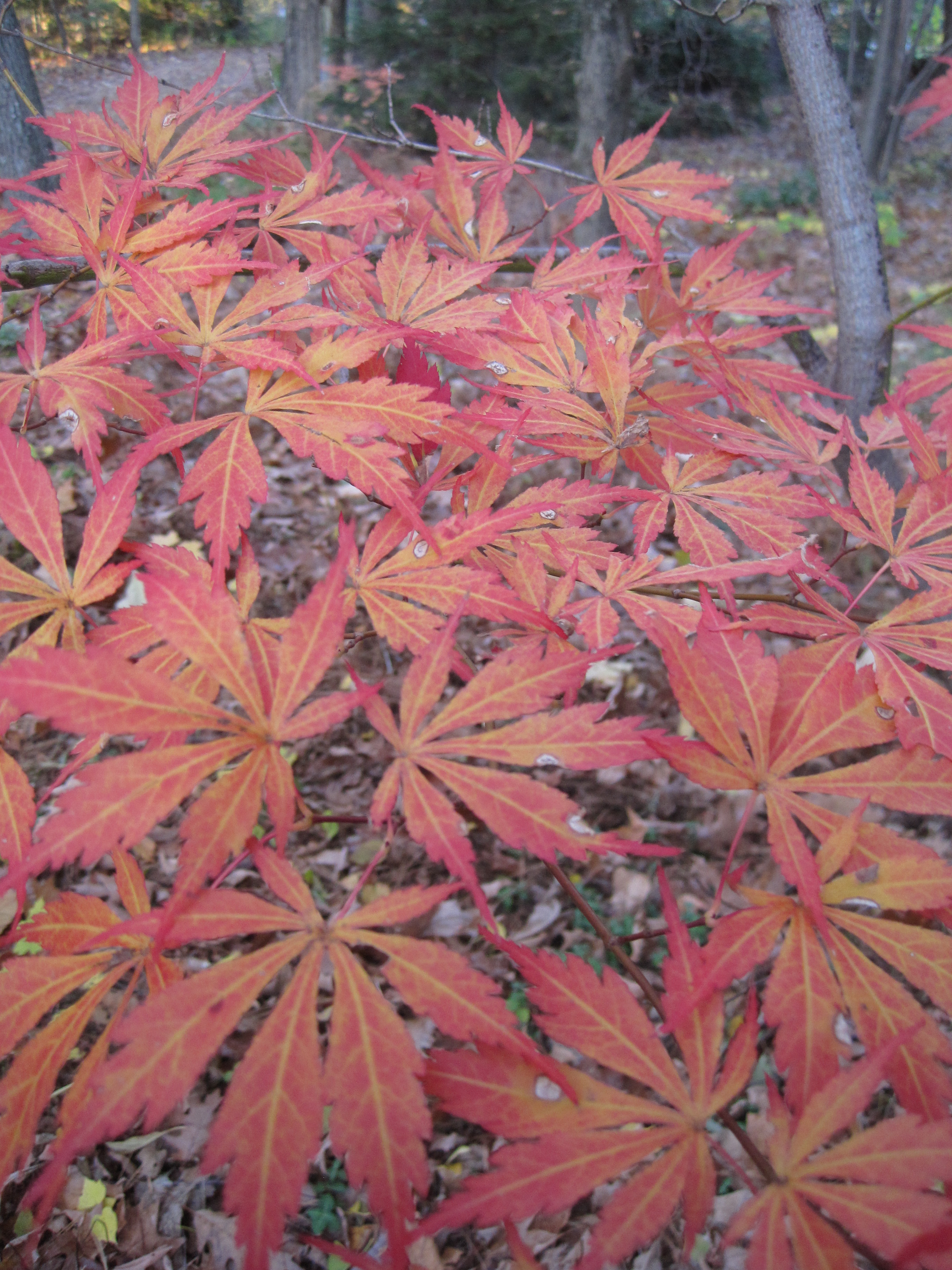
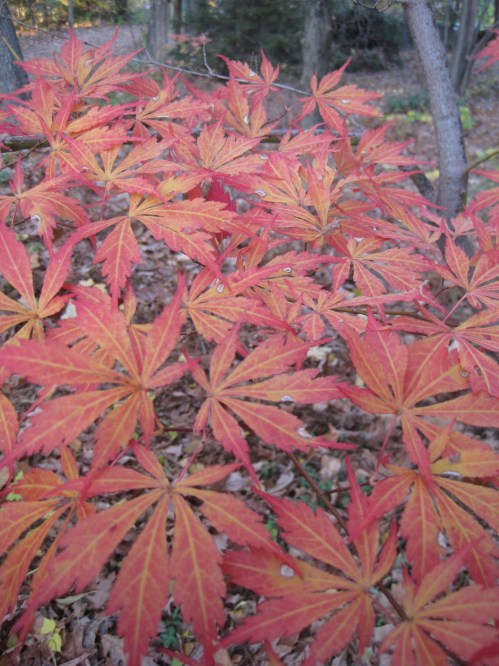
Japanese Maples aren’t usually planted for their fall color, which is a pity. Our various seedlings tend to fall into two types of color: pure scarlet or flame orange. (and a lot of muddy ones where the red just doesn’t quite do it, but is definitely red) A few are orange. The greener the bark, the oranger the coloration in the fall. In general, the orange/green have relatively green summer foliage, which is probably why they are less common (until recently we tended to select on the basis of summer foliage).  For one reason or another, we decided to plant two rather nice green ones flanking the drive, I decided I liked them, and we have since added several more. Which means that we have succeeded, somewhat not accidentally in developing what (in several decades) will be a real grouping of orange maples in the Rabbit Hole drive, an accomplishment that really was only apparent this year, as several are very small still.  The fall color, no surprise, comes from the two different parents, along with the trunk/twig coloration. The orange seems to come from the fine cut-leafed dwarf maple parent, the red from the bigger, rather coarsely cut full sized parent. The red is always a pure color with no shading on the leaf. The orange tends to shade towards the veins/edges, creating an appearance similar to Stewartia or Dogwoods, where the tree is not a single color.

Unfortunately, the coarser shape appears to be the dominant gene in determining leaf shape, though the orange ones are slightly finer. Only one ever approached the parent type, and it died on me (naturally). Red is also the more common fall color.

Red:

007

002

Orange: (all of these are still fairly small), but you can see the green cast to the bark on branches over about 2 years in age, which is the giveaway; the reds have purple bark.
013

Winter Project? Tuesday, Oct 28 2014 

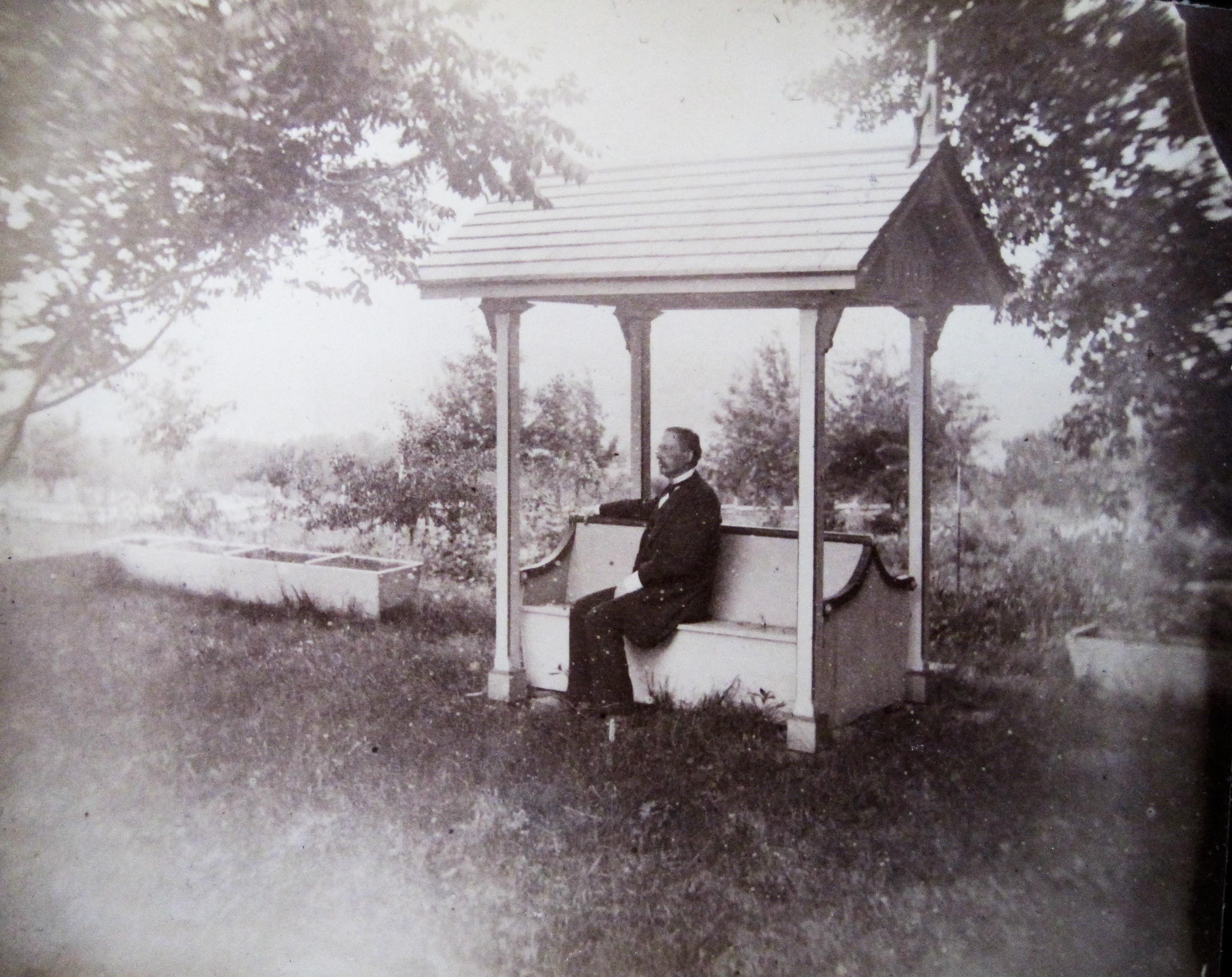
There is enough left, plus a picture or two, that reconstructing this bench which once looked out over the pond is possible. I don’t think we will rebuild the planters, however. Nor will we attempt to replant the hyacinth garden, though it must have been quite elegant in a Victorian fashion: too shady for one thing, leaving aside the practical problems!

Here is Morris Smith, circa 1885, looking east:

IMG_9425

Looking up at the remains of the bench today: the triangular shape mid-ground, right.

IMG_5008

« Previous PageNext Page »