Bleeding trees! Wednesday, Oct 1 2014 

and buildings!

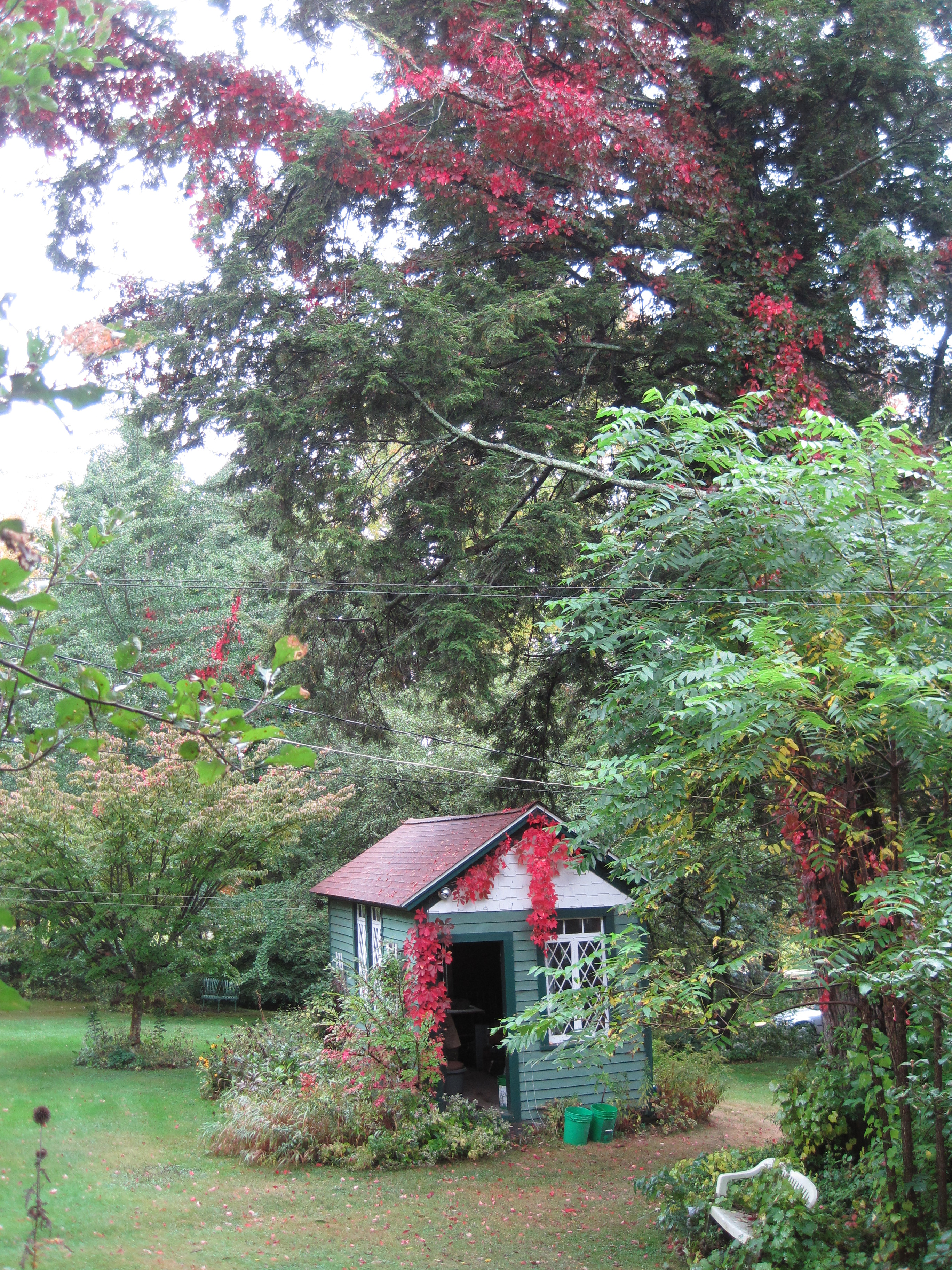
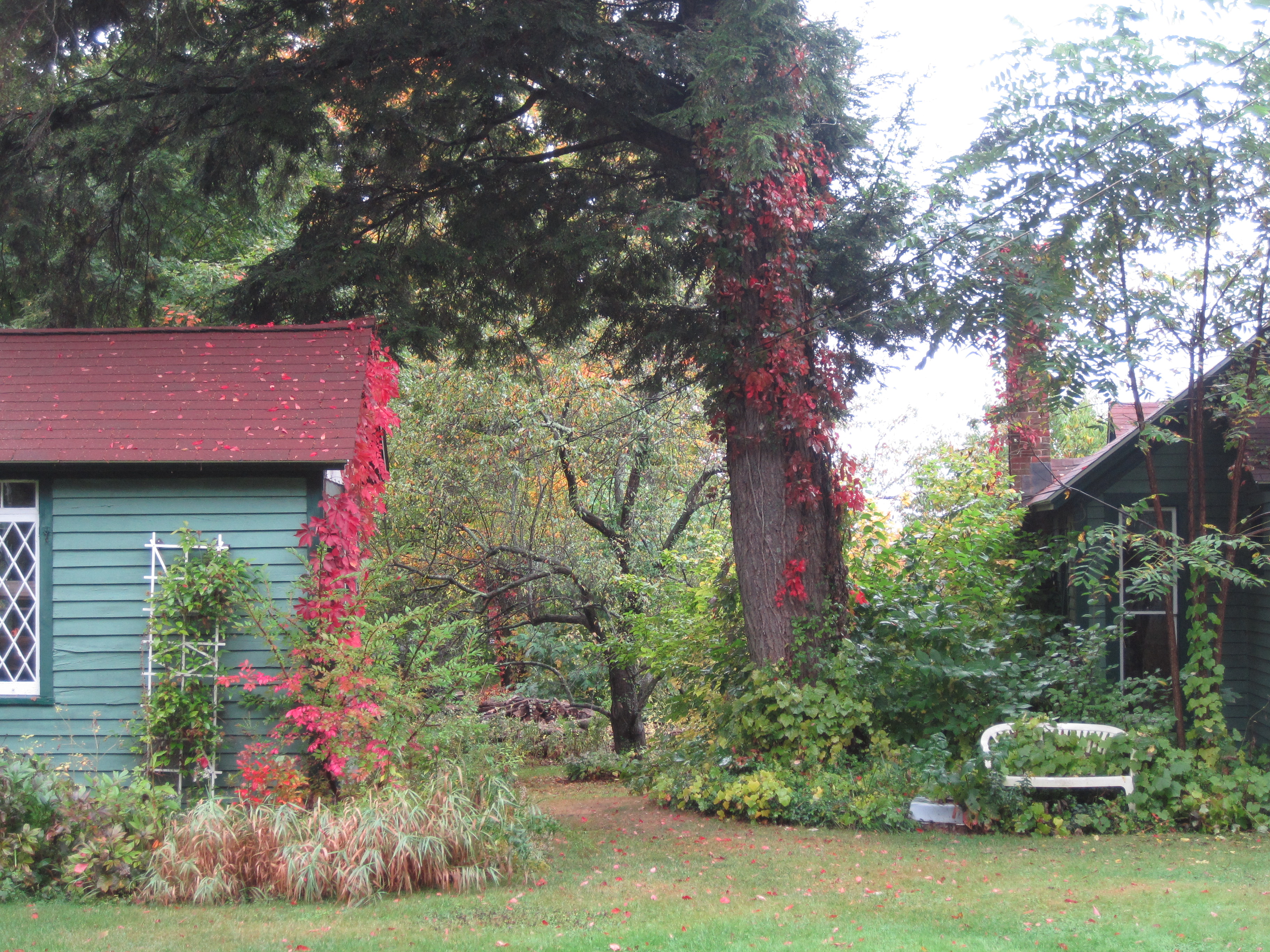
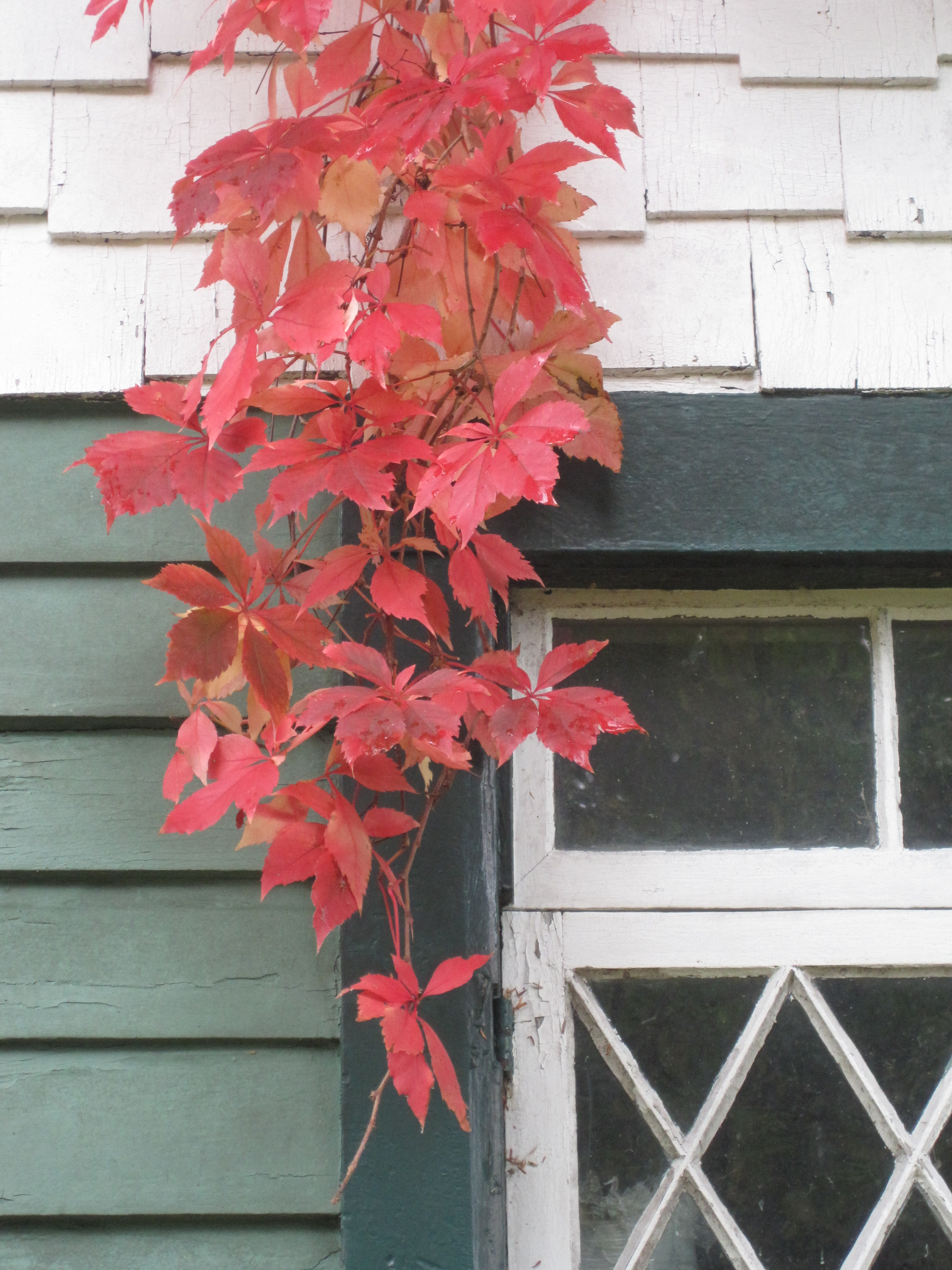
Well not really, actually. The woodbine (virginia creeper) is particularly happy this year. These pictures don’t do justice to the one growing in the hemlock at all, nor to festooned chimney on the little house (not visible in the first picture). But take note of the gingko tree in the background, the woodbine has quite quietly established itself in it.

009

I know, a bit overgrown…

013

Woodbine in the gingko:

012

011

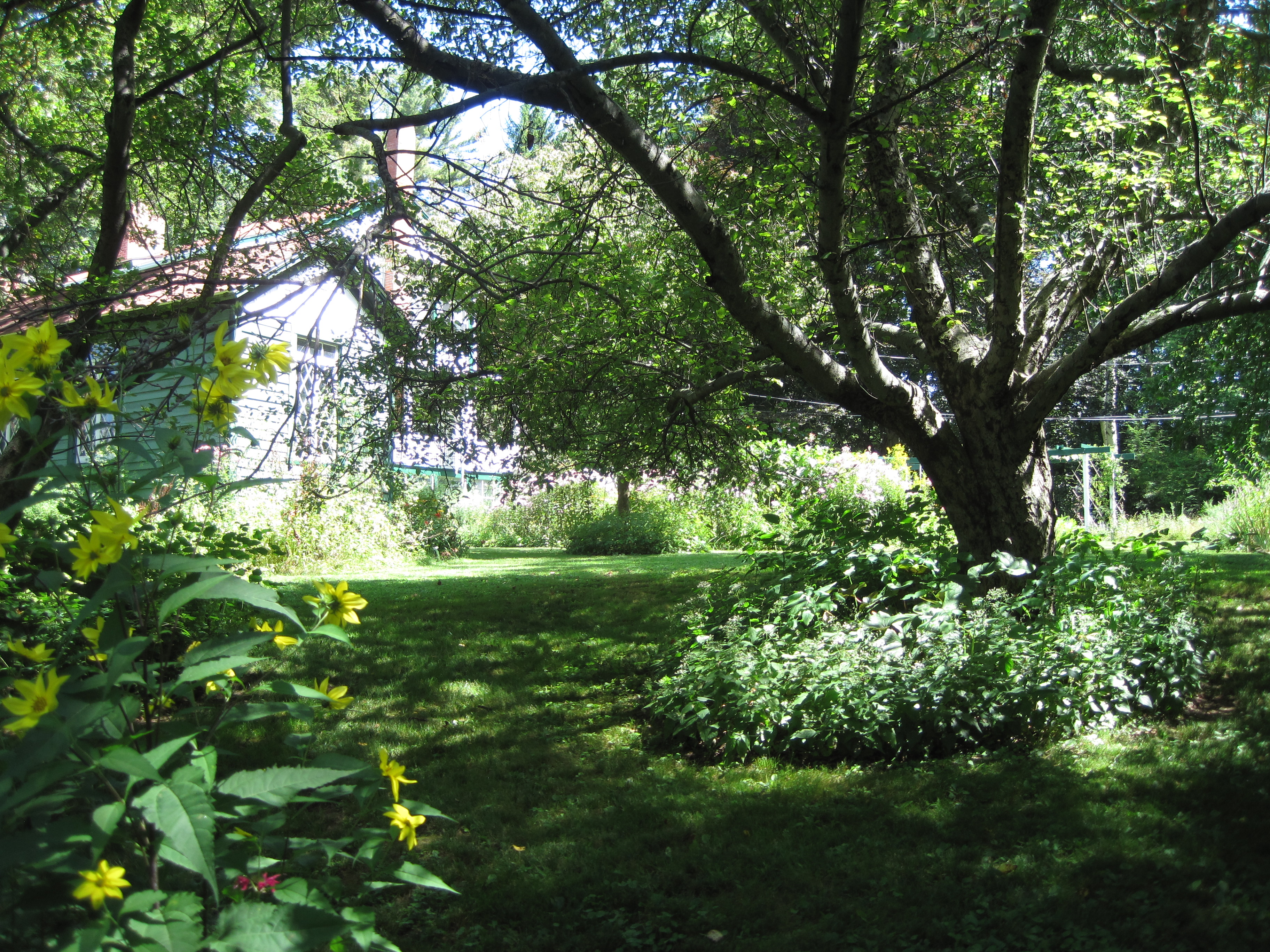
The old apple tree Saturday, Sep 27 2014 

065

along with woodland sunflower. Actually, not that old a tree, planted about 1964.

This photo was taken about a month ago, we are now into the dry and dusty phase of autumn. The colors are spectacular at least!

New garden! Thursday, Sep 25 2014 

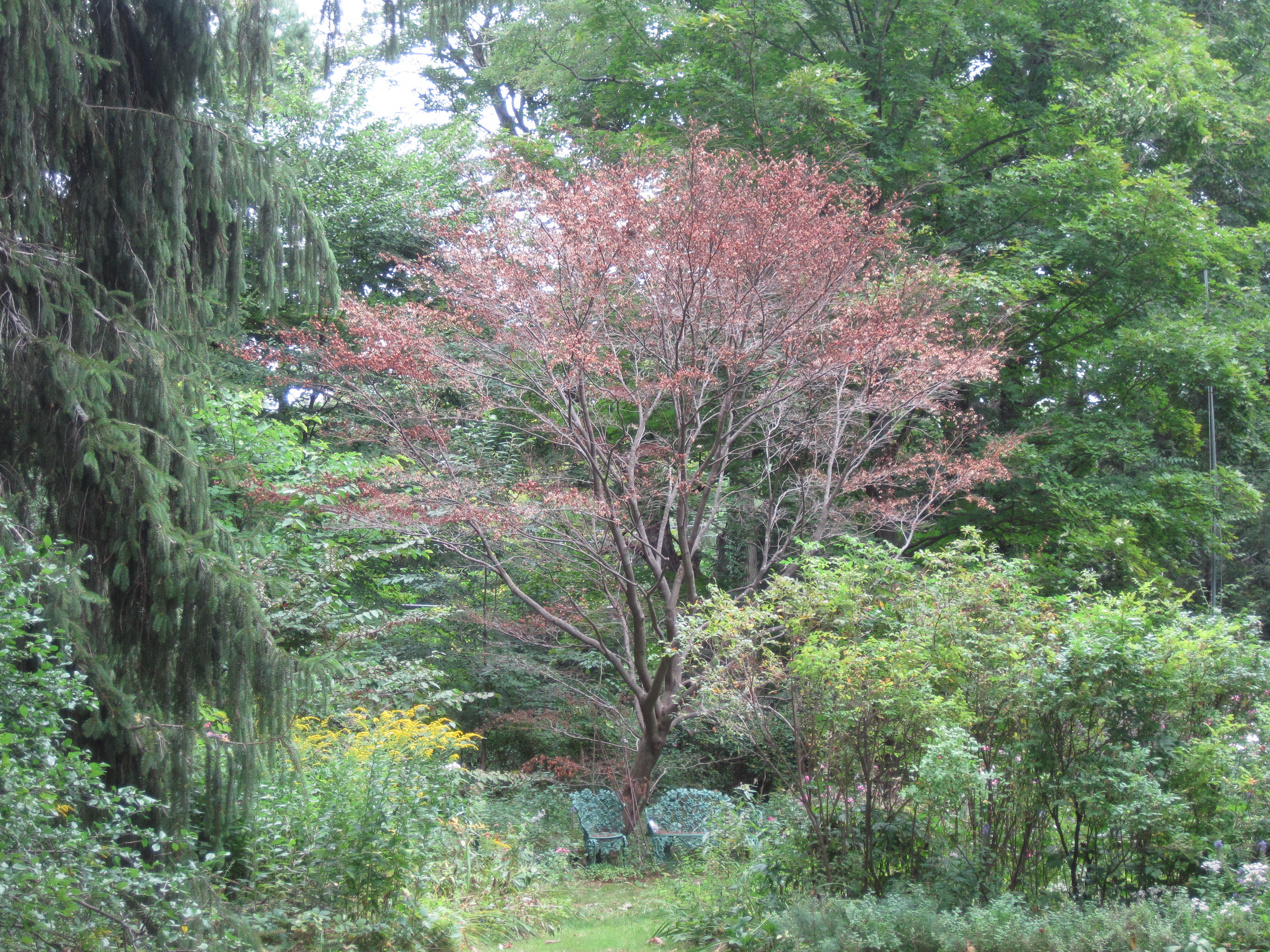
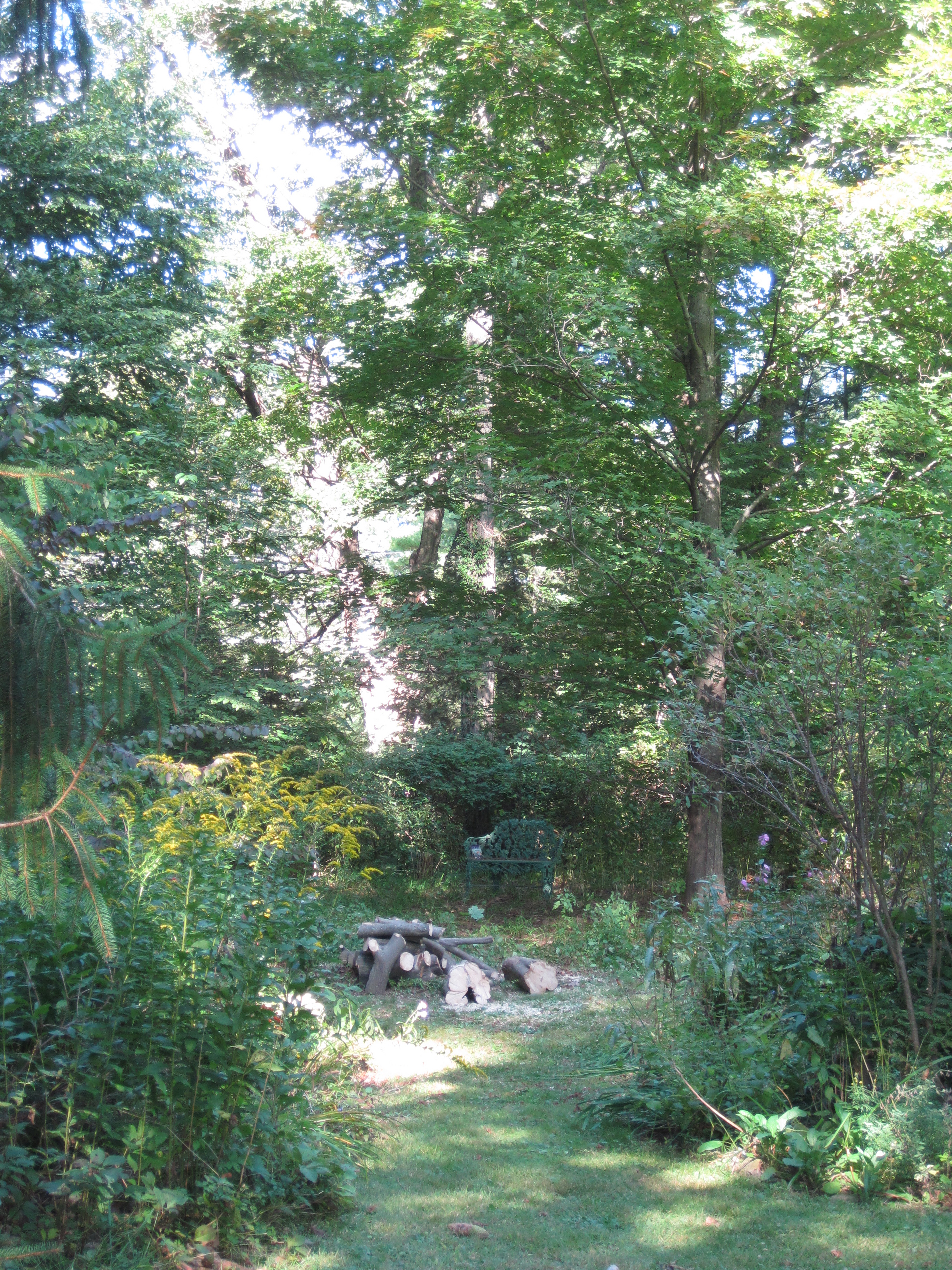
We don’t tend to go for wholesale reconfiguration of spaces around here.  But the abrupt death of a tree required it.  So, in a group effort today, the space where the Japanese Maple once was has been re-organized. The previously crowded Enkianthus has been joined by an ‘Arnold Promise’ Witch-hazel, which should become the dominate ‘tree’ in the space, at its feet a Russian Arborvitae (Microbiota decussata), a ‘Diablo’ Ninebark is trying out its third or fourth location just to the east of that, and then heading into the soggy area a lovely inkberry, which will demarcate a new path that leads back through the daylilies.  Above and behind this is the Sugar Maple, with the benches are chairs placed to the north of it, so a nice view to the west is created.

The fall color should be spectacular.  We hope!

Pictures to come, I promise.

I suppose I ought to update my tree list….

Now what? Thursday, Sep 18 2014 

One very dead Japanese Maple removed, possibly killed drought/winter stress/serious rot and hopefully not Verticillum Wilt*

001

Those leaves aren’t supposed to be a crispy brown.

But now what? The space has an entirely different feel to it, the beanpole locust in the background is suddenly prominent, as is the Sugar Maple. The paths, which bent at the tree, don’t quite make sense anymore and there is a whole lot more sun, and more distance.  This will take some consideration.

001


*The state lab isn’t exactly helpful on the subject: ‘We can’t test dead wood’…well, the whole tree is dead, so what exactly can you test?

The Yellow Pot Monday, Sep 15 2014 

086

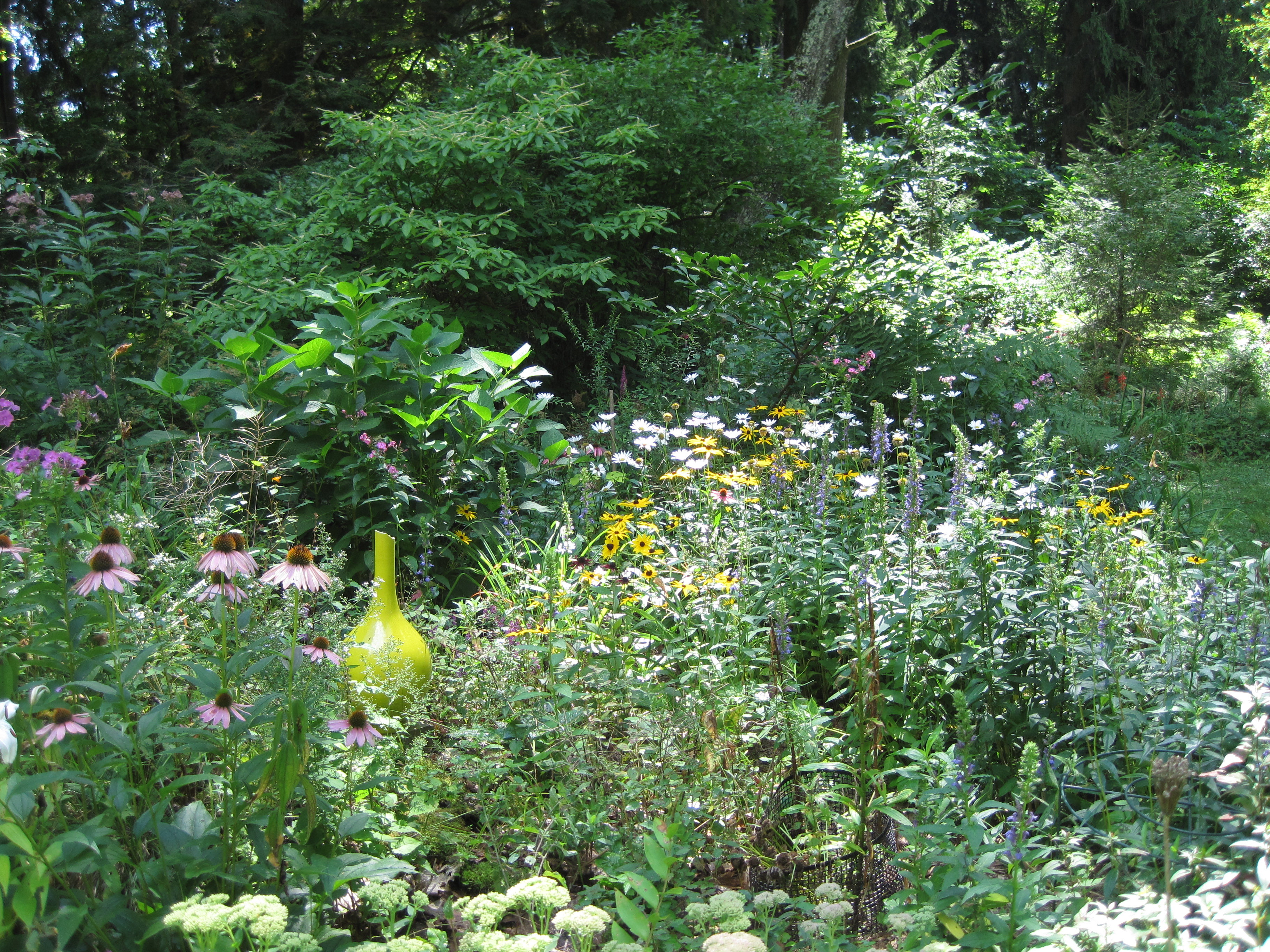
I know, I know, no content here! The big garden and its pot, amazing how a focal point brings it all together.

Volunteers Thursday, Sep 11 2014 

Nice to have…

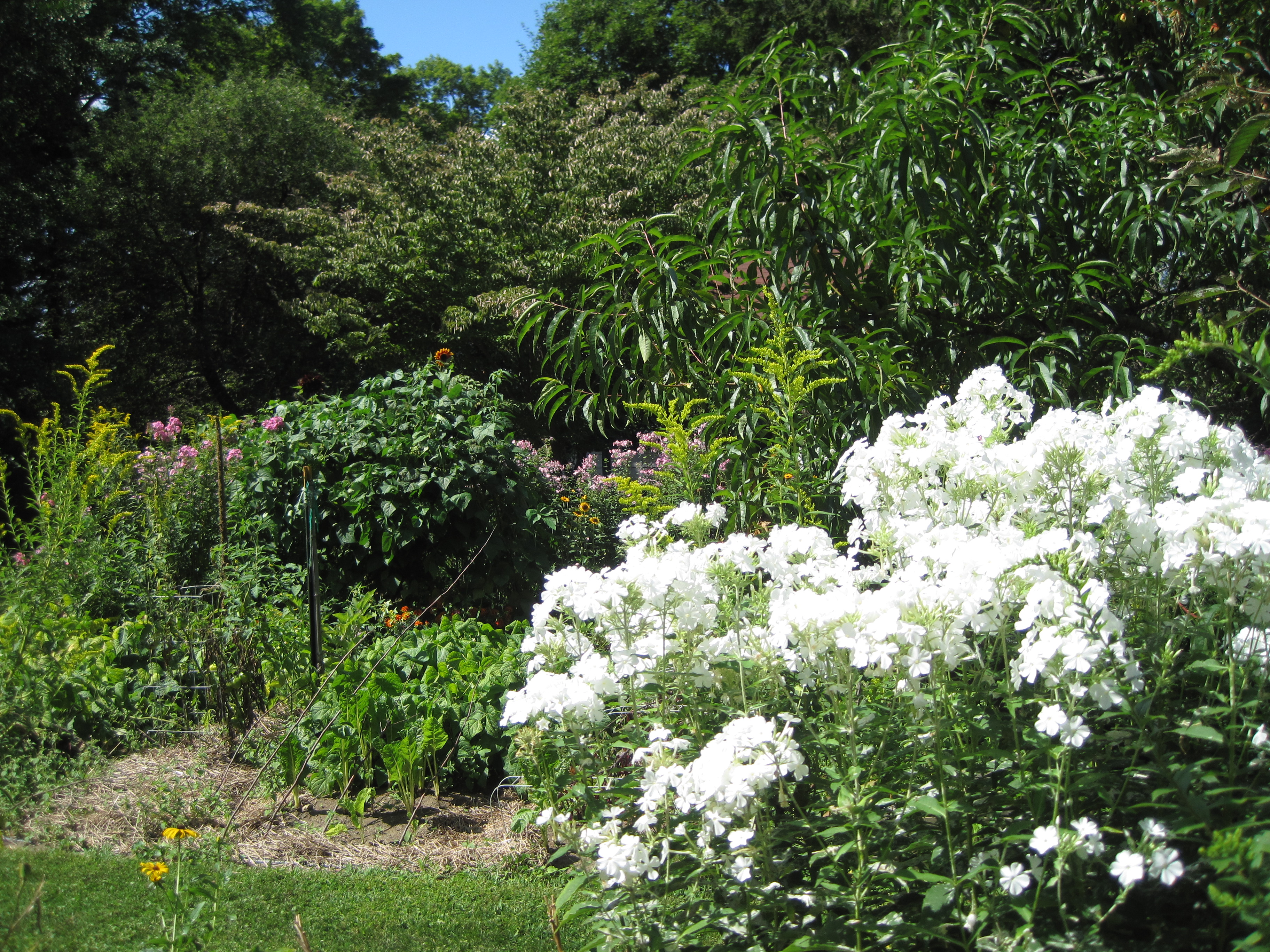
In this case, a whacking great clump of white phlox.  In the vegetable garden of course….  Maybe next spring I’ll divide it? It is a tall, late white, with good mildew resistance.  What more does one want? (It is at least in a pre-arranged spot, that little yellow black-eyed susan down at the bottom? In a row of baby kale!

057

Plant Identification Wednesday, Sep 10 2014 

I am hopeless at it, mostly because I never bring a guide with me and never bring the plant back.  (Trees are easy, I’m contemplating all those herbaceous things!)

Still, there is some learning going on.  Flat-topped goldenrod for example, has leaves that look more like a slightly overgrown tarragon than a goldenrod.  The beautiful wild blue relative of our fall garden asters has smooth leaves that feel like kid leather; it looks very weedy indeed…until now, when its color has the cultivated varieties well and truly beat. Blue wood aster has slightly paler, yellow leaves than the more common white wood aster, and a more pronounced notch at the base. Grey goldenrod has leaves that look almost like a sage leaf, but without the pebbly texture. The calico asters, with their thousands of little flowers, are very stiff, with lots of little branches and leaves.  One of the goldenrods that bloom all along the stems has a beautiful purple stem, the other doesn’t. The purple one has better form (and naturally is not growing in an area that is likely for long term survival: south of the barn where I must, must, do some weed whacking). And so forth.  The goal, of course, is to be able to edit the meadow lawn areas correctly in the spring.  For example, now that I know the difference between the flat-topped goldenrod and the regular goldenrod, I can remove the latter and keep the former in one area where the flat-topped type gives the right look.  (besides being rarer) Thankfully, because I didn’t know what the weird tarragon like thing was this spring (though clearly Not tarragon) and did remember that it was where the flat-topped goldenrod had been I didn’t pull all of it…quite!

Some things are easy: yarrow, one of the black-eyed susans (the felt leaved one that blooms all summer and the deer Love, naturally)

Dam! Friday, Sep 5 2014 

Went for a drive yesterday looking for this and that in northwest Ct. Happened to stop by this location, have a dam or two actually, and a tree.  Lots of trees. I always laugh when people argue that you couldn’t possibly get lost in the woods around here. It is true that you couldn’t get lost in thousands of square miles of trackless wilderness. And as long as you have two good feet and keep walking without going in a circle, you will hit a road within a few hours.  But, nonetheless, you could do a pretty decent job of getting mislaid, especially in an area where the topography is so solidly confused.

147

Colebrook River Dam and in the distance the Hogback Dam*. The area is open to various types of recreation, though with multiple overlapping agencies and owners, it pays to check the current regulations carefully.

*It has some other official name, but is known as Hogback.


Considering trees Sunday, Aug 31 2014 

Esperanza has a horrid, Brigadoonish*, feel about it.  Alright, it isn’t horrid. It is lovely, I like the musical. But the fact is that being outside of time can’t happen, when it does…Brigadoon actually has a rather dark underside to the story and the older tales it is based on are darker still.

But I was fretfully contemplating a few trees in various stages of mature/decline/stone Dead.  Trees should outlive people, that is one of the points about planting them.  But they still die. Just like people, just like pets. When you have a history going back 140 plus years, some trees, important trees, will die.

It’s a long list. There was a horse chestnut on the east lawn in the 1870’s, that was gone by the 1890’s, two big maples on the north lawn, two big elms, we are on our second copper beech, at least four full sized white pines, one of the big Norway Spruces*, the old cottonwood, several white birches, several huge apple trees, several full sized sugar maples, at least one Norway maple, several hemlocks….

And those are just the trees that spring to mind and were big enough to require outside help in removal…

Sometimes I wonder, what hell would it be to live forever?


*The others are just as big now, 80-100+ feet, but this was one of the originals.

The old Silver Maple Thursday, Aug 28 2014 

Down by Julie’s Pond, taken a few years ago. I have to figure out how to get the duckweed back under control on that pond….

IMG_6162

« Previous PageNext Page »