
Comments Off on Considering sunflowers
gardening and Modern Photos gardening, photography, sunflowers 13:54
Comments Off on Considering sunflowers
gardening vegetable gardening 17:00
why it is Labor Day! I have peaches, and more peaches (though not as many as usual) and pole beans, and peppers, and tomatoes, and…..
Thank goodness for good quality chest freezers, so much easier than canning things. I know if the power went out completely it would be unfortunate. But you know what, that is what the generator is for!
Comments Off on I know
gardening and Landscapes gardening 10:44
Our continuing experiment with several patches of uncut lawn grass, heavily interspersed with yarrow, aster, thyme, goldenrod, black eyed susan, violets, etc continues to be fascinating. In addition to adding a sculptural element: after two years the paths are increasingly well defined, along with a sense of movement; the ecological change is staggering.
Last night I had the occasion to sit out near one of the patches and listen. The tall grass was the source of all of the insect noise, so loud that it was almost distracting. The short grass lawns were dead silent. It was no surprise that the two phoebes were hunting the tall grass. Each bird had his/her patch of fence line and all of their hunting took place in the tall grass areas.
I’ve also noted that the young white oak only began to grow well when it was in taller grass. Now that may be coincidence, or the taller grass may in fact trap more water and keep the soil cooler.
What are the drawbacks? Well, the more insect life thing does mean a greater possibility of ‘bad’ insects: yellowjackets and ticks. I haven’t figured out the best way to control the goldenrod and heart-leaved wood aster (both of which are take-over artists), and I have yet to figure out how best to cut the tall-grass areas. Late fall, I think, but how? String trimmer or scythe and then rake it all up seems to be the best idea so far.
Best management practices and the tweaking thereof will continue to evolve!
gardening and Modern Photos gardening, sunflowers 20:51
gardening gardening, trees 20:24
The tulip tree, happily growing in a prime location, and not that old relatively speaking (planted early 1970’s) has a rough measurement of circumference at 5ft up of: 106 inches; which though is shy of three feet in diameter. The magnolia clocks in at 190 inches, 15 plus feet, give or take, or a just a hair over five feet in diameter… I suppose I ought to stop considering the tulip tree to be small? I mean it is, frankly, if you were looking at it from the standpoint of the Pacific Northwest, or Old-Growth, or high quality timber, but it isn’t Small…
Comments Off on A random fact
A flower that has fallen solidly out of fashion; but frankly there are few others out there that are such consistent producers of clean, elegant, easily kept cut flowers. They also, with a bit of thought, can be used as accents in a garden Something to be said for that; the fact that they are ‘easy’ notwithstanding…

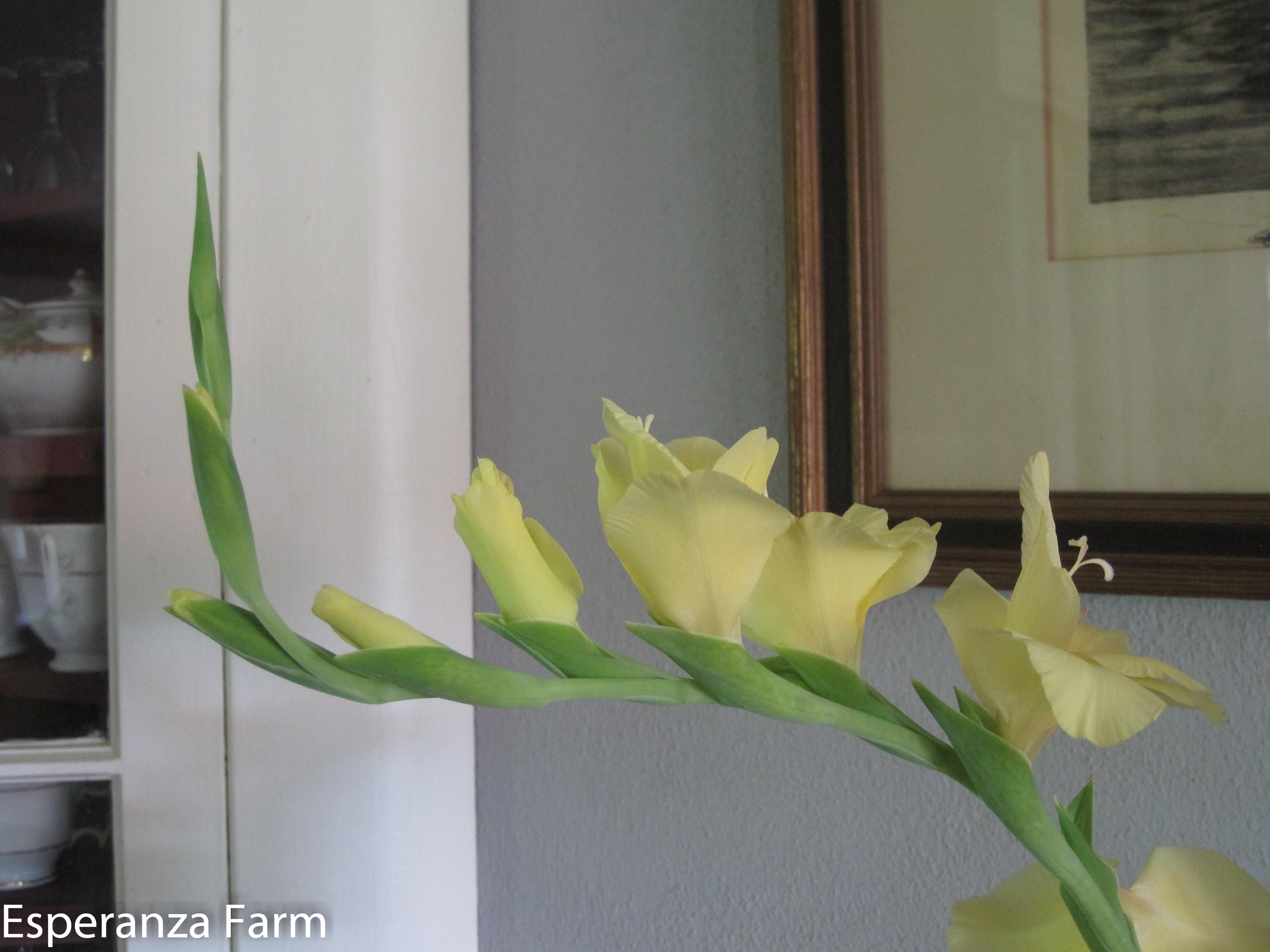
August is when things start to bake, but actually you can end up with a number of flowering plants. In fact, for a few weeks it is almost easier to have lots of flowers than mid July (which is very green).
One of our earliest, tall goldenrods has come into bloom. You can’t get a good look at it because the bees are going mad (I’d love to know where the honey bees are coming in from)
The snakeroots are still tall, white bottle rockets. They are nicely balanced by the white and cinnamon clethras, much small white spires.
The shasta daisies, coneflowers, and black-eyed susans give a good mix of white/pink/golds
Pure red is added by the cardinal flowers, the earliest of the lobelias.
White/ivory is added by the wild yarrow which has happily colonized the tall grass lawns.
More pink and red comes from the Joe Pye weed, monarda (bee balm) and agastaches. The hyssop continues with a pale blue.
The creeping wild mints and oreganos add some unexpected pink/rose down near the ground.
A bit of light periwinkle blue comes from the big globe thistles
A clear lemon yellow comes from the wild helianthus, a volunteer on the road sides around here.
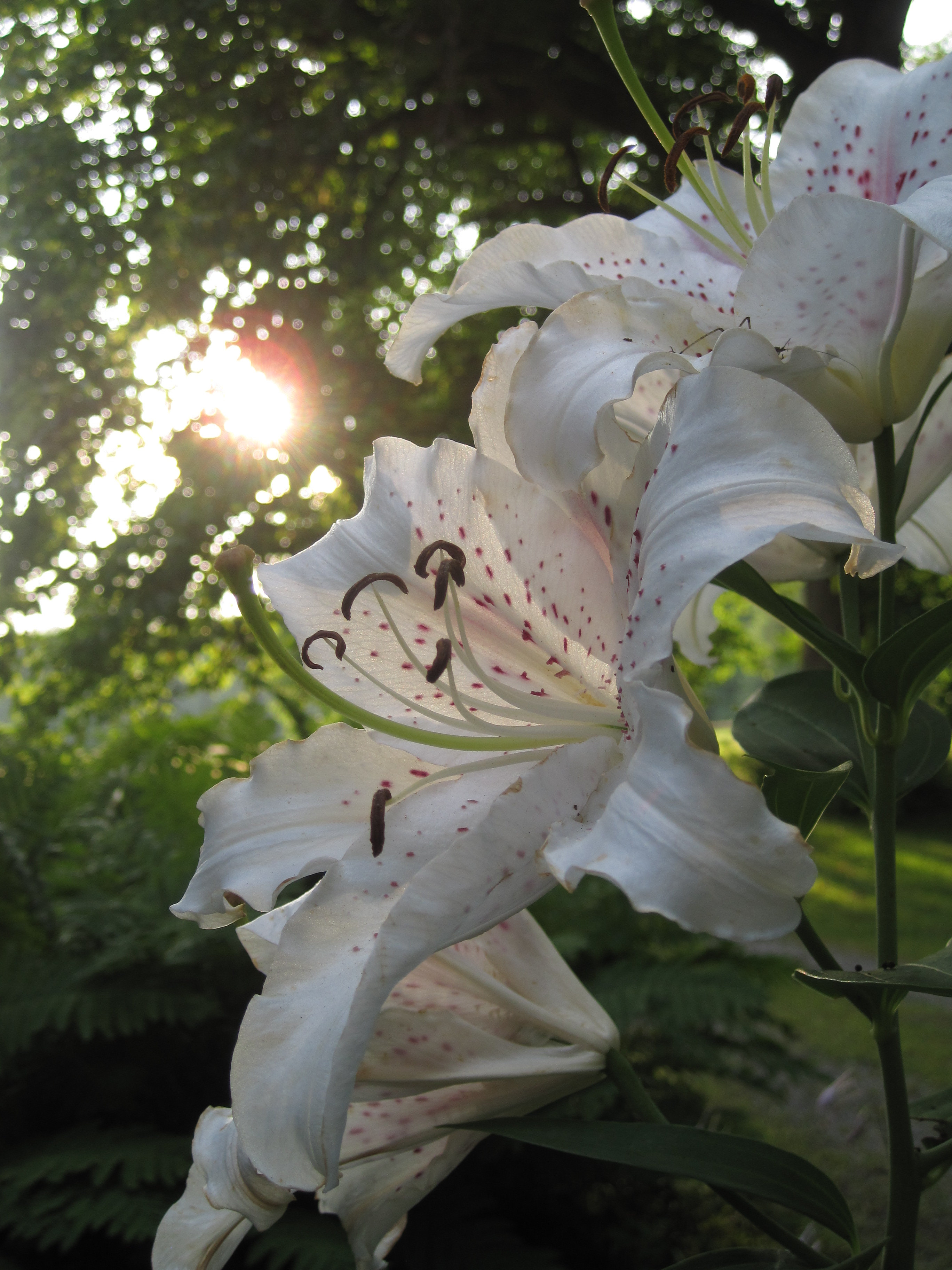
The Oriental lilies are just about done this year, they really raced through the season, which is too bad.
The all time winner is probably the flowering raspberry. It has been blooming non-stop since early June.
Clematis ‘Duchess of Albany’ is blooming nicely, having gotten ahead of the Japanese Beetles.
Coming up next: the asters (including heart leafed and wood) along with the goldenrods and a few Japanese anemones.
And of course the annuals: sunflowers, cosmos, and morning glories.
There is a reason you can’t move without tripping over a bee, other pollinator, or hummingbird around here…
Comments Off on What’s Blooming?
gardening and Landscapes gardening 20:25
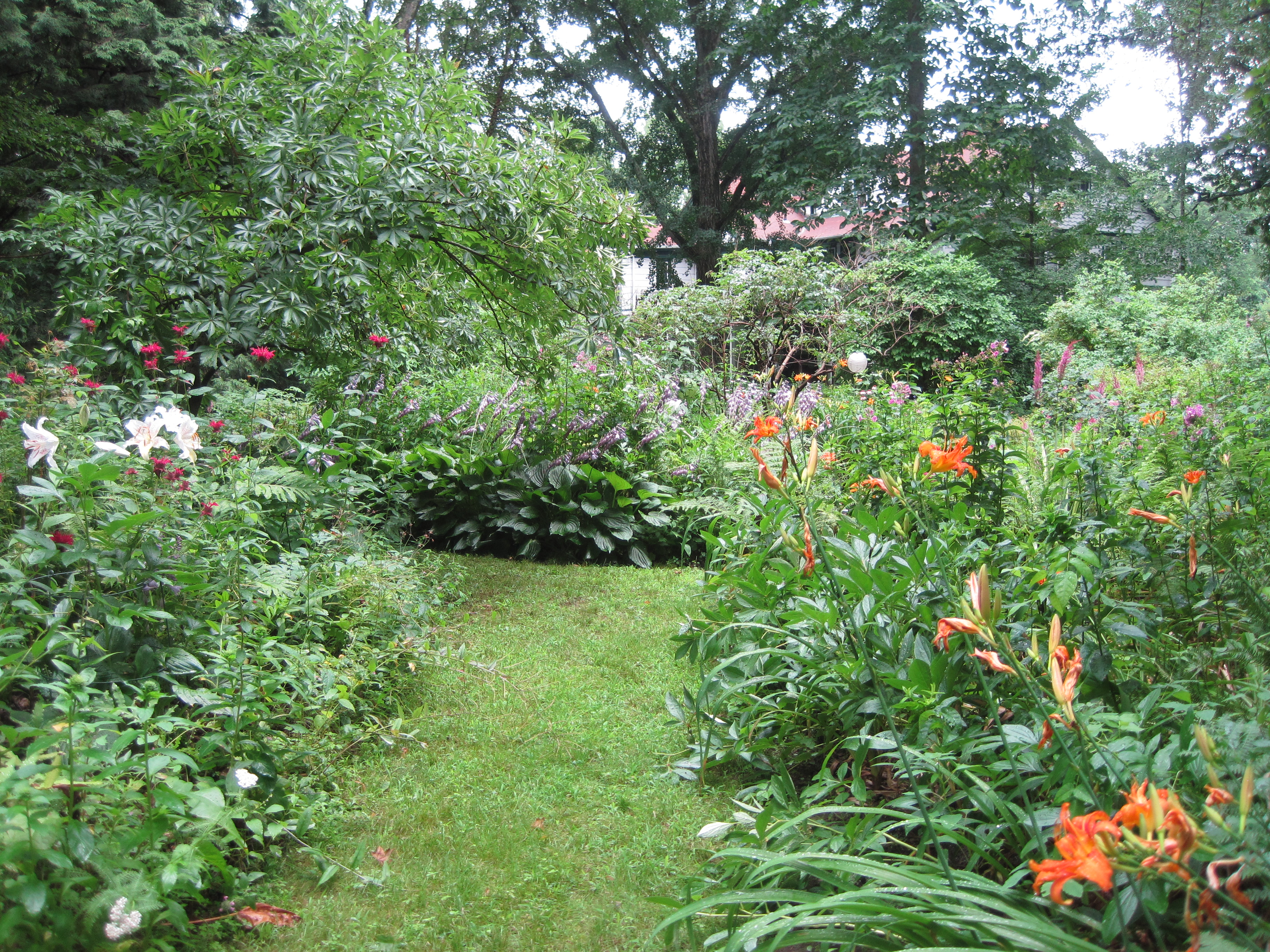
Left: Jacob Kline and Raspberry Monarda, Casa Blanca Oriental Lily; center, old standard blue hosta; right, regular orange ditch/day lily, tall, late pink Ostrich Plume astilbe.
Everything except the lilies and monarda are done now, but some other things have come along.
Esperanza and gardening connecticut, gardening 20:02
Cod, fresh corn, and green beans (from the garden) for supper. Simple gifts!
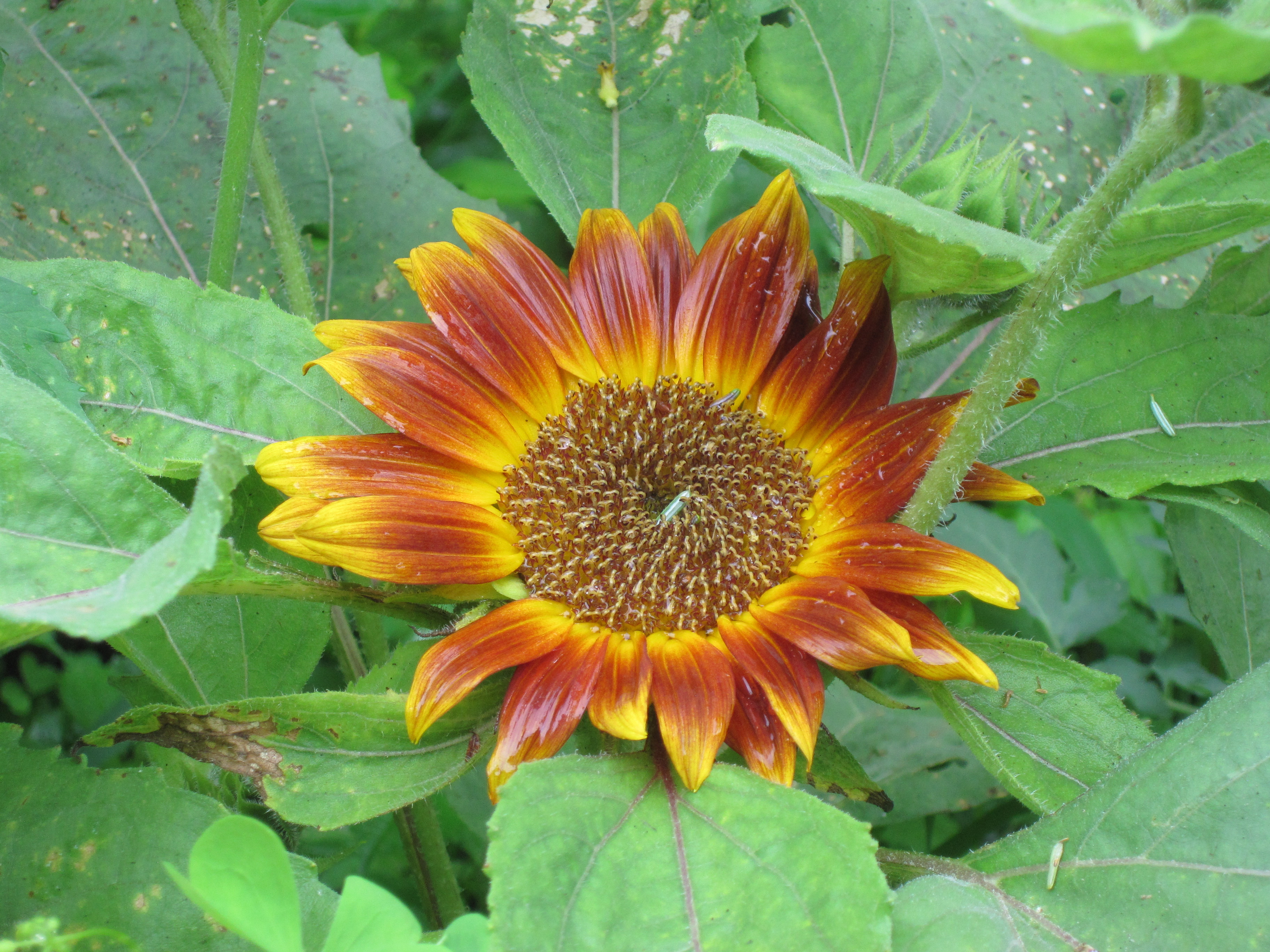
In a change from supper. There are many things in the world, both local and not, that I deplore; but there is great beauty nonetheless. The beauty of the most simple sunflower; the thistles, monarda, yarrows, a multitude of flowers loaded with bees, butterflies, moths, and hummingbirds; the peace of the pond where the wren (pair) was busily foraging in and amongst the deadfall; and where a solitary wood-duck was taking its ease. There, uncounted frogs fled from my steps. There the young buttonbushes, spicebushes, and maples flourish. I can do little indeed, but here I can take care.
gardening and Modern Photos gardening, lilies, photography 20:41
 Acair Fearann