Julie Palmer Smith Friday, Nov 18 2011 

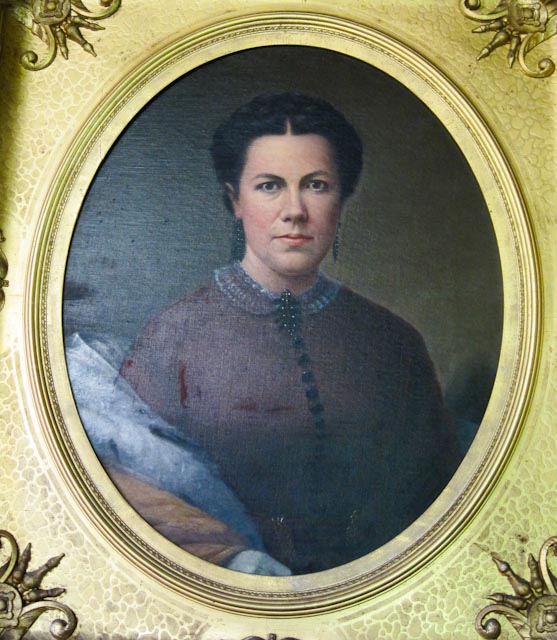
It occurs to me that pictures are always useful.  This is a portrait done of Julie early in her marriage sometime in the 1850’s, when she was in her 30’s. A matching portrait of Morris also exists.  The artist of this oil painting is unknown; there may well be a signature, but if so it is under the frame.

Hold On! Thursday, Oct 27 2011 

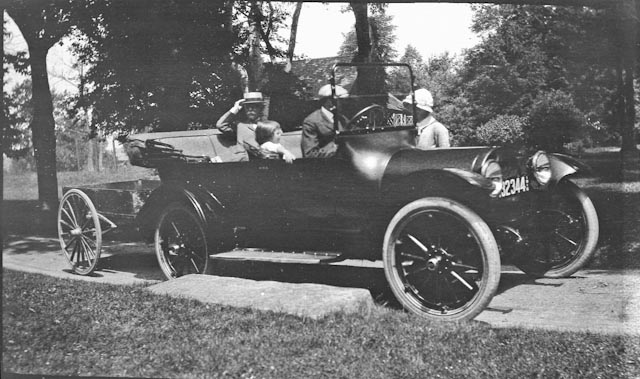
Considering the post of a few days ago (Eeek), I went looking for early automobile photos.  I found this one from 1905.  Not sure who all is in it, except that is WWE holding rather firmly on to his hat!  I find the wooden wheeled cart rather dubious.  That is a big car by the way, the mounting block is a solid four or five feet long.  I haven’t a clue what it is, any suggestions as to what or where I might find that out would be great!

In the background you can see across the tennis court easily; the massive central oak may be the tree directly behind the center of the car, it has the right shape.  The other, of course, hasn’t even been planted yet.

Historic Photos: WWE washing windows Wednesday, Oct 12 2011 

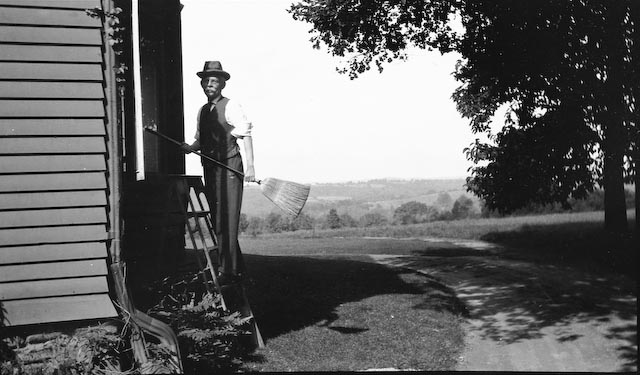
October 1921, WWE (William Webster Ellsworth) washing the windows on the north bay.  Note the bowtie, vest and hat.  The driveway appears to still have its upper turn-around at this point, the magnolia is quite a bit smaller, with much of the shade in the photo coming from the large red maples, long gone.  Today the driveway has dropped about six inches as it goes around the curve; or it has been shifted closer to the house with a subsequently sharper and steeper bank to the lawn.  It looks like it was still dirt at this time.  The house was still clad with green wooden clapboards, interesting to note that it does not have a corner trim board even in the original siding: another argument for placing it in the ‘Shingle style’ camp as opposed to ‘Queen Anne’ camp of architecture, at least on that bit.  It looks like the five-leaf akebia vine was at the house already, I think there is a bit of it on the downspout (which is just as peculiar these days); the fern bed is apparently just beginning, it is much larger now. 

Also note that one can see Intervale’s fields very clearly in this photograph; today the hedgerow hides that low hill, and only the top of the West hill, the next ridge to the west is visible.

I am not entirely sure how the broom works into washing windows…

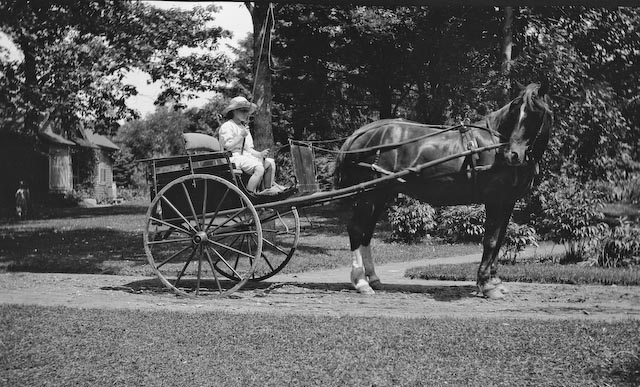
Helen Ellsworth van Loben Sels 1904 Saturday, Aug 27 2011 

Helen Ellsworth van Loben Sels

Helen was a daughter of William Webster Ellsworth and Helen Smith, Julie P. Smith’s daughter.  She move to California and married Maurits van Loben Sels.  They developed a very successful farm, Amistad, in the Sacramento Valley.  The farm is still in operation today, though the house (which was very much a California version of Esperanza) no longer exists.

This picture, taken in 1904, is located on the top of the lane.  One of the interesting things is how much the lane has sunken between its banks in the last century, today it is nearly a foot lower..  The horses would have been primarily used for driving,but were also broke to ride.  Clearly of Thoroughbred ancestry, they probably stood between 16 and 17 hands.  From letters and stories it is known that Helen was quite comfortable around horses, as was her mother and grandmother; and she clearly seems to be confident in this picture.

Second cutting Tuesday, Aug 23 2011 


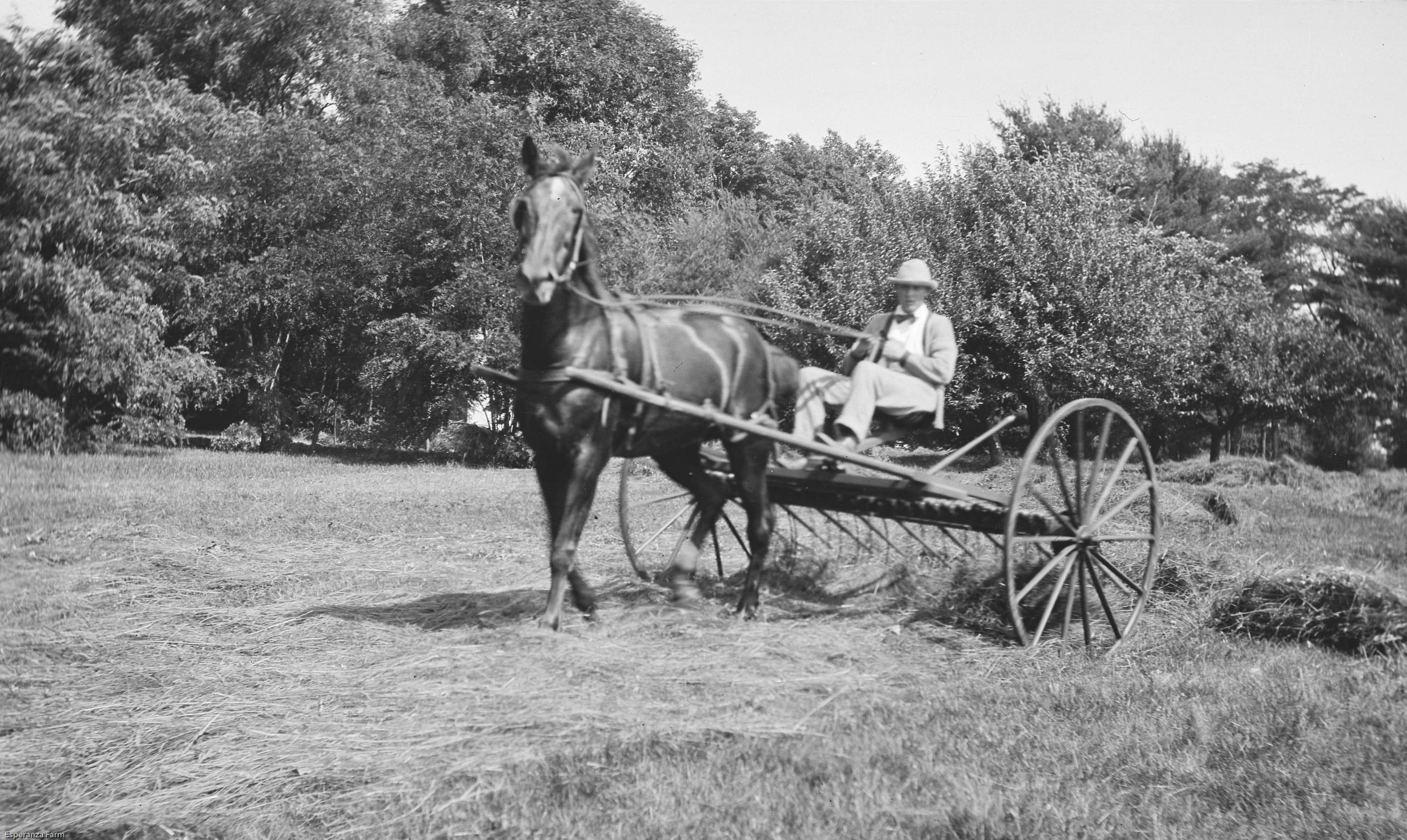
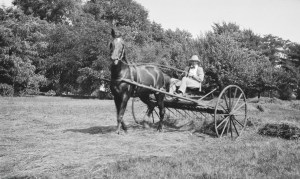
Tedding hay 1911

 Esperanza has always produced hay, for most of its history it was for its own use.  The picture above was probably takn of a second cutting of hay.  I don’t know who is driving the horse, but I do know that the horse is Kentucky Chief, one of a matched pair of medium weight driving horses.  He would have been well suited to handling a light tedder and would have been much faster than using one of the Percherons, who would have been used to bring the hay in.  The farm also had a team of oxen.

  Today I take 75 bales and the rest is taken by the farmer who cuts it.  That the field has a reputation for being the best in town is a source of pride. (even if the competition is small these days)  The field easily breaks a 1000 (est. at 50lb bale, much less when he does round bales) a year, which isn’t bad since only 12 acres are in hay at the moment.

There is always a way to these things.  The first cutting traditionally comes in early June, Belmont weekend when the grass turns from silver to gold.  Really, the color changes when the wind bends the grass, gold is fully mature seed heads.  Brown is too late.  Most years, this one was no different, this is the worrisome cutting.  The larger and more valuable of the two, it comes at a time of year prone to uncertain weather.  It is also the cutting, because of the tall grass height and seed heads, that is more easily ruined.  Because it is higher quality grass it is generally considered horse hay, but this also increases the risk for horse hay must be dry.   Hail storms beating the grass down before it is cut, rain when it is down can turn it from 6 dollar horse hay to 2 dollar construction hay. 

The second cutting happens any time from mid August to before the frost, so end of September. This period has more predictable weather.  The cutting is smaller often half the size, unless the summer has had lots of rain, and easier to handle.

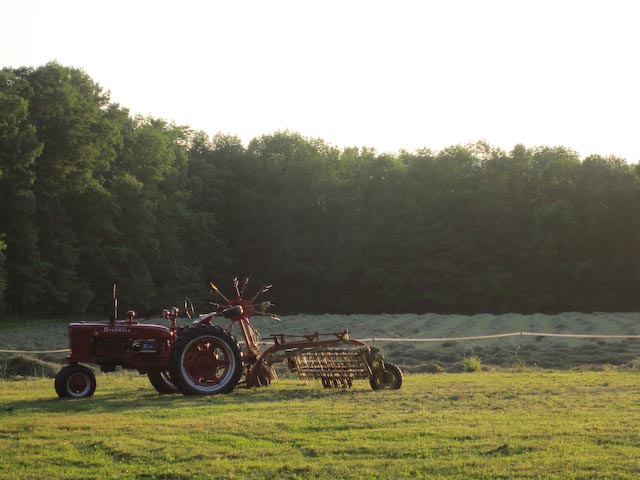
Hay tedder 2011

This picture was taken in June.  You can tell by the size of the windrows that this is a first cutting.  While the tractor qualifies as an antique, and has another career at tractor shows, the rakes are more modern and of a typical size for New England haying equipment today.  Like all farm machinery they are elegant, functional and lethal.

Carlotta Norton Smith 1908 Saturday, Aug 13 2011 

Carlotta Norton Smith

Carlotta (Julie’s daughter) gardening, August 1908.  I don’t believe that watering can exists anymore, but we have similar (riveted tin).  The bench still exists. Several interesting things here: note the fitted apron, I think blue and white, the glove apparently only on one hand, the hat! and brooch.   It looks to me like she is watering breadbox poppies, the ones that create poppy seed.  And I am intrigued by the tall ornamental grass in the background; we tend to think of that as a modern gardening accent, but it clearly isn’t.

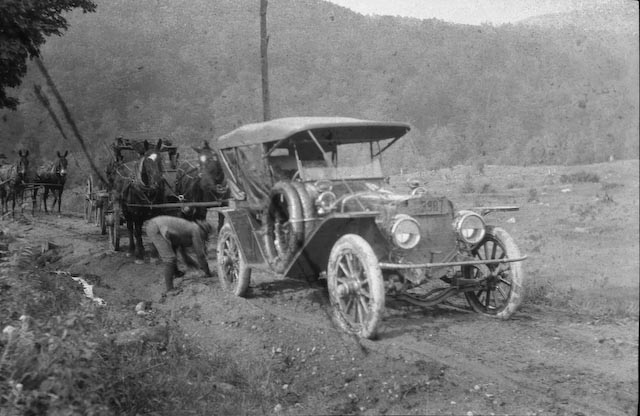
Traffic Jam Monday, Aug 8 2011 

Somewhere in the neighbourhood, in 1915, my guess would be in the Bakerville/Nepaug area.  I have a nice little collection of early car photos, they all seem to concern: fixing it, getting it started, or getting it unstuck…

One hundred years to the day Thursday, Aug 4 2011 

One hundred years to the day of this photo, and a bit worse for wear but it rolled on and off the truck, we got the cart back (with two others).  Now, anyone know how to restore them?

Kennedy and Nero Monday, Aug 1 2011 

Kennedy Creevey and Nero

Kennedy and Nero (a Great Dane) watching feed corn being processed as silage at the dairy barn, summer 1910

« Previous Page