Esperanza is still sometimes for some purposes called Esperanza Farm. The relationship between the house and the farm is a complicated one, leading deep into women’s history, the rise of scientific agriculture, and economics. I won’t get into it here. Suffice it that the cottage, long sold and now a winery, produced sufficient vegetables, dairy products, meat, and cut flowers to support Esperanza, its dependencies, and sometimes enough to sell. Obviously, it did not have to support the family through the winter; although it did add to households of the various caretakers, we know late season vegetables were part of the wages so to speak. The dairy products were sold during the winter.
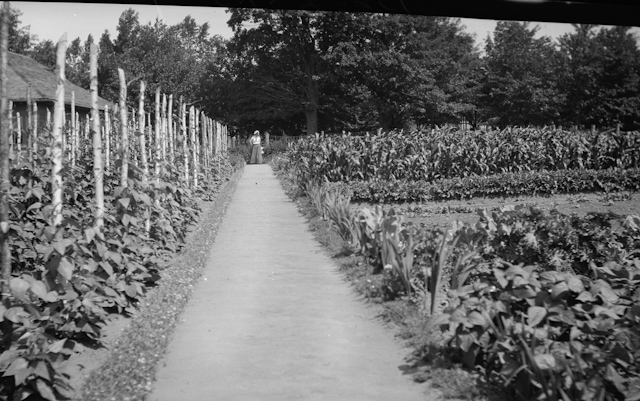
Here is a picture of the edge of the cottage garden taken in 1909: corn, pole/bush beans, lettuce, and gladioli are all visible.
 Acair Fearann