Also known as Actaea racemosa, Black Cohosh, or Bugbane is one of the Northeast native plants that deserves much wider use. It happens to be one of my garden favourites, so perhaps I am biased. Blooming in late July into August its towering candles of ivory add an incredibly dynamic element to the garden as they often bend and twist, earning it the local name: Black Snakeroot. The various pollinators, from bees to beetles, adore it. Its flowers can easily last several weeks with the seedheads remaining through the winter as architectural elements, while its heavily cut foliage works as a good backdrop for smaller plants.
It happens to flourish in the heavy, poor draining, partially shaded clay of this area. In this it is unlike almost every other garden plant out there! A big specimen should be treated as a herbaceous shrub, as they can easily be 2+ feet tall and as wide, with the flower stalks hitting seven feet. It is also very long lived. Conversely, it is also slow to reach flowering maturity, expect to wait several years when starting them from seed. It is drought and rain tolerant. About the only thing it doesn’t tolerate is a heavy winter mulch layer on its crown, treat it like a fern. It can be very late in coming up in the spring.
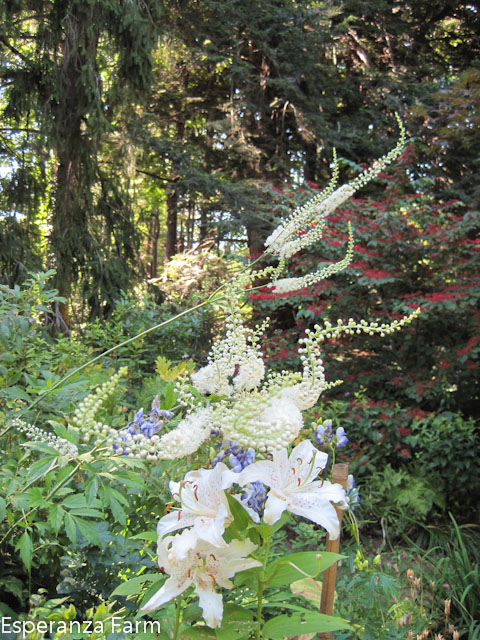
Here is a small one in amongst an Oriental lily and some monkshood, the red in the background is a double-file viburnum:
 Acair Fearann