For decades the north path wove its way past the garden shed, beneath the great locusts and hemlocks, and crossed into the garden between the great square boundary pillar and the twenty foot tall remains of the big cottonwood. The tree had been nearly three feet in diameter, after it fell about twenty years ago years the remant snag was left. Totally hollow, it fit the image of the slightly spooky, slighty romantic ruined tree trunk; the imagination could run rampant, maybe a parliament of owls, maybe a racoon family, maybe bats, weasels, snakes, maybe a person could hide in it? It was an elegant ruin, visible from several places in the garden, adding a sense of age, memento mori. In later years it was crowned by woodvine, crimson in the fall. And it was the woodvine, which held it together, that in the end probably pulled it over.
I went out the other day to find that it had toppled, quietly, without fanfare, falling towards the heaviest weight of the woodbine, away from the path. The shell had mostly crumbled, though it fell on soft ground. The largest piece, about a third of the trunk, had fallen on a young conifer; but it was so light and thin that I could roll it off the little tree, which had only been bent.
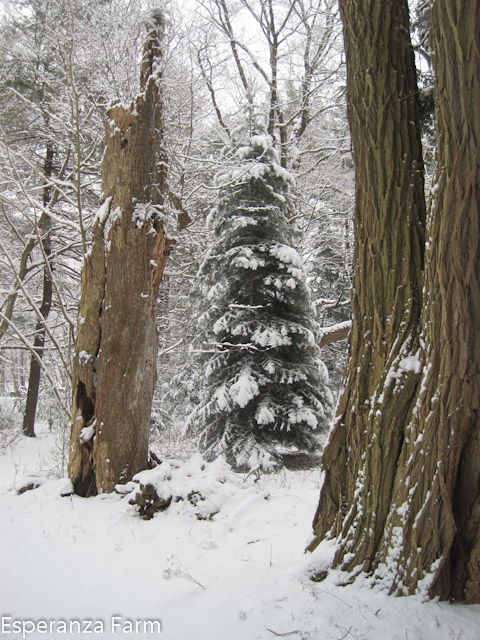
From the path, it fell to the right, the young conifer is behind the locust’s trunk in the photo.

You can just see the trunk, directly above the middle of the viburnum (white shrub!) in this picture.
 Acair Fearann